The Mursi tribe is one of the most popular and attractive tribes in Ethiopia. This people are mainly located in the Debub Omo Zone of the Southern Nations, Nationalities, and People’s Region, and it is closer to the border with South Sudan.
Report from the 2007 national census suggested that, there are up to 11,500 Mursi, 848 of whom live in urban areas while a total number of 92.25% live in the Southern Nations, Nationalities, and People’s Region.
Most interestingly, they are surrounded by mountains between the Omo River and its tributary the Mago, their home is widely regarded as one of the most isolated regions of Ethiopia. They also have great neighbors which include the Banna, the Aari, the Mekan, the Kwegu, the Karo, the Nyangatom, and the Suri.
According to our research, it was found that they were grouped together with the Me’en and Suri by the Ethiopian government under the name Surma.
The Mursi Tribe’s Religion and culture
There are so many ways people or tribes experience forces but the Mursi experience a force that is greater than themselves which they call Tumwi.
This greater force is usually located in the Sky and sometimes manifests itself as a rainbow or a bird. They have a principal religious and ritual office in their society which is known as Kômoru, the Priest or Shaman.
When the community or the society is being threatened by calamities like drought, diseases, crop pests, the Kômoru in this case serves as a conduit for communication between the community and the deity (Tumwi). He also represents the wellbeing of the group as a whole.
Ideally, the Kômoru should stay in Mursiland or even with his local community in order to maintain this connection between the people and the Tumwi. (bhuran). There are priestly families in two other clans, namely Garikuli and Bumai, but Komortê is generally regarded as the preeminent priestly tribe.
Even though some Mursi have embraced Christianity, the faith of the Mursi people is categorized as Animism. In the northeastern region of Mursiland, there is a Serving in Mission Station that offers Christian instruction, primary medical treatment, and educational services.
The Azande people are very special and they can’t be neglected as far as Africa History is concern, they live in the southwestern of Sudan, at the immediate east Central African Republic and north of Congo.
They have many ancient traditions, it is also believed that they originated from many clans that can be traced back into history. The Azande people also have an interesting history of migration within the last 200 years, they have record of history in fighting for their freedom of independence from the outside and it’s was mainly European legal and social, encroachments.
Their religious values that make them who they are have been largely held true despite these intrusions. There are so many cases where Europeans their instituted customs and traditions from Europe into the social life of the Azande people during the colonial rule era.
The Azande people are know for being strongly commitment or staying true to their belief in the traditional conception of one creator deity who created the universe.
The Azande have strong believe in Mbori (the supreme being), they are one of the tribes who have always believed in God and they have never created a shrines, temples, rituals, or ceremonies to honor Mbori.
The Azande people’s faith is a good example of how African thinking about the creator’s separation from everyday life is reflected in many ways.
As a result, although it is uncommon, people may seek advice from Mbori because they more frequently rely on oracles for their everyday needs. As seen in the Nile Valley, these practices are more in line with Africa’s ancient customs.
Pharaonic times or as depicted in other African legends. The main oracles are recognized as having a close connection to the Azande forefathers. A small group of individuals are also thought to inherit the capacity to harm others, making them better suited to gauge the level of discipline required to preserve societal harmony. Any kind of misfortune, no matter how minor, stems from a disorder in the world of humans. Someone is in charge.
Without human action, nothing bad ever happens. People who pass away are frequently homicide victims in the sense that someone was responsible for their demise. People who would disturb the social order are typically punished by the priests or priestesses who have the ability to recognize the nature of order, harmony, and equilibrium in the society.
Many individuals refrain from engaging in harmful behaviors out of fear. The character of Ture, who upholds the middle ground between order and chaos, as in many African traditions, and applies the conventional wisdom to different activities, actions, and social situations, is one of the greatest cultural figures among the Azande.
Some authors have addressed Ture as a trickster figure, similar to Ananse among the Akan, but this is to minimize the psychological and social effect of a character who is not about tricking anyone, but rather about enforcing through instruction the value of the middle ground between chaos and order. Azande marriage law allows a woman to reject a marriage if she thinks it is unsuitable. Following the marital ceremony, the husband is always indebted to the wife’s family.
It is difficult to be truly divorced from the woman’s family because the woman is considered a valuable part of her family’s wealth.
Lorem ipsum dolor sit amet,sed diam nonumy eirmod tempor invidunt ut labore et dolore magna aliquyam erat, At vero eos et accusam et justo duo dolores et ea rebum. Lorem ipsum dolor sit amet, no sea takimata sanctus est Lorem ipsum dolor sit amet. Stet clita kasd gubergren, no sea takimata sanctus est Lorem ipsum dolor sit amet. no sea takimata sanctus est Lorem ipsum dolor sit amet. no sea takimata sanctus est Lorem ipsum dolor sit amet. sed diam voluptua. Lorem ipsum dolor sit amet,sed diam nonumy eirmod tempor invidunt ut labore et dolore magna aliquyam erat, At vero eos et accusam et justo duo dolores et ea rebum. Lorem ipsum dolor sit amet, no sea takimata sanctus est Lorem ipsum dolor sit amet. Stet clita kasd gubergren, no sea takimata sanctus est Lorem ipsum dolor sit amet. no sea takimata sanctus est Lorem ipsum dolor sit amet. no sea takimata sanctus est Lorem ipsum dolor sit amet. sed diam voluptua.
Lorem ipsum dolor sit amet,sed diam nonumy eirmod tempor invidunt ut labore et dolore magna aliquyam erat, At vero eos et accusam et justo duo dolores et ea rebum. Lorem ipsum dolor sit amet, no sea takimata sanctus est Lorem ipsum dolor sit amet. Stet clita kasd gubergren, no sea takimata sanctus est Lorem ipsum dolor sit amet. no sea takimata sanctus est Lorem ipsum dolor sit amet. no sea takimata sanctus est Lorem ipsum dolor sit amet. sed diam voluptua.
Lorem Ipsum has been the industry’s standard dummy text ever since the 1500s
Lorem Ipsum?
Lorem Ipsum has been the industry’s standard dummy text ever since the 1500s, when an unknown printer took a galley of type and scrambled it to make a type specimen book. It has survived not only five centuries,
It has survived not only five centuries.
Officia pariatur? Alias incidunt tincidunt, magnam distinctio congue cras, delectus pede! Tincidunt beatae habitant ullam. Aute reiciendis nemo aut alias unde laboriosam placerat sequi! Atque habitasse fringilla similique. Dis odit voluptate dis rutrum dui praesentium? Justo?
Lorem Ipsum has been the industry’s standard dummy text ever since the 1500s, when an unknown printer took a galley of type and scrambled it to make a type specimen book. It has survived not only five centuries, Lorem Ipsum has been the industry’s standard dummy text ever since the 1500s, when an unknown printer.
Lorem ipsum dolor sit amet,sed diam nonumy eirmod tempor invidunt ut labore et dolore magna aliquyam erat, At vero eos et accusam et justo duo dolores et ea rebum. Lorem ipsum dolor sit amet, no sea takimata sanctus est Lorem ipsum dolor sit amet. Stet clita kasd gubergren, no sea takimata sanctus est Lorem ipsum dolor sit amet. no sea takimata sanctus est Lorem ipsum dolor sit amet. no sea takimata sanctus est Lorem ipsum dolor sit amet. sed diam voluptua. Lorem ipsum dolor sit amet,sed diam nonumy eirmod tempor invidunt ut labore et dolore magna aliquyam erat, At vero eos et accusam et justo duo dolores et ea rebum. Lorem ipsum dolor sit amet, no sea takimata sanctus est Lorem ipsum dolor sit amet. Stet clita kasd gubergren, no sea takimata sanctus est Lorem ipsum dolor sit amet. no sea takimata sanctus est Lorem ipsum dolor sit amet. no sea takimata sanctus est Lorem ipsum dolor sit amet. sed diam voluptua.
Lorem ipsum dolor sit amet,sed diam nonumy eirmod tempor invidunt ut labore et dolore magna aliquyam erat, At vero eos et accusam et justo duo dolores et ea rebum. Lorem ipsum dolor sit amet, no sea takimata sanctus est Lorem ipsum dolor sit amet. Stet clita kasd gubergren, no sea takimata sanctus est Lorem ipsum dolor sit amet. no sea takimata sanctus est Lorem ipsum dolor sit amet. no sea takimata sanctus est Lorem ipsum dolor sit amet. sed diam voluptua. Lorem ipsum dolor sit amet,sed diam nonumy eirmod tempor invidunt ut labore.
This article is all about the Races of Africa and other information about Africa you might not know yet.
The Berbers of the Mediterranean coastlands and the Negroes of equatorial Africa were the two main ethnic groups that inhabited Africa in the past. The Berbers (as well as the ancient Egyptians) were of Hamitic ancestry; they were Caucasian in race and possessed “European” face features. The short-tailed Pygmies were among the Negroes.
Before the Negroes drove them from the most productive territories, the Pygmies and a third race—the somewhat yellow-skinned Bushmen—may have been extensively distributed over central and southern Africa.
The Pygmies’ descendants now live in the woodlands of central Africa. Bushmen are now only found in small numbers, mostly in the southern Kalahari desert.
The Sahara desert lies between northern coastal regions and equatorial Africa. The Sahara was a lush grassland up until the end of the last Ice Age (about 8000 B.C.).
After thereafter, it began to dry up, however a sizable portion remained inhabited until around 2000 B.C. Early Saharan settlers were presumably a hybrid of Berbers and Africans.
In what seems to have been a calm life, cow tending was a significant occupation, as shown by recently found rock paintings. The artwork also demonstrates how essential music and dancing were to these ancient Africans, just as they are to contemporary Black people.
As the desert grew between around 4000 and 2000 BC, the Saharan peoples slowly left, some of them stayed and learned to survive without much water; today’s Berber Tuareg inhabit the desert as a result (whose men wear veils).
Southward migrants established themselves in western and central Sudan. (The word “Sudan” refers to the extensive grassland region that runs the length of Africa, south of the Sahara and Egypt. An extensive forest belt separates the western Sudan from the southern coast.) The immigrants in the Sudan intermarried with other Negro tribes to establish the Bantu-speaking peoples, who gradually migrated throughout central, eastern, and southern Africa.
In the eastern Sudan, south of Egypt, another civilisation arose, starting about 1000 B.C. – that of the Kushites, probably a mixture of Hamitic and Negro stock. Further east is Ethiopia.
The Ethiopians were probably of Hamitic origin, mixed later with Arabs from Arabia. Historical times, that is when history is known with reasonable accuracy and some detail, started on widely different dates in the different regions of Africa, very roughly as follows:-
Egypt – about 3000 B.C. Nush – about 1000 B.C. Berber North Africa – about 1000 B.C. Ethiopia – about A.D. 0 Western and Central Sudan – about A.D. 300. East Africa – about A.D. 700. The Forest lands south of the Western Sudan – about A.D. 1000.
As mentioned in the foreword, Egypt and Ethiopia (and modern Dutch and British South Africa) are the subjects of separate histories. The following chapters deal with the early histories of the peoples in the other five regions
Details on how Timbuktu Flourished During the Golden Age of Islam
Timbuktu was one of the thriving centers of scholarship and culture during the Golden Age of Islam, and it prospered for centuries. It is located in the middle of modern-day Mali in Western Africa.
The Epic of Sundiata serves as the foundation for the region’s reputation as a center of learning. The harsh Sosso monarch Sumaoro Kanté was defeated by the Mandinka prince of the Kangaba realm, according to the epic poem from the thirteenth century, and a new empire was established.
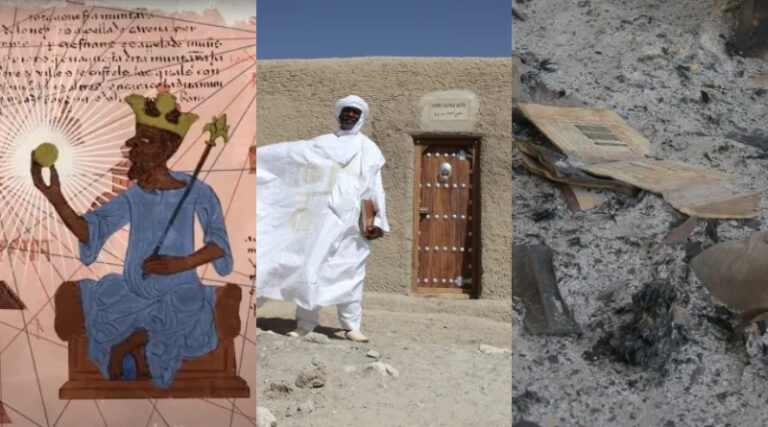
The Mali Empire on the upper Niger River thereafter gained strength and notoriety. The empire became a center of extraordinary study, culture, and architecture after the strong Malian monarch Mansa Musa I quietly acquired the city of Timbuktu in 1324 after returning from his trip to Mecca.
Timbuktu had been a seasonal trading post established in 1100 A.C., where the Saharan Desert and the Niger Delta meet, creating a lush and lucrative agricultural zone. Powerful West African kingdoms and the pastoralist Tuaregs of the Southern Sahara traded here.
And when Islam came to Tuareg societies as early as the 8th century, the Tuaregs passed along the religion through trading posts like Timbuktu, facilitating connections between Arab-Islamic and West African peoples.
Timbuktu developed from a modest but prosperous trading town into a hub of trade and learning under Mansa Musa I and his successors, making the Mali empire one of the most significant of the Golden Age of Islam. Strong Islamic and West African rulers came to Timbuktu from all over the world to trade, learn, and forge solid political alliances.
Timbuktu had 150–180 Qur’anic schools, or Maktabs, by the 16th century. The monarchs of Mali also constructed enormous mosques, not only as places of worship but also as educational institutions for the study of mathematics, law, grammar, history, geography, astronomy, and astrology.
Madrasas Built for Worship and Scholarship
Mansa Musa I significantly improved the Sankoré Mosque, which the Tuaregs had originally built at Timbuktu in the 1100s A.C., by inviting prominent Islamic thinkers, or Ulama, to raise the mosque’s stature.
The Djinguereber Mosque was afterwards built by Mansa Musa I, who hired the eminent Islamic scholar Abu Ishaq Al Saheli in exchange for 200 kilograms of gold. When Tuareg monarch Akil Akamalwa took control of the Mali empire later in the 15th century, he constructed the enormous Sidi Yahya mosque.
The oldest higher education institution in Sub-Saharan Africa is Koranic Sankore University, which was founded from the union of these three educational institutions, or Madrasas.
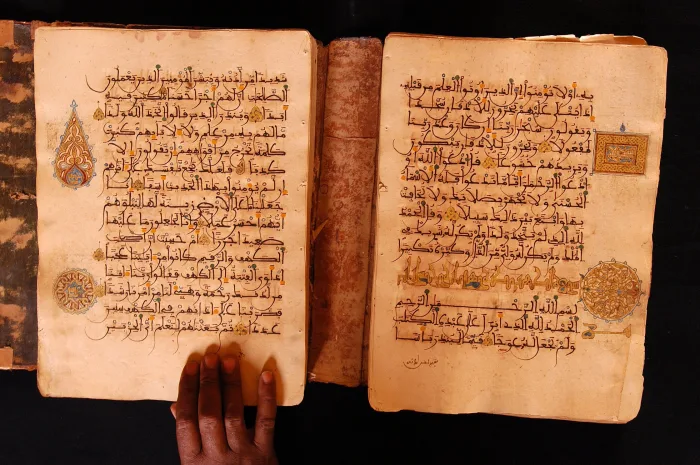
Mosques and schools proliferated in Timbuktu, mirroring what was found in the other flourishing Islamic cities of Cairo and Mecca. In his article African Bibliophiles: Books and Libraries in Medieval Timbuktu, California State University, San Bernardino librarian Brent D. Singleton writes that “in Timbuktu, literacy and books transcended scholarly value and symbolized wealth, power, and baraka (blessings),” and that the acquisition of books specifically “is mentioned more often than any other display of wealth.” The knowledge contained within the books reflected the fabric of Malian society.
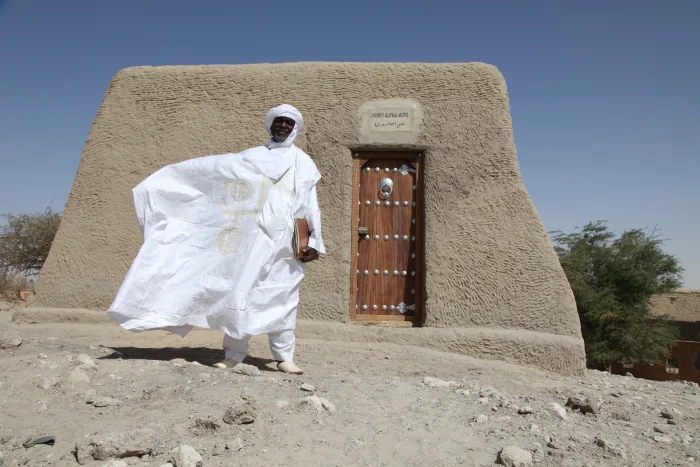
Dr. Abdel Kader Haidara, a Malian scholar who oversees the preservation of over 350,000 manuscripts from this era, says that “in addition to the academic and scholarly literature, there are many parts that contain poetry and dedications to women.” Haidara adds that women have prominent roles in maintaining Malian heritage and contribute to the meticulous work of preserving ancient manuscripts.
In addition, Timbuktu stood out from other significant Islamic cities during the Golden Age of Islam. For instance, Singleton notes that while the mosque libraries in Cairo and Mecca continued to be available to the public, all of Timbuktu’s libraries appeared to have been private collections of specific scholars or families.
Knowledge Passed Down Through Books—And Oral Histories
It is not surprising that books in Timbuktu were prized possessions that were passed down from generation to generation. The practice mirrors the West African tradition of oral histories passed down by griots, esteemed West African musicians and storytellers who were the keepers of the history of the empires and royal families.
Griots originated from the same Mandinka ethnic group that Sundiata hailed from and were responsible for composing his epic. Much like Islamic scholarship and bookmaking in Timbuktu, the role of a griot was only passed down through lineage and was acquired through extensive apprenticeship. Griots continue to practice today and include Malian musicians such as kora player Toumani Diabaté, who can trace his griot lineage to the Golden Age of Islam.
The Mali Empire declined in the 15th century, and was replaced by the Songhai Empire. Askia Muhammad, a military leader from the Malian city of Gao, reigned from 1492 and 1528 and fortified the Islamic learning tradition in Timbuktu that his predecessors had set forth. But soon, Timbuktu found itself under threat when the Moroccan Saadian dynasty invaded the Songhai Empire in the late 16th century. Much of Timbuktu’s centers of learning were destroyed and many people’s possessions, including important manuscripts, were lost.
The cities of Timbuktu and Gao were nonetheless able to maintain a high degree of autonomy from the Saadians, and in 1632, they declared independence from the Saadian dynasty. However, the Golden Age of Islamic scholarship, architecture and culture in the Songhai empire and across West Africa had seriously diminished.
Attacks on Timbuktu’s Manuscripts
The city’s manuscripts were still widely used to educate in the Qur’anic schools and great mosques during the Saadian occupation of the Songhai empire. But when the French arrived in West Africa in the 17th century, many of the cultural products of Timbuktu were looted and taken to Europe, ending the widespread practice of learning through the manuscripts. These were not the only attacks on the legacy of Timbuktu.
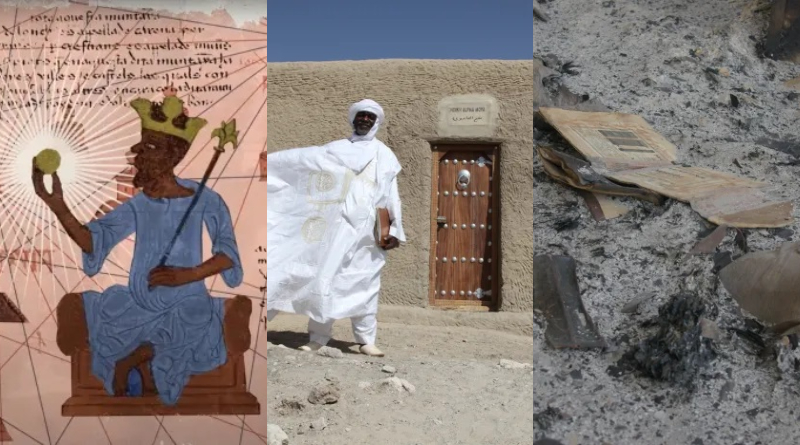
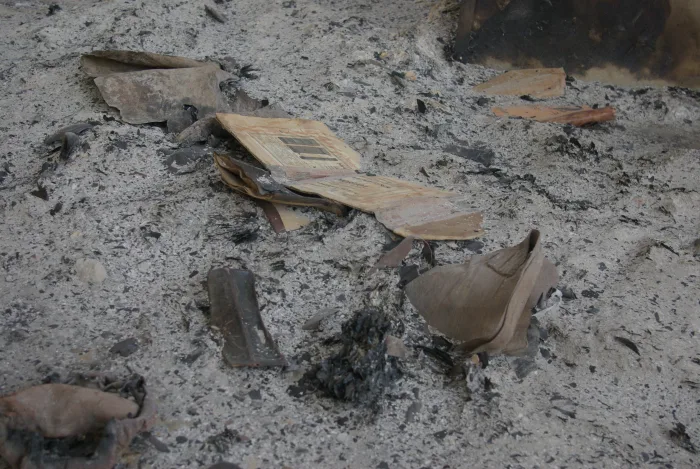
In 2012, militants tied to al Qaeda in the Islamic Maghreb (AQIM) took over Northern Mali and began destroying anything perceived as haram or forbidden to their religious practice, including generations-old manuscripts that characterized the ancient city of Timbuktu. With a small team, Haidara rescued over 350,000 manuscripts from 45 different libraries in and around Timbuktu and hid them in Bamako—the capital of Mali. On many occasions Haidara and his allies were threatened by al Qaeda militants and accused of stealing—a crime punishable by death or mutilation.
But Haidara eventually built the Mamma Haidara Library in Bamako, naming it after his father, who was also a scholar and keeper of manuscripts. In 2022 Google Arts & Culture launched an online archive of manuscripts guarded by Haidara and his team. “While griots recall history from memory and ingenuity, the manuscripts are the discernible history of Mali,” says Haidara. The manuscripts serve as tangible evidence that the Mali Empire and its great city of Timbuktu were foundational to the legacy of West African and Islamic scholarship.
Through the work of Haidara, mirroring the oral tradition of groups like the griots, the preservation of Malian history remains a continuous mission. “Even I don’t know everything that is in the manuscripts,” says Haidara. “Everyday I learn something new from and about them.”
On St. Simons Island in Glynn County, Georgia, along Dunbar Creek lies a historic location called Igbo Landing or the Igbo landing mass. When Igbo captives from what is currently Nigeria were transported to the Georgia coast in 1803, it resulted in one of the biggest mass suicides of enslaved people in history.
The slave ship Wanderer brought the Igbo and other captives from West Africa to Savannah, Georgia, in May 1803. Slave traders John Couper and Thomas Spalding paid an average of $100 for each of them, with the intention of reselling them to plantations on nearby St. Simons Island.
The chained slaves were packed below deck of the York, a coastal ship that would transport them to St. Simons. About 75 Igbo slaves revolted during the voyage, took control of the ship, drowned their masters, and as a result the ship grounded in Dunbar Creek.
The sequence of events that occurred next remains unclear. It is known only that the Igbo marched ashore, singing, led by their high chief. Then at his direction, they walked into the marshy waters of Dunbar Creek, committing mass suicide. Roswell King, a white overseer on the nearby Pierce Butler plantation, wrote the first account of the incident.
He and another man identified only as Captain Patterson recovered many of the drowned bodies. Apparently only a subset of the 75 Igbo rebels drowned. Thirteen bodies were recovered, but others remained missing, and some may have survived the suicide episode, making the actual numbers of deaths uncertain.
Regardless of the numbers, the deaths showed a strong tale of resistance as these slaves overpowered their masters in a foreign nation. Many of them chose to commit suicide rather than continue to be held as slaves in the New World.
Over time, The Igbo Landing gained immense symbolic significance in the local African American culture. Many locals referred to the Igbo people’s revolt and eventual suicide as the first freedom march in American history.
Locals reported that the Igbo slaves’ ghosts haunted the Landing and nearby marshes in Dunbar Creek, where the Igbo people committed suicide in 1803.
The story of Igbo, who chose death over slavery which had long been part of Gullah folklore, was finally recorded from various oral sources in the 1930s by members of the Federal Writers Project.
While many historians for centuries have cast doubt on the Igbo Landing mass suicide, suggesting that the entire incident was more legend than fact, the accounts Roswell King and others provided at the time were verified by post-1980 research which used modern scientific techniques to reconstruct the episode and confirm the factual basis of the longstanding oral accounts.
The St. Simons African American community had a two-day commemoration in September 2002 that included Igbo history-related activities and a procession to the scene of the mass suicide.
75 people attended, representing various US states as well as Nigeria, Brazil, and Haiti. The participants declared the area to be sacred ground and demanded that the spirits be laid to rest for all time. The Igbo Landing is currently covered in coastal Georgia schools’ curricula.
European Christianity and Slavery: The concept of race and racial hierarchy did not determine who could and could not be sold into slavery in Western Europe prior to the New World’s invasion.
Instead, the Early Middle Ages, which spanned the fifth through the ninth centuries, marked the limits of slavery in Europe. According to historian David Brion Davis, it was eventually possible to avoid European Christians enslaving one another because to the Judeo-Christian belief in a monotheistic God who rules over a single race of people.
As more people in western Europe adopted Christianity, slavery on that continent gradually declined, but other rigid social and economic structures persisted. By the year 1500, Christians in Europe thought that slavery was a more cruel penalty than death for offenders and prisoners of war.
In northwestern Europe, non-Christian (or pagan)
Between the fifth and the eleventh century, Vikings frequently assaulted coastal settlements in search of slaves. While certain regions were shielded from these slave expeditions by the Norman Conquest of England in 1066, tensions and conflicts between Christian and non-Christian Europeans persisted.
Even when a large number of Irish Celts adopted Christianity beginning in the fifth century, English Christians still thought less of them because they believed they continued to follow pagan rituals in their religious practices. In later years, the English were able to defend Irish colonization with the aid of their feeling of Christian superiority.
Another factor in the split between Christians and Muslims was the Christian crusades of the High and Late Middle Ages, which were conducted against Islamic countries in the eastern Mediterranean, western Asia, and northern Africa.
Religious wars were already raging prior to the trans-Atlantic commerce when Islam began to spread in the fourteenth century through the Ottoman Empire, which by the sixteenth century included parts of Southeast Europe, North Africa, Western Asia, and the Middle East. In addition, Barbary corsairs (or pirates) invaded coastal towns in Europe from the fifteenth through the nineteenth century and sold European Christians into the Islamic slave trade.
In the end, European Christians were aware of the prospect of slavery even under the protection of church law.
In response to these conflicts, a series of fifteenth century popes argued for the enslavement of non-Christians as “an instrument for Christian conversion.” According to church law, Christians were protected from slavery, but Muslim “infidels” and non-Christian “pagans” were acceptable to enslave. Similarly, in Islamic law, only non-Muslims could be enslaved. While Jewish populations living in Christian-dominated Western Europe were protected from slavery in the Middle Ages, widespread anti-Semitic prejudices amongst European Christians led to Jewish persecution, exile, violent massacres, and even accusations of causing the Black Death.
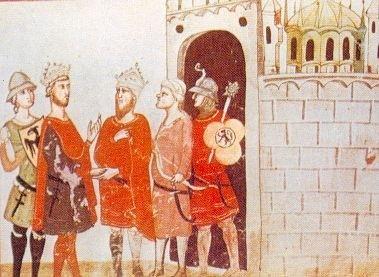
Emperor Frederick II, a Christian crusader from Italy, meets al-Kamil, Muslim ruler of Egypt, during the Sixth Crusade (1228-29), from a manuscript of the Nuova Cronica by Giovanni Villani, ca. 1341-48.
In the New World, the criteria for enslavement increasingly shifted from non-Christian to non-European. As Europeans began emphasizing religious, racial, and ethnic differences between themselves and American Indians and Africans, this boundary moved further, from non-European to non-“white,” particularly to enable the enslavement of “black” Africans and their African American descendants.
The recovery of classical Greek texts before and during the European Renaissance also provided philosophical and theological justification for a Christian social hierarchy that included slavery. For example, the Greek philosopher Aristotle (384 BC to 322 BC) produced writings about slavery that influenced prominent Christian theologians such as Thomas Aquinas in the thirteenth century, and later provided legal and moral justifications for implementing slavery based on a racial hierarchy in the sixteenth century.
Aristotle argued that the master and slave relationship was natural and that some are marked out for subjection, others for rule. Aquinas built on Aristotle’s argument to assert that the slave was the physical instrument of his owner. This condition allowed a slave owner to claim everything his or her slaves possessed and produced, including their children.
Aquinas attributed the plight of enslavement to sin and the inevitable conditions of a sinful world. Other theologians before and during the Renaissance emphasized Aristotle’s belief in a natural order, but asserted that some men were slaves by their very nature.
Based on this evolving theology, European Christians initially saw non-Christians as “natural slaves.” With New World expansion, however, Europeans came to primarily associate Africans with the institution of slavery.
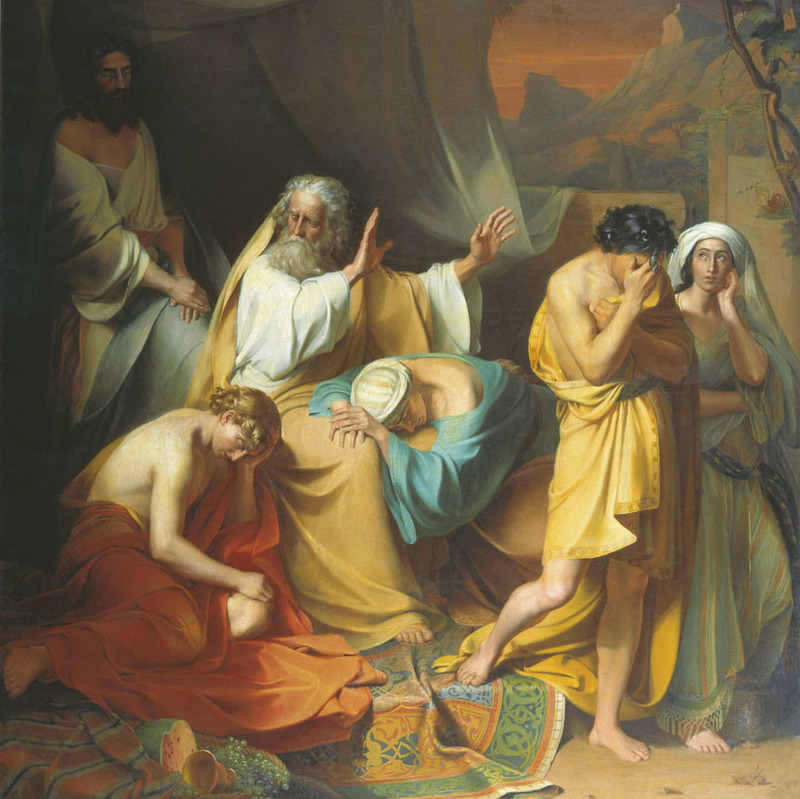
To explain this racial shift from a Judeo-Christian worldview, sixteenth and seventeenth century theologians merged Aristotle’s theory of “natural slaves” with the biblical Curse of Ham. According to this interpretation, Africans are the descendants of Ham and Canaan, who Noah cursed into slavery for Ham’s transgressions (Ham is Noah’s son and Canaan’s father).
Though the Bible does not mention race or skin color in this narrative, according to these sixteenth and seventeenth century theologians, Africans inherited Ham and Canaan’s curse of slavery. By the nineteenth century, pro-slavery advocates in the United States continued to use this misleading biblical justification, as well as Aristotle’s theory of natural order and New World racial prejudices, to defend their support of slavery.
Togbe Tsali who was a great Anlo had super natural powers and a member of the Tsiame royal clan of present-day Volta Region.
Togbe Tsali lived during the reign of the wicked king called King Agorkoli at Notsie. As a result of the wicked treatment the people received from their king, he(Togbe Tsali) decided to run away to a new location(Eweland) with some of the people.
He transformed himself into a flying spirit and surveyed the Eweland. On his return, Tsali convinced the people that the land is good; hence, they should run at night and possess it.
Late in the night, they poured water on the land to make it dust-free in order to escape without being detected. When King Agorkoli realized the next day that most of his people had fled, he organized his army to chase them and bring them back.
However, on their way, Togbe Tsali asked the people to move backwards. This confused the soldiers because they could not determine the direction the people moved. Other account has it that he changed into a mouse and changed the direction of their footprints in order to confuse the soldiers of King Agorkoli.
When they arrived at the Eweland, he took to farming and hunting. He cleared a large portion of land in a day, caused rain to fall on the land. He planted maize which matured and was harvested on the same day. Since there was no rain on the other farm lands, the people were forced to buy food from him alone.
This made the people unhappy because he had used his supernatural power to satisfy his selfish ends. Due to the disaffection among the people against Tsali, they decided to kill him. They captured him and buried him. But three days after the burial, he was seen walking around his compound going about his chores.
The people were surprised. They recaptured him, cut him into two pieces and tied stones on the body and dumped it into the River Volta. Three days later, he was seen riding on the back of a crocodile on the river.
He told his people that no person born of a woman could kill him. This improved the relationships between him and his people. He then used his supernatural powers to the benefit of the people. When he was about to die, he asked the people to erect two shrines in his memory. They should call him at the shrines when they needed his assistance.
The two shrines still exist in the volta region today where faithful worship call on him during times of difficulty.
Archaeologists and enthusiasts have been puzzling over Egyptian statues have broken noses for decades.
Statues had a significant role in the culture of Ancient Egypt. Statues of nobles and pharaohs from all the ruling dynasties could be seen among the magnificent architecture, which included luxurious palaces and wonders like the pyramids.
But these statues adhere to a pattern that has archaeologists and history buffs baffled for decades: a case of shattered noses.
There would be as many statues in perfect condition as there would be ones with deterioration, particularly in the nose. Some would shockingly be in perfect shape if it weren’t for a broken nose. This is the mystery of Egyptian monuments and their broken noses, with speculations about colonization and internal political strife among Egyptians cited as possible explanations.
Getting the conspiracy out the way.
Many people who have read into the case of missing or defaced noses in Egyptian statues believe it to be the work of European colonialism. It is said that in an attempt to cleanse the statues of their African roots, the noses were broken as Africans have distinct noses, which are their defining features. This theory, however, is entirely baseless and has no truth value behind it.
Historians have critiqued this by pointing logical fallacies that claim that even if the noses were broken off, other features of the statue would still allow for association with their African roots — features on the statue that weren’t broken off. Despite the horrors that colonialism brought upon the world, breaking Egyptian statues’ noses is undoubtedly not one of them.
A work of Nature?
Knowing that the Europeans weren’t behind this mystery, it is often speculated that this is nothing but merely a work of corrosion. This theory is plausible as the noses of the statues are especially vulnerable because they stick out, and air would affect them the most. Furthermore, there have been many identified cases where natural causes like corrosion are the reason why a part of the face/body of the statue is missing.
However, all of these cases had signs of decay in multiple areas of the statue. The nose wasn’t the only thing targeted, and the accompanying regions like the cheeks or torso of the statues were also damaged. Thus attributing the statues that specifically had only their nose broken off to natural causes is not very likely.
Considering that most of these statues were indoors where they would not be exposed to air makes this theory even weaker.
The Ancient Egyptians viewed Statues as Living Beings.
The theory that does receive the most respect within academia that discusses Egyptian history is that of Iconoclasm and Ancient Egyptian’s belief in the supernatural. Ancient Egypt was known for having a strict religious paradigm, one which believed that individuals’ lives after death were preserved in statues.
While they were aware that these statues couldn’t move, they believed that people’s life force, when they died, were transferred into their respective statues, almost as if they were living beings. To effectively eliminate this life force, the Egyptians believed that they had to destroy the statues.
Hence, it is speculated that people who went to rob the tombs of the nobles and pharaohs would break the nose of the statue first to effectively eliminate this life force as the statue won’t be able to breathe. It sounds ridiculous to think that a statue can breathe, but the Egyptians firmly believed that the nose itself was the source of life for the deceased, and breaking it was the only way they would kill them once and for all.
This theory would explain why so many statues found at burial sites specifically had their noses chopped off with no other sign of natural corrosion.
Where Religious Motives end, Political Motives Start.
Although religious beliefs are strongly theorized to be the reason behind the smashed noses, there were also political reasons for defacing these statues. In the Ancient Egyptian world, the dynasties that came before the current ruling one were often despised and were seen as inferior.
Hence, to solidify their dynasty as the superior one, most rulers would have the statues of previous pharaohs and rulers defaced.
Often they would have the entire statues broken, with severed arms and legs or no remaining torso. In Ancient Egypt, this signified the hatred expressed for those that came before the ruling party. This practice is often deemed synonymous with current politics, where propaganda might be used to tarnish the reputation of the previous governments or ruling parties in order to legitimize the current leader. For the Egyptians, defacing statues was their form of propaganda.
Some causes of broken noses can be attributed to nature and some to simple human error where the statues were knocked over or mishandled. However, there is one growing consensus within the Ancient Egyptian historical academia. The Egyptians were deeply religious people and intentionally broke the statues’ noses to avoid the pharaohs’ wrath while also showing their distaste for previous rulers by ordering these statues to be shattered.
While the mystery of the statues could be solved with ideas of Iconoclasm and religious beliefs, it is clear that these broken noses are definitely not an attempt to whitewash the African race by Western Colonialism.
Queen Elizabeth II has just made history as the only British monarch to be celebrating a platinum jubilee (70 years) on the throne.
With that has come many interesting stories about the long, impactful life of the monarch who turned 96 years in April 2022.
And with Ghana being one of Britain’s most prominent former colonies, it is no wonder the Queen has visited the West African country twice in her lifetime: 1961 and 1999 under Kwame Nkrumah and Jerry John Rawlings respectively.
But there are even more intriguing stories around the reasons Queen Elizabeth II made that first trip to Ghana in 1961 at all cost.
According to the report, there were two principal reasons: the first was to stop Ghana from leaving the commonwealth, and secondly, to eschew the notion of racism particularly because America in 1961 was still denying Black people the right to vote.
When the 35-year-old Queen Elizabeth II touched down in Ghana, she did something that was quite symbolic to the agenda with which she came to the country: the queen danced with Kwame Nkrumah, the newsweek.com indicates.
“In 1961, at the height of the Cold War, Britain and America feared Ghana would leave the Commonwealth and fall under the influence of the Soviet Union, U.K. newspaper The Times reported.
“Up stepped the queen, then 35, on a mission to persuade President Kwame Nkrumah not to leave the partnership of nations she cherished.
“During a visit to capital city Accra, the queen was photographed dancing happily with the Ghanaian leader at a time when black people in America were still denied the right to vote,” the report said.
Bomb scare ahead of Queen Elizabeth’s visit
A report by biography.com said that before the Queen left on the trip, there was great worry among the Members of Parliament and the general public because of rising tensions in Ghana.
More so, they were wary of the visit becoming too dangerous and so on October 19, 1961, Winston Churchill expressed the same sentiments when he wrote to Prime Minister Harold Macmillan, saying in part: “I have the impression that there is widespread uneasiness both over the physical safety of the Queen and, perhaps more, because her visit would seem to endorse a regime which has imprisoned hundreds of Opposition members without trial and which is thoroughly authoritarian in tendency.”
To aid growing tensions, five days before Elizabeth’s trip was to begin, bombs went off in the capital city of Accra, where a statue of Kwame Nkrumah was hit, making it clear that the president was a target.
Concerns about the Queen possibly becoming collateral damage while with him were heightened.
Queen Elizabeth didn’t want to embarrass Ghana
Bent on making the trip to Ghana, Queen Elizabeth II was not disturbed by the bombings. This was also because she was reluctant to reschedule her trip to the country for the second time since she had already cancelled on Nkrumah in 1959 when she became pregnant.
The Queen was equally getting concerned about the closeness of Nkrumah to the Soviet Union and her fears that the country could deflect to it made her more determined to come to Ghana.
Besides, as head of the Commonwealth, the Queen didn’t want to insult or embarrass Ghana by postponing the visit, which could push Nkrumah into leaving the group altogether.
“How silly I should look if I was scared to visit Ghana and then [Soviet leader Nikita] Khrushchev went and had a good reception,” the Queen is quoted to have said, expressing her feeling of competitiveness in the matter.
To further convince her people that her trip to Ghana was important, Queen Elizabeth also told her prime minister, “I am not a film star. I am the head of the Commonwealth — and I am paid to face any risks that may be involved. Nor do I say this lightly. Do not forget that I have three children.”