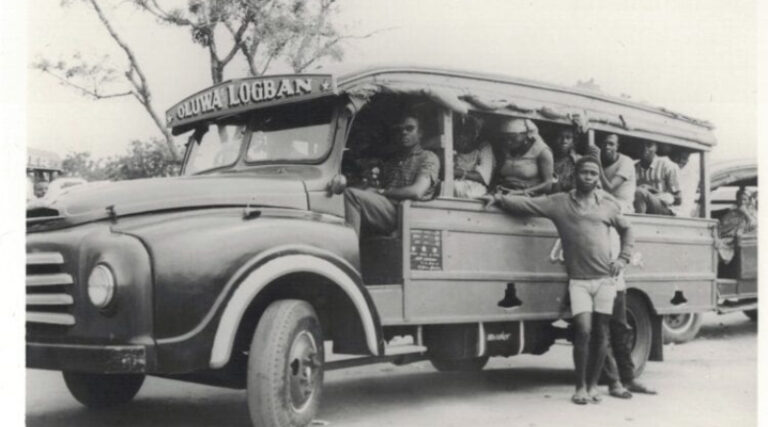
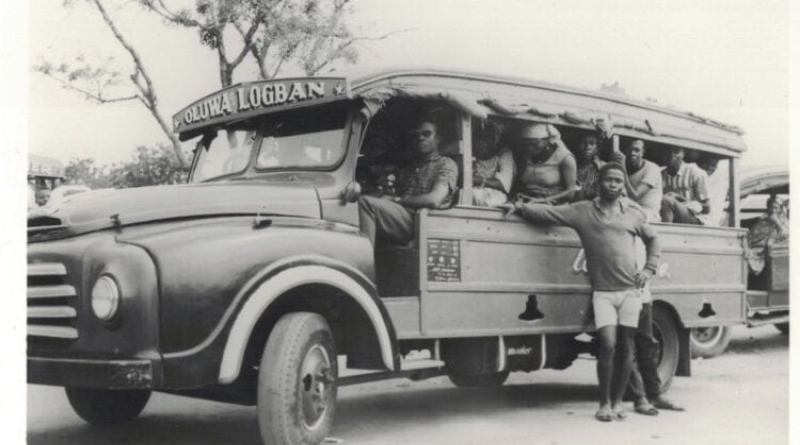
In 1902, the first motor vehicle arrived in the Ghana by then called Gold Coast. The fragile and finicky vehicle, a paraffin fueled and steam driven French Gardner Serpollet car cost £543.
It was brought in for Governor by then called, Matthew Nathan.
The car was a symbol of luxury and Western modernity in the West African colony, but Nathan’s vehicle was also an experiment.
British Secretary of State for the Colonies Joseph Chamberlain had suggested two years earlier that “it might be advisable to employ a motor car as an experiment on the roads near Accra and Cape Coast.”
It was in that regards car came to Ghana. The British colonial officials like Chamberlain believed that motor vehicles would revolutionize.
At that time, cars were used to show wealth and luxury but now, many people in Ghana have cars and many can afford a public means.
In the olden days when cars came to Ghana, it was not common for ordinary person to enter a car. It was only used by well known wealthy people especially people in government.
Krepin Diatta has been trolled heavily on social media over his looks which has been popularly deemed as ugly.
Senegalese player, Krepin Diatta who earlier showed off his gorgeous white girlfriend. The football is currently not happy after several fans mocked him for his alleged ugly facial look.
His team lost yesterday by a lone goal to Algeria although the player had a good game on the pitch.
He wrote; “I am very sad to see some African brothers making fun of me. I work for our beautiful and dear African continent and what I receive in return are only insults, mockery of my brothers.This is too bad of you and racism comes from there. I need your encouragement and not your insults. Thank you to everyone who supports me. Only God makes my strength and I am proud of my physical person.Your mockery won’t change anything in my life. But one thing is for sure, we are all african.”
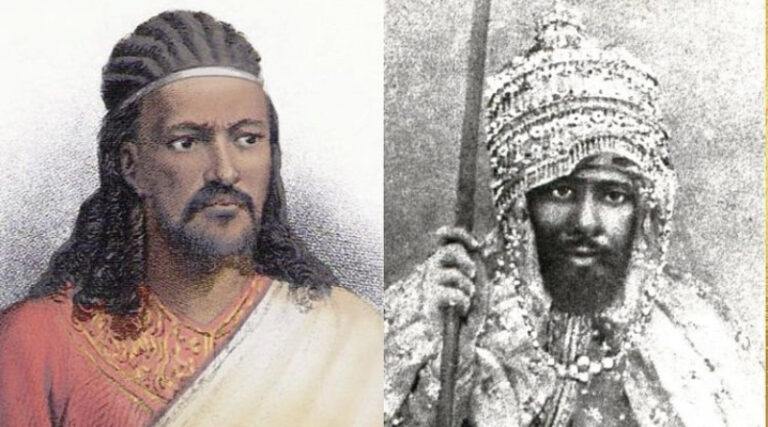
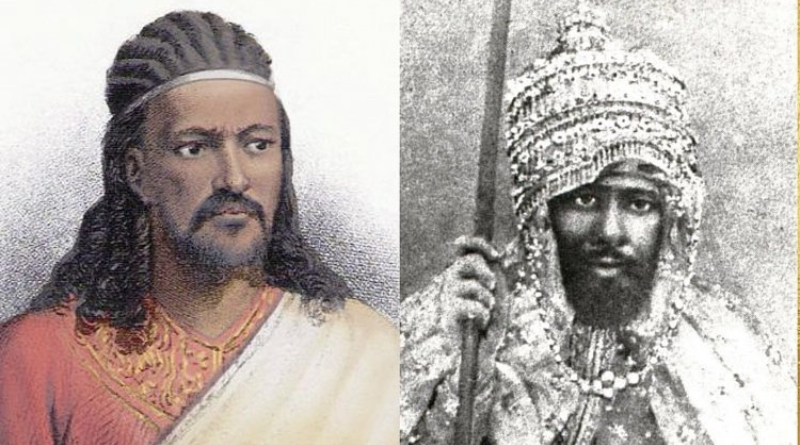
Yohannes IV, a nobleman by birth, a cleric by education, a zealot by faith, moralist by tendency, a monk by practice, a nationalist by policy, and a soldier and emperor by profession
Yohannes IV’s birth name was Kahsai Mrcha. He was born on July 12 1837 at Mai Beha Tembien. His father was Shum Tembien Mircha Woldekidan ofTembien.
Mircha’s mother Woyzero Workewoha Kalekirstos was the grand daoughter of Ras Suhulmikael Eskiyass of Adwa Where he traces his royal blood.
Kahssai’s (Emperor Yohannes) mother was Woyzero Silass Dimtsu, daoughter of Dejazmach Dimtsu of Enderta. Her mother was woyzero Tabotu Woldu Agame; sister of Dejazmach Sibagadis Woldu of Agame. So Emperor Yohannes on his father’s side is from Timbien and Adwa. On his mother’s side he is from Enderta and Agame.
He defeated Wagshum Gobeze (Emperor Tekle Giyorgis) on July 11 1871 30 kms from the city of Adwa. Gobeze had 60,000 troops and Kahssai had 12,000 troops. Gobeze’s wife was kahssai’s sister. Before the crushing defeat Gobeze’s wife warrned him saying the following poem.
Dejazmach Kassai was crowned emperor January 12, 1872 at the historic Tigraian city of Axum. He took the name and title of Emperor Yohannes IV, King of Zion and King of Kings of Ethiopia, becoming the first emperor crowned in that historic city since Emperor Fasilides in 1632.
Emperor Yohannes was an extraondinary military leader and a very religous king. He was the top vangaurd of Ethiopia. On October 11 1875 Egypt occupied the city-state of Harrar and they were advancing from the port of Masswa on the north.
Yohannes marched up north and met them at Gundet on November 16 1875. The Egyptians did not know the local area and they were fooled in to marching in to a narrow and steep valley and were wiped out by the Eperor’s troops hiding on the valley from the surrounding mountains.
Most of the Egyptian force, along with its many officers of European and North American background, was killed. He also defeated them again at the battle of Gura on march 9 1876.
At the end he was betrayd by the shewan king, menilk who secretly signed an agreement with Italians to invade the country from the north in exchange of the crown.
In 1889 Yohannes was battiling so many domestic and external enemies at the same time. The mahdists from sudan on the west, the Italians on the north, Menilk on the south and the Gojams on the south west.
He decided to defeat the Mahdists from Sudan and he did, but at the end of the battle Mortally wounded by a sniper bullet he died after a few hours Battle of Metemma on March 9, 1889.
More often than not, when Canadians discuss slavery, they like to speak at length about the role they played in the mid-1800s providing a safe haven for enslaved people fleeing plantations in the southern U.S. via the Underground Railroad.
And though the story of the Underground Railroad is a significant moment in Canadian history that lasted for about 30 years, one must also not forget that for more than two hundred years, slavery happened in Canada, too.
Curiously, authorities in the country, including edifices and museums say little of the indigenous people and Africans they enslaved, and how they benefited from the inhumane practice.
As records show, slavery in what is now known as Canada began long before European traders and colonists arrived.
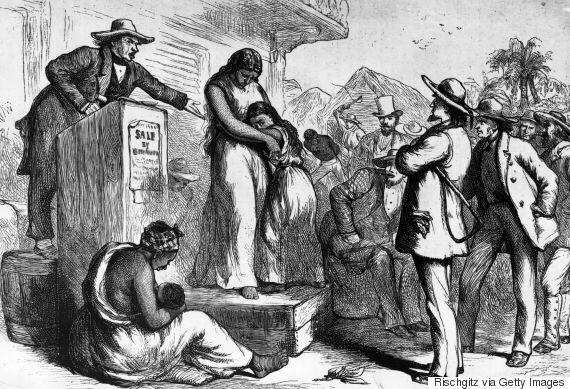
At the time, indigenous people enslaved prisoners taken in war, but the Europeans introduced another form of slavery, where individuals were viewed as property that could be bought and sold. In other words, the buying, selling and enslavement of Black people were practiced by Europeans in New France — the first major settlement in what is now Canada — in the early 1600s until the territory was conquered by the British in 1759.
At the time the British took over, it is documented that out of a population of 60,000, around 4,000 were enslaved — about 7 percent of the colony. Many of them were indigenous slaves, usually known as Panis, and enslaved Black people who were largely transported there during the transatlantic slave trade.
Between 1525 and 1866, 12.5 million Africans were shipped to North America, the Caribbean and South America, according to the Trans-Atlantic Slave Trade Database. Only about 10.7 million survived the dreadful journey under bondage in slave ships, and for a two-century period, settlers in what would eventually become Canada were involved in the trade.
Indeed, when the British took over New France, it did continue with slavery and even renamed New France territory (now Canada) as British North America. Soon, enslaved Black people replaced indigenous slaves.
However, these enslaved Black people made up a much smaller proportion of the population as compared to the United States, and some historians including Denis Vaugeois have even argued “these weren’t really slaves, they were more like servants and they were treated like members of the family.”
Nevertheless, slavery in what is now Canada was just as barbarous as in other states.
As a matter of fact, slaves were beaten, sexually abused, or even killed when they tried to escape. “Most wills from the time treated enslaved people as nothing more than property, passing on ownership of human beings the same as they would furniture, cattle or land,” writes the Canadian Museum for Human Rights.
Just as experienced in other states, enslaved people in British North America presently Canada also rebelled against their conditions. In 1777, a number of them escaped from the territory into the state of Vermont, which had just abolished slavery.
In British North America, however, slavery continued. Influential colonists including McGill University founder James McGill, Upper Canada administrator Peter Russell and Father Louis Payet, the priest of Saint-Antoine-sur-Richelieus, owned slaves. Ordinary people did too.
“Slave ownership was found at every level of colonial Canadian society, whether French or English, working on farms, in bakery shops, working in leather tanning, slave orderlies working in hospitals, working for merchants, working in the fur trade as slave canoe paddlers for Scottish and French Canadian fur traders crisscrossing the country,” said historian George Tombs.
“We all know how important the fur trade was for the building of Canada and bringing Canada together but how much do we know about the aboriginal slaves bought and sold as part of the fur trade? Not much.”
Sadly, even when enslaved Black people were freed, they usually had to work as indentured servants (doing unpaid labor) for years in exchange for food, shelter and transport.
By the late 1700s, large groups of Black settlers, mainly former enslaved people, started arriving in Nova Scotia, Canada after the American Revolution. Scores of them were promised land and freedom in the province but things went sour when they arrived and had to face white settlers who viewed them as inferior.
Thus, many Black settlers moved towards the margins of society and began building vibrant communities. It was during this same period — on March 25, 1807 — that the slave trade was abolished throughout the British Empire of which British North America was a part. Slavery in itself came to an end in 1834 giving rise to the Underground Railroad movement where Canada became a safe haven for runaway slaves.
To date, amid concerns of discrimination against Black Canadians, the country usually prefers to showcase its role in the Underground Railway rather than its history of slavery. But things are likely to change as Charmaine Nelson, a former art history professor at McGill University, is launching the first research institute in the country dedicated to the study of Canadian slavery.
The Institute for the Study of Canadian Slavery will be established at the Nova Scotia School of Art and Design (NSCAD) in Halifax.
“The impact of Dr. Nelson’s work to uncover, preserve, and share the difficult history of Transatlantic slavery will start here in Halifax — a city that continues to confront systemic racism built on generations of discrimination — and it will ripple across the country and around the world,” Andy Fillmore, the Liberal MP for Halifax, said.
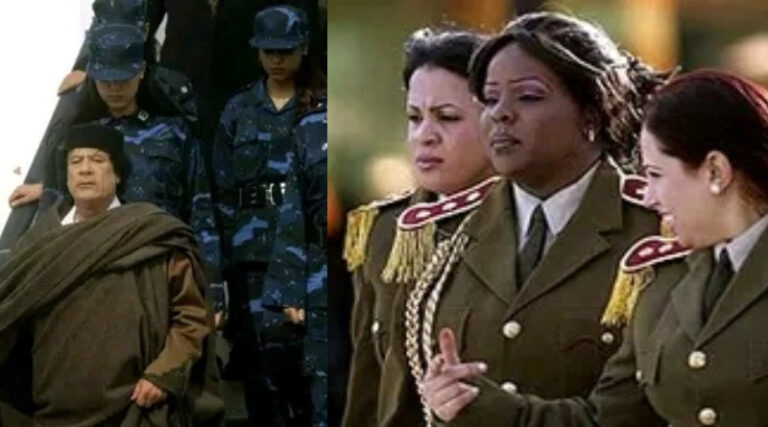
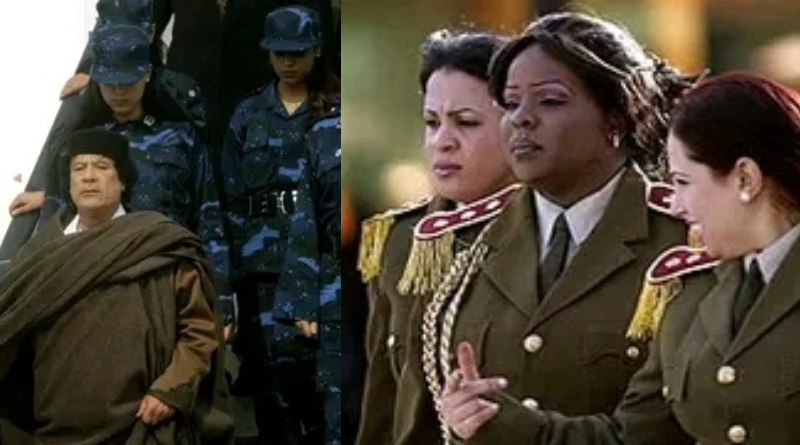
In today’s article, we are going to look at what Gaddafi female bodyguards went through in the hands of the Libyan leaders.
Information gathered shows that the former bodyguards said Gaddafi and his sons raped and abused them and then discarded the women once the men became “bored” with them.
Benghazi-based psychologist Seham Sergewa has collected the details for use by the International Criminal Court (ICC), which is investigating possible war crimes by Gaddafi and his associates.
Gaddafihas kept a cadre of about 30 women, known as his Amazonian guard, close by his side since the early 1970s. At times, the women took bullets for Gaddafi — one woman died and two were injured when the Libyan leader was attacked in 1998.
The strongman asked his female bodyguards not only for their protection but also for oaths of virginity, and that they are dressed in camouflage, nail polish, coiffed hair, and heavy mascara.
The source said that one of the bodyguards said, she was blackmailed into joining the unit after the regime told her that her brother had been smuggling drugs into Libya and she would go to jail unless she agreed to join the brigade.
“A pattern emerged in the stories,” the Times reports. “The women would be first raped by the dictator and then passed on, like used objects, to one of his sons and eventually to high-ranking officials for more abuse before eventually being let go.”
Serge is also investigating claims that Gaddafi soldiers systematically raped women during the conflict. Some women have come forward saying they were raped by as many as 20 soldiers at a time.
“In one case, a girl, around 18 or so, said she was raped in front of her father. She kept telling him not to look at her,” Serge said.
Other victims have committed suicide or were contemplating it.
ew reports show that the violence against women may extend to Gaddafi’s son Hannibal and wife Aline Skaf, as well. At Gaddafi’s seaside homes, CNN discovered that Hannibel’s nanny had been beaten, starved, and repeatedly burned.
Since June, many Libyan women have also been asked to join the armed forces to fight against the rebels.
“We are going to make sure that every mother, the symbol of love and creation, is a bomb, a killing machine,” government spokesman Moussa Ibrahim.
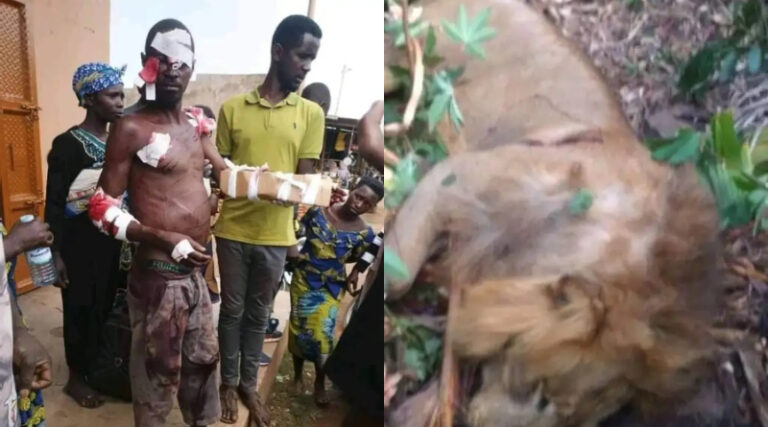
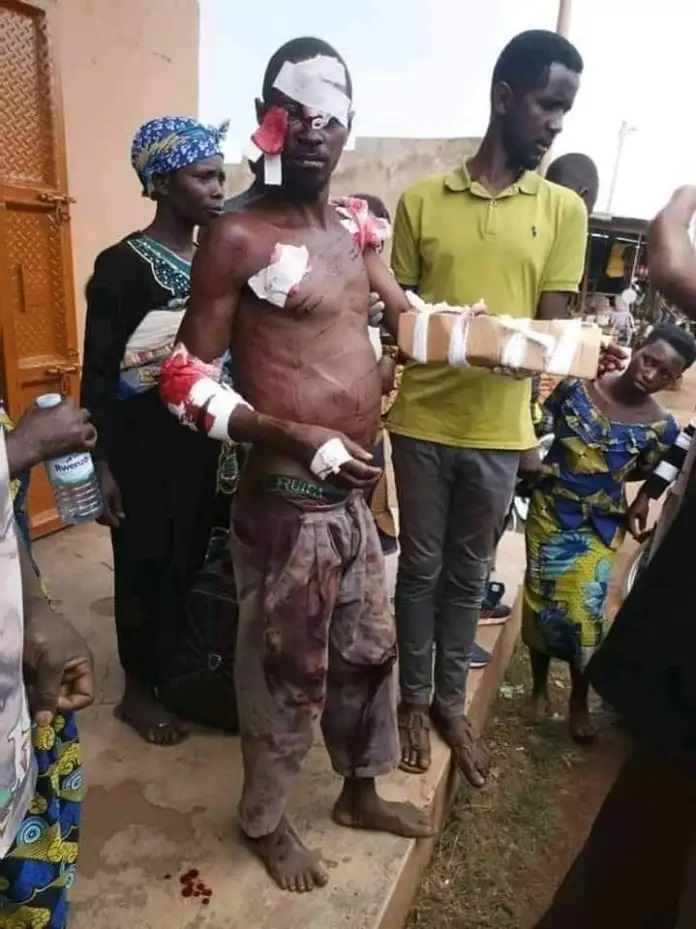
A man has replicated the adventure of Sampson in the Bible as he fought with a lion and won.
Not only did he win, but, he also made sure that the lion did not come out of the fight alive as he killed it. The incident happened Mpefu Kagadi District in Uganda.T
The post we saw on Facebook about the fight reads;
“As seen on Twitter… A man from Mpefu Kagadi District in Uganda had a one on one fight with the lion and he k.illed it with his 2 hands! Brave men are from Africa.
“Infact, we are just waiting for him to come back from the Hospital today and we are planning to crown him the “New King of the Jungle”, that creature has been a real Problem in this village”, said the Local Council Chief.
However the Central government Wild Life Officials have said that the New Ruler must still explain to the authorities why he never chose to run away first as the law advises and clearly stipulates under such circumstances.”
Nigeria international Kelechi Nwakali claims SD Huesca terminated his contract after he played at the Africa Cup of Nations against the Spanish club’s wishes and he then turned down a transfer in January.
The 23-year-old said he “will no longer suffer in silence” as he made a series of allegations against SD Huesca in a statement posted on Twitter.
Midfielder Nwakali alleges Huesca sporting director Ruben Garcia pressured him not to join the Super Eagles squad for January’s Nations Cup and that the club had been “abusing its power” in an attempt to force him to sign a new contract, including failing to pay his wages on time.
Huesca “completely deny and disagree with the player’s accusations” and say they will defend themselves in court if required.
“The club has acted at all times with the utmost respect for the player,” a Huesca statement said.
“Given the seriousness of some of the statements made, the club reserves the exercise of any actions it deems appropriate in defence of its legitimate rights and interests.”
The second-tier outfit announced it had terminated Nwakali’s deal, which was due to expire at the end of this season, on Tuesday but did not give a reason for the decision.
Nwakali’s final appearance for the club had come against Girona on 2 January, before he departed for international duty.
Nwakali featured three times for Nigeria at the Nations Cup in Cameroon, but missed their last-16 defeat by Tunisia through illness.
He also claimed he had been made to train alone after returning to Huesca on 1 February.
Nwakali joined Huesca from Arsenal in September 2019 and featured a total of 33 times during his time with the club.
“All I want to do is get back to playing the sport I love,” Nwakali added.
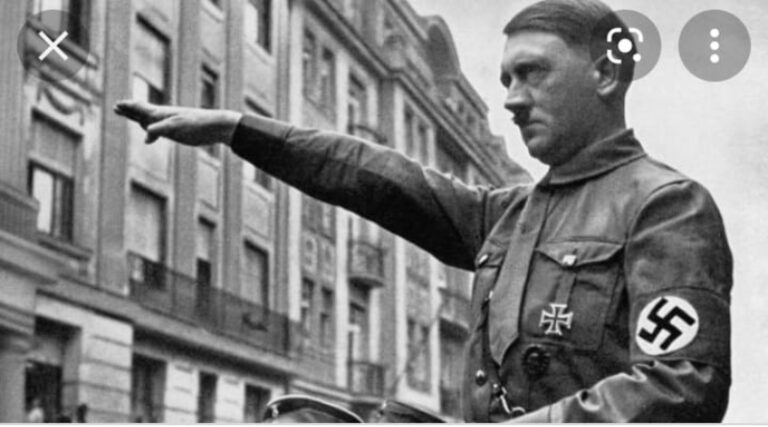
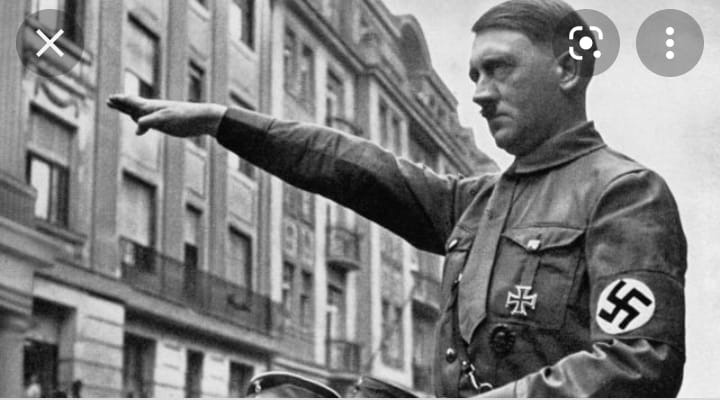
Here is Adolf Hitler Ordered The Invasion Of The Soviet Union In 1941
In June 1941, Adolf Hitler ordered an invasion of the Soviet Union. By the end of 1941, German forces and the European Axis powers occupied most of Europe and North Africa.
These gains were gradually reversed after 1941, and in 1945 the Allied armies defeated the German army.
After the outbreak of war in 1939 came the added fear of Soviet expansion in Eastern Europe, while Germany was fighting the British Empire and France in the west.
All of these factors contributed to the decision taken by Hitler in July 1940, after the German defeat of France, to plan for an all-out assault on the Soviet Union.
In August 1939, Germany and the Soviet Union signed a non-aggression pact in Moscow. The pact stunned the world because of the parties’ earlier mutual hostility and their conflicting ideologies.
The conclusion of this pact was followed by the German invasion of Poland on 1 September that triggered the outbreak of World War II in Europe.
According to France24.com, Hitler intended to destroy what he saw as Stalin’s ‘Jewish Bolshevist’ regime and establish Nazi hegemony.
The conquest and enslavement of the Soviet Union’s racially ‘inferior’ Slavic populations would be part of a grand plan of ‘Germanisation’ and economic exploitation lasting well beyond the expected military victory.
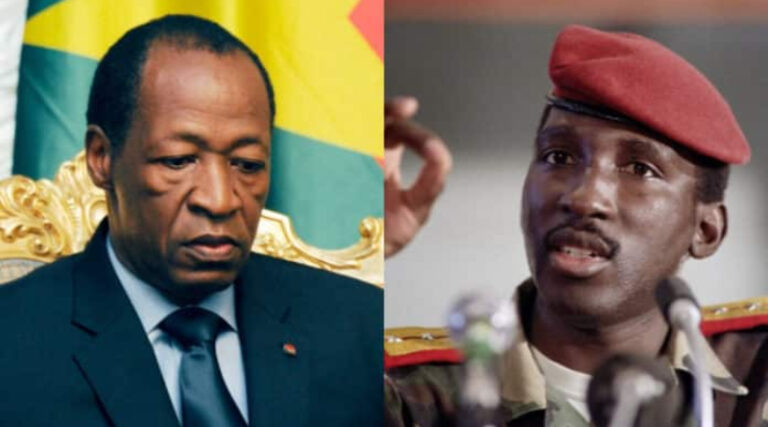
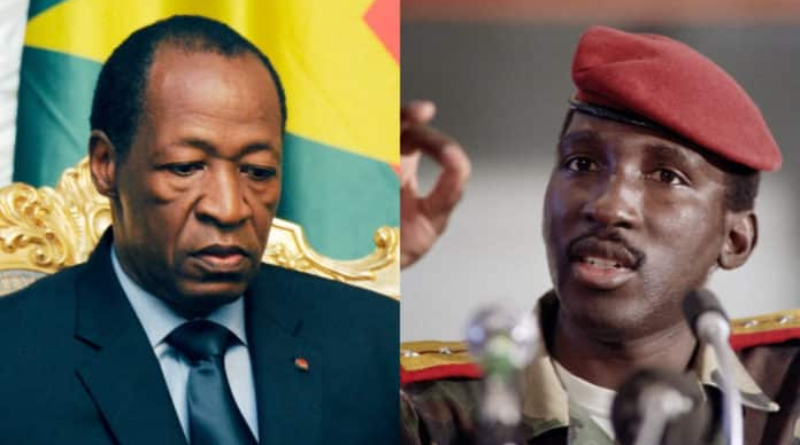
A court in Burkina Faso has finally sentenced the former president, Blaise Compaoré, to life in prison for the murder of his predecessor, Thomas Sankara.
Sankara, who was not one of those African leaders to be told what to do by western nations, was murdered after four years in power in a coup led by his former friend Blaise Compaoré, reports face2faceafrica.com.
The court, after a six-month trial, handed down the sentence to the former president in absentia. Hyacinthe Kafando, Compaoré’s former security chief who is accused of leading the hit squad, was also found guilty.
Compaoré succeeded Thomas Sankara and ruled Burkina Faso for 27 years before being removed from power in a 2014 uprising following his decision to extend his tenure.
He fled to Ivory Coast, where he has since been in exile.
The ex-leader has denied involvement in Sankara’s murder.
History confirms that the Moors ruled in Europe, primarily Spain and Portugal for almost 700 years.
They were known for their influence in European culture, but not many people know that the Moors were actually Europeans of African descent.
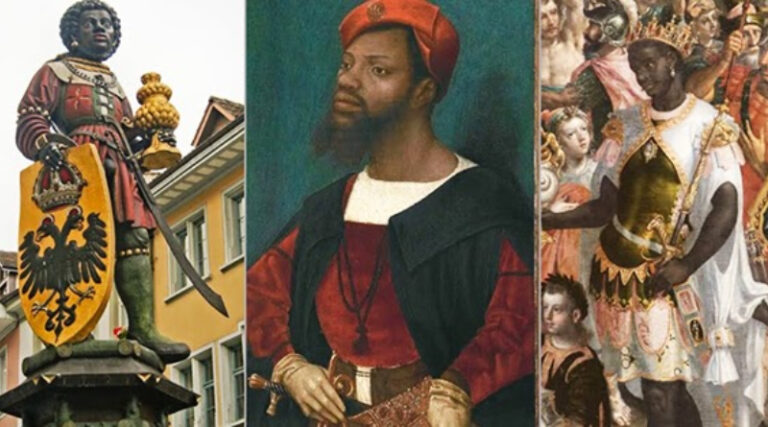
Moors were usually depicted as being “mostly black or very swarthy, and hence the word is often used for negro,” according to the Oxford English Dictionary.
Several written works at the time also confirm that. The 16th century English playwrights William Shakespeare used the word Moor as a synonym for African and Christopher Marlowe used Moor and African interchangeably.
Author and historian Chancellor Williams said “the original Moors, like the original Egyptians, were black Africans.” An Arab chronicler also described Moorish Emperor Yusuf ben-Tachfin as “a brown man with wooly hair.”
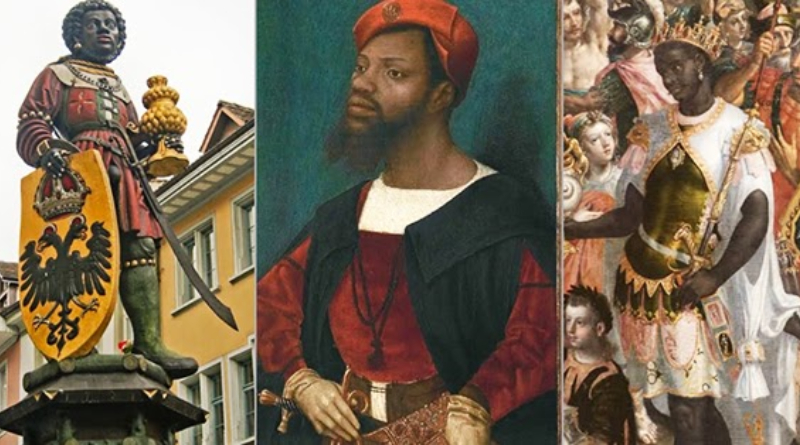
In European Art, Moors are also often shown with African features: pitch black, frizzled hair, flat and wide face, flat-nosed, and thick lips. The Drake Jewel, a rare documented piece of jewel from the 16th century, seemed to show a profile of a Black king dominating the profile of a white woman.
Moreover, Moors were known to have contributed in areas of mathematics, astronomy, art, cuisine, medicine, and agriculture that helped develop Europe and bring them from the Dark Ages into the Renaissance.
Generations of Spanish rulers have allegedly tried to abolish this era from the historical record. But recent archaeology determined that Moors indeed ruled in Al-Andalus for more than 700 years — from 711 A.D. to 1492.