Author

knowafricaofficial

Browsing

Here are the five countries with the highest poverty rate.

There is no doubt that poverty is almost everywhere in the world, but some countries have the highest rate in terms of poverty.

READ ALSO: African Lady Goes Viral After Revealing The Reason Why She Cut Off Her Breasts (DETAILS)

1) South Sudan – 82.30%

Poverty

According to Worldpopulationreview, About 82% of the population in South Sudan is poor according to the most recent estimates, based on the $1.90 2011 purchasing power parity poverty line.

2) Equatorial Guinea – 76.80%

Poverty

More than 70% of the population lives in poverty in Equatorial Guinea, and over 40% lives in extreme poverty. More than 50% of the population is under 18 years of age and child poverty is higher than adult poverty because of the larger number of children in poor house- holds.

3) Madagascar – 70.70%

According to the World Bank, about 70% of people in Madagascar are estimated to be living on less than $1.90 per day. This number has decreased since the last official statistic in 2012 (when 77.6% were living in poverty in Madagascar). Still, this remains one of the highest poverty rates in the world.

4) Guinea-Bissau – 69.30%

Poverty

Guinea-Bissau has been plagued by political instability since it became independent in 1974, resulting in a lack of development and high levels of poverty. Nearly 70 percent live below the poverty line, with high infant and maternal mortality rates and a countrywide chronic malnutrition rate of over 25 percent.

5) Eritrea – 69.00%

Poverty

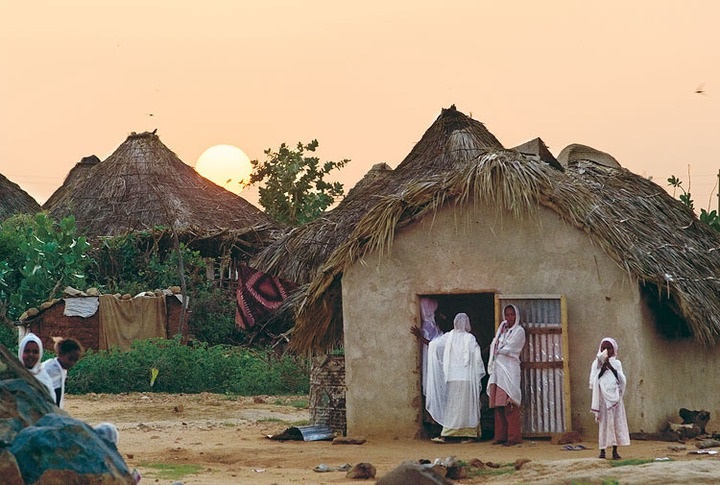
Eritrea is a small northeastern country in Africa, surrounded by the larger Somalia, Ethiopia and Sudan. It is home to nearly 5.4 million individuals, of which, about 65-69 percent live in poverty.

SOURCE: www.knowafricaofficial.com

One of the top Tv Presenters in Ghana, Captain Smart was live on his early morning show on Onua TV where he described President of Ghana, Nana Addo Dankwa Akufo Addo as an “apology of political contempt”.

Captain Smart is one of the freedom fighters in Ghana, and one of their goals is to expose any corrupt leader in Ghana. He is well known for bringing out top secrets on how this country is being run by criminals and he always backs his facts with documents or evidence.

Captain Smart

He made a very long speech during the morning show and the Ghanaian Tv personality said that “I very sorry to all Ghanaians that campaigned for the President of the Republic of Ghana Nana Addo Dankwa Akufo Addo”.

Captain Smart then went on to say that until he loses his seat on Onua TV which happens to be his home now after being sacked from Angel Tv, there is no politician in Ghana who can offer him a bribe.

He then made his reasons known by saying; “blood money”. He explained why he said “blood money” from the point of view that, the money politicians have been spending during the campaign is money for Ghanaians and therefore he can not take it as a bribe.

Captain Smart hints at the reason why there is no traffic in Accra as on Monday, he says “there was no traffic in the towns of Accra this morning because of the increased in fuel price and people are in fear to move their vehicles.”

During the hottest morning show in Ghana, Captain Smart made it clear by saying;

“Government may not be able to pay this month salary since the government may go in for assistance from IMF (International Monitory Fund). Nana Addo Dankwa Akufo Addo, Okyere Dark and one other politician’s tweet made it known that, they are interested in going for a loan at IMF.” He added.

“Nothing can make me become a member of the National Democratic Congress Party”, Captain Smart boldly disclosed.

One of the last thing ladies will get rid of on their body is their breast. Breasts was given to ladies for a purpose but in this article an African Lady has gotten rid of hers and stated her reason.

There is no doubt that one of the things men like about women is their breasts and most men sees it as one of the impressive and fascinating organs. Many women consider their breast as their God giving pride and asset.

Breasts

One of the main uses of breast in Africa is to feed babies, attracting the opposite gender, and for cosmetic purposes.

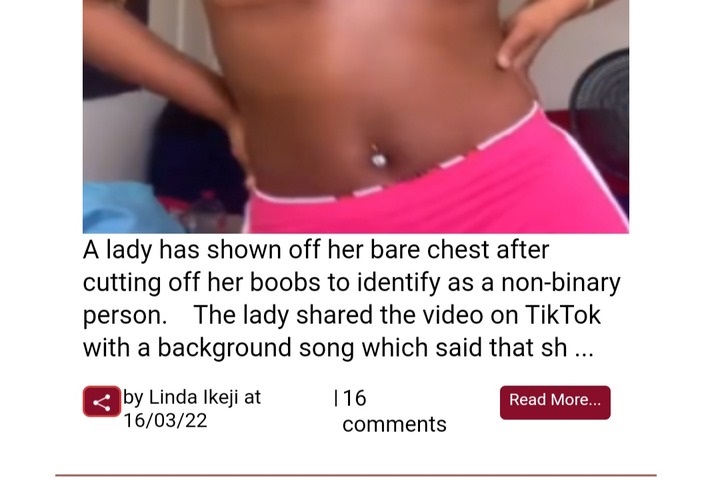
This lady we are talking about is a Nigerian, she took over the internet after exposing her bare chest to identify herself as a non-binary person. According to one of the most visited and reliable website, Linda Ikeji’s blog, the lady took to her TikTok account to announce her latest surgery saying that she underwent the surgery because she no longer needs the breasts.

There has been so many reactions from people all over African and most of them express how shocked they are.

This world is not balance, as many ladies are finding ways and means to increase their breast, some one is rather paying money to get rid of hers. See the picture below;

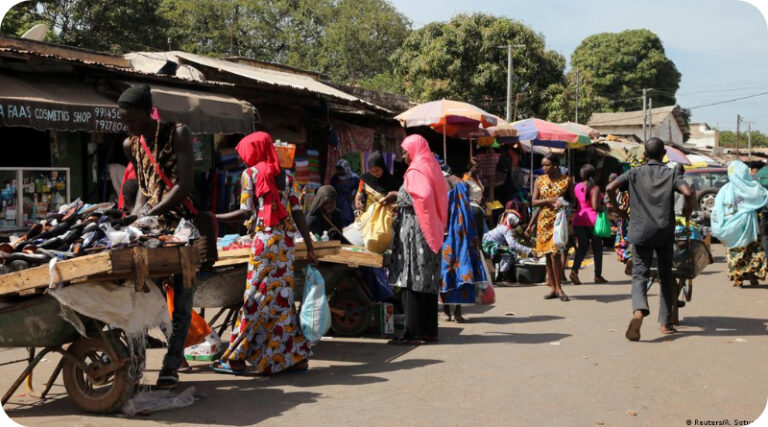
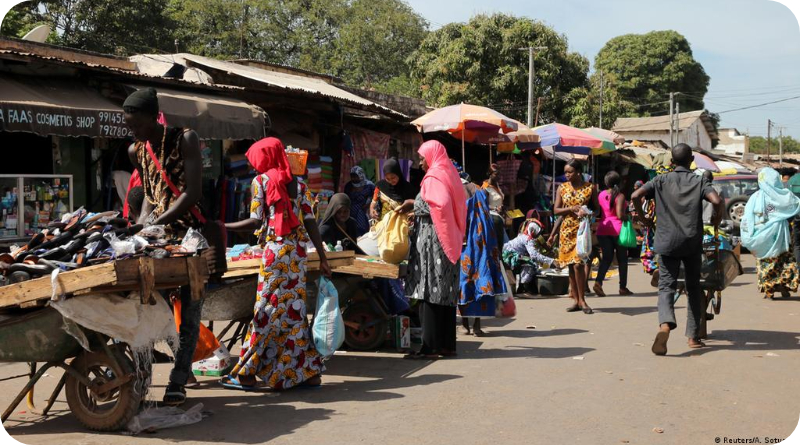
Many people in Gambia flee as Senegal has allegedly launch an offensive against separatist rebels from Casamance.

Gambians on the run after Senegal lunches latest attack against rebels in Casamance. When we cast our minds back to the year 1982, we can see that that was the year rebels started to get engaged in a low-intensity conflict and this has killed thousands of lives.

Gambians

Now the Gambian president Adama Barrow has made it clear to his people that he will do anything possible to help them.

“If you can come back you will not find us here because we are going to find another safety place, because here also is not safe. Here and Karrol, is the same place, only one village between. So you know that noise, that noise you can find you at Karrol, maybe he can find you here. So if you know that, it is going to be hard, like these days, we are going to run away again”, said Tuti Jammeh, a Gambian IDP from the village of Karrol.

As it stands now, the number of displaced is unclear and a local resident has made a claim that at least one hundred people have already entered his village. The health sector is also working hard as The Red Cross is already present in the field and is assessing the situation.

“We are doing an assessment to meet with the people, the IDPs, the refugees, that are within the hotline, within the mainlines, to register them. Also put them into the government data collection in order for government to be able to know the number of people. But now that the conflict is between the border lines, we expect more people, because this is the first time now that we are receiving villagers from Senegal to The Gambia”, said Sheriffo Mboge, regional officer of The Gambia Red Cross Society.

It can be confirmed with facts that the Senegalese President Macky Sall has made achieving “definitive peace” in Casamance a priority of his second term in office.

Football is now one of the most watched sport in Africa, and here is a brief history of African football.

Football is now one of the most watched sports in the world. Africa is among the continents that has shown more interest in the sport. There is no doubt to the fact that football is now the sport almost everyone knows in Africa.

The Amazing History of African Football

Many Africans have shown their great love for how football is done in Europe, Asia, Africa and other continents in the world.

Because of African participation in European football, many people on the continent of Africa supports football clubs in Europe and we can name few clubs like Fc Barcelona, Real Madrid, Chelsea, Manchester United, Manchester City, As Roma, Liverpool and other big clubs.

Since football was introduced to Africa, there has been so many great players who have written their names in the history of European football after given the chance to show their talent.

Don’t forget there are so many big clubs on the African continent who have also gained much attention worldwide. In terms of talent, so many clubs in Africa have proved and still producing quality players who travel all over the world and make the people of Africa Proud.

The Amazing History of African Football
History of African Football

The Early History of African Football.

Football was officially introduced to Africa in the latter part of the 19th century by Europeans. It is on record that the first football game in Africa was played in the year 1862 and by the year 1882 the game was already spreading throughout the African continent, and it was through missionaries, railways and the military.

Now this brings us to talk about the first and the longest-lasting African football clubs, the Savages FC which was founded in the year 1882 in South Africa and Gezira SC from Egypt.

The Savages FC and Gezira SC are the oldest football clubs in Africa. Now many teams were coming into existence as Alexandria FC from Egypt was also founded in 1890. CAL Oran from Algeria was also founded in 1897.

In the 20th century, football became popular on the African continent and was played in Central Africa as well.

Now let us walk you through a little bit of history. CAF was also founded as a regulatory body for African football but before CAF was founded, African football was flawed and children were exploited and witch doctors had a large part before the game. There were so many animal sacrifices and various magic rituals were performed prior to any game.

After CAF was founded to be the governing body of African football, the four founding members (countries) were Sudan, Egypt, South Africa and Ethiopia. In 1957 the first ever Africa Cup of Nations was held.

Even in the year 1934, Africa had a competitor at the World Cup and it was no other than Egypt. Though up till now no African country has been able to win the FIFA World cup for the continent but it can be assured that African Football has improved a lot as compared to when CAF wasn’t around.

Airline

The Airline operators in Nigerian are seriously demanding operational licenses from the federal government to begin importation of fuel.

Airpeace Chairman, Allen Onyema has now issued a strong warning to the Airlines in Nigeria about the shut down of operations over the non-availability of Aviation fuel to run their operations.

Below is what Onyema said.

‘We have only three more days, all airlines in Nigeria will shut down. We are not threatening this country, it is a fact”

Allen Onyema recently spoke at a meeting of oil marketers and Airline operators at the National Assembly.

NNPC CEO, Mele Kyari and other stakeholders were also present at the meeting.

”I have the mandate of all airlines to demand that Airlines begin importation of fuel, if we can buy planes of millions of dollars, we can also import fuel ourselves. Let NNPC give Airlines licenses, we want to import ourselves, Onyema insisted

STAY WITH US FOR MORE DETAILS….

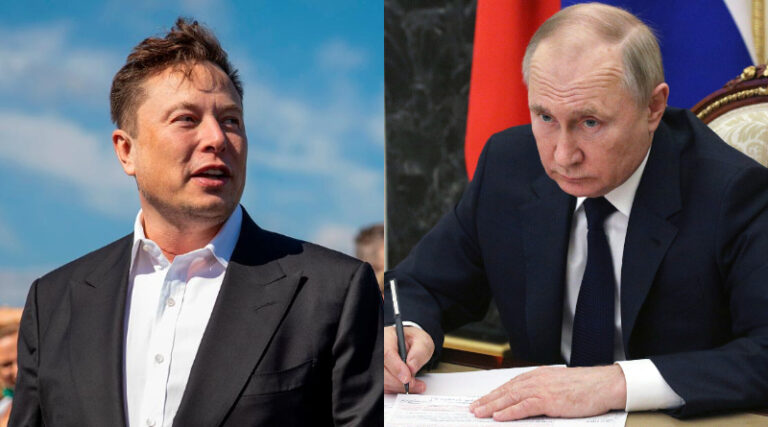
The richest man in the world, Elon Musk has openly challenged the current Russian President Vladimir Putin to an open fight.

Elon Musk is the richest man in the world currently, he is known for making most impossible possible. Now the ongoing war between Russian and Ukraine is gaining more attention day in and day out.

Elon Musk Has Challenge Vladimir Putin To Face Him In A 'Single Combat'

Many have taken their stand between the two countries for example the United Kingdom who have now sanctioned Roman Abramovic after their investigations into the ownership of his football club, Chelsea and other companies in the United Kingdom.

Now the CEO of Tesla wants to single handedly face Putin in combat, and if Elon Musk wins, Ukraine gets freedom.

The owner of SpaceX and Tesla went to Twitter to made his intentions known. The post he made has generated a lot of conversations in the world.

Elon Musk boldly went on to tag Kremlin to his tweet challenging Putin and asked: “Do you agree to this fight?”

Putin, 69, is an ex-KGB officer and a black belt in judo. He has practiced judo since his childhood and became the first Russian to achieve the eighth dan black belt in 2012, before being awarded the ninth dan black belt in taekwondo a year later.


Know Africa Official is here with the top 10 universities in Africa according to African Booth, one of the fastest-growing YouTube channels in Africa.

Top 10 Universities in Africa 2022 is here and today we are presenting it to you as African Booth presented it. It’s a well-known fact that education in Africa suffers from many angles. But what might surprise some of you is that Africa has some of the best universities in the world.

top 10 universities in Africa

We are starting from the number 10 spot and we have Northwest University from South Africa

Northwest University came into existence in 2004 after two universities agreed to merge. Throughout the years, Northwest earned its place to be recognized internationally. And it’s considered one of the best for its high standard of excellence in teaching, learning and research.

It operates under the motto “Innovation through Diversity”, boasting of students from over sixty countries around the world.

And it’s best known for excelling in economic and management Sciences, business and governance, industrial psychology, and tourism.

Mansoura University Egypt is number 9 on our list

Located in the Nile Delta of Egypt, Mansoura University was established in 1972 as East Delta University, until it changed its name in 1973.

It’s one of the largest institutions, contributing to Egypt’s cultural and scientific life. The university covers many major disciplines and has excellent medical facilities.

And it’s earned its place as part of the top research-oriented institutes in Africa, committed to creating a more optimistic world. You can choose from many subjects and a range of degree programs, including diplomas, bachelor’s, master’s, and PhDs.

Number 8, University of Pretoria – South Africa

The University of Pretoria is a top public university for research and learning, established in the early twentieth century. The university is home to a business school, nine different faculties, and it offers over 1800 academic programs.

And it has earned numerous awards and achievements in research at international and local levels.

The university focuses on attaining successful innovations that can contribute to South Africa’s economy and other neighboring countries. Students can choose from many majors, minors, specializations, and graduate degree programs.

Number 7 on our list is the University of Ibadan, Nigeria.

Located in Oyo State, Nigeria, and founded in 1963, the University awards postgraduate and undergraduate degrees in a wide range of study areas, including arts, medicine, among others. It has been ranked as one of Nigeria’s leading research-intensive universities.

And it was the first institution to award an academic degree in Nigeria and has contributed immensely to its economic, political, and social growth.

At Number 6 on our list is The University of Johannesburg South Africa

The University of Johannesburg is famous for being one of South Africa’s research capabilities, bolstering students’ careers in business and economics, engineering, health sciences, and other fields. Founded in 2005, it has been empowering students with essential technical skills since its founding.

The university offers world-class academic programs at both undergraduate and postgraduate levels. It has over 50,000 students and offers several learning options for different programs.

At Number 5 on our list is Cairo University, Egypt

It is situated in the heart of Egypt’s beautiful capital city, Cairo. It’s become one of Egypt’s best public universities after its establishment in the early twentieth century. It houses 20 faculties and 3 institutions and has its place among the top 50 centers for higher education in the world.

Its School of Medicine is amongst the first schools of medicine to exist in a center for higher education in Africa, and its school of Law stands out as being among the best on the continent.

(rerecord) At Number 4 on our list is, The University of KwaZulu-Natal, South Africa

Located in a province called KwaZulu-Natal, it was founded in 2004 after it was merged with the University of Durban-Westville. It has five campuses and four colleges. These colleges house many schools. The University of KwaZulu-Natal offers both postgraduate and undergraduate degrees and is friendly to international students.


Number 3 on our list is, Stellenbosch University, South Africa

Located in the heart of Western Cape, South Africa, it’s a public university for research and the oldest university in Africa which has remained famous for its academic excellence.

Having four campuses, the University awards both undergraduate and postgraduate degrees in a wide range of studies, including Law, Medicine, Surgery, among others. It houses up to 150 departments, shared between 10 faculties.


Number 2 on our list is, The University of Witwatersrand, South Africa

Commonly referred to as the University of Wits, it is located in Johannesburg, South Africa, and comprises many campuses. It is a University for Research and awards both undergraduate and postgraduate degrees.

It was founded in 1896 and has produced great personalities who influenced the world in outstanding capacities. The great leader, Nelson Mandela, for example, is one of them.

Number 1 on our list is, The University of Cape Town, South Africa

The University of Cape Town is one of the oldest universities in South Africa. It consists of 57 departments and 6 faculties, over 1000 academic staff, and over 3000 non-academic staff.

It has six campuses and offers degrees, including a master’s degree, doctorate degrees, and others. You can study a number of courses, including medicine and Surgery, and engineering.

And there you have it, our top ten universities in Africa.  Watch the video here
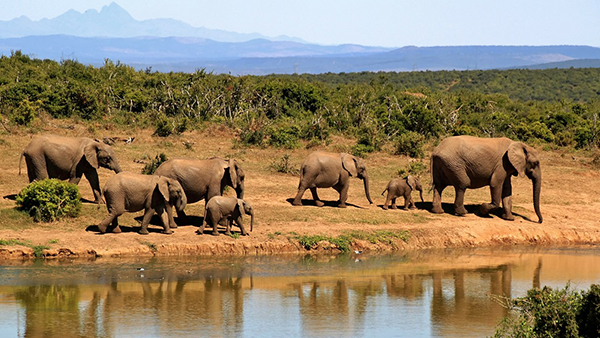
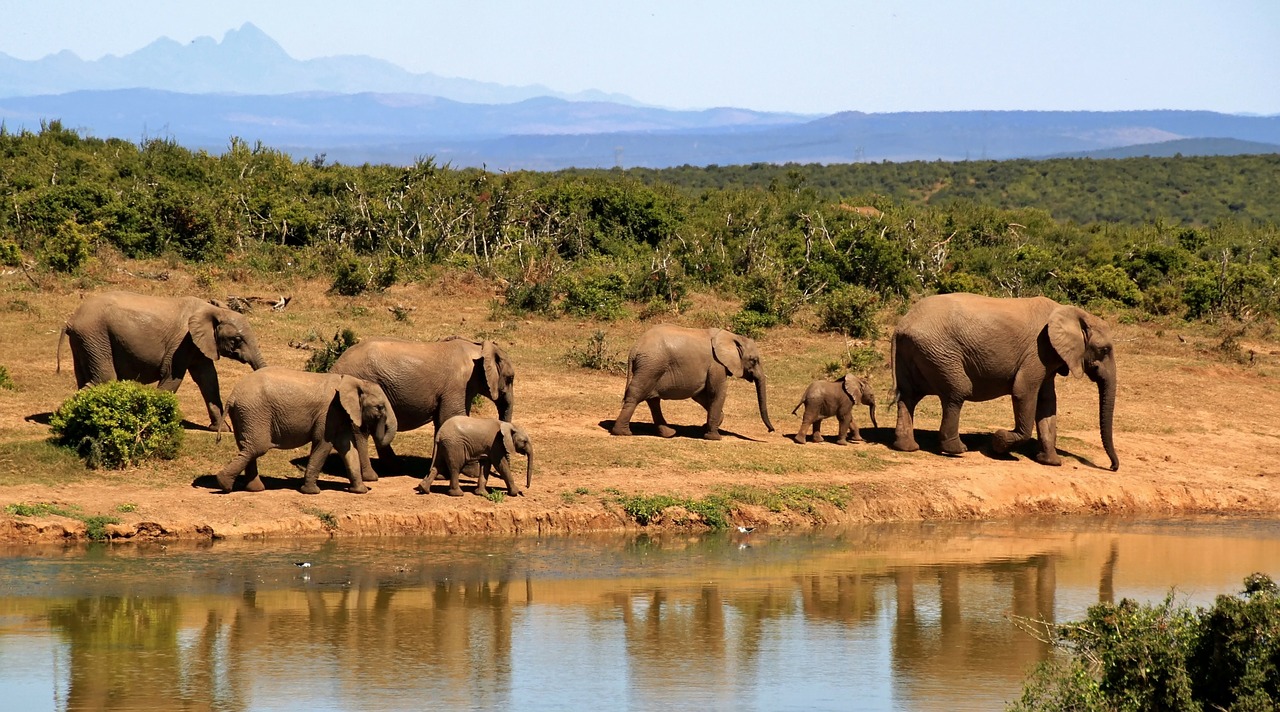
elephants-,knowafricaofficial.com,history, africahistory 1

Because of their sophisticated minds and ability to experience intense emotions, elephants are among the most competent animals on the planet.

Elephants play an important role in seedling establishment for trees; in fact, some species rely entirely on elephants. Elephants that eat savannah tree sprouts and shrubs help keep the plains open and ready for the plains game that lives in these ecosystems. Elephants eat a wide variety of plants, and their dung contains plant seeds. When this dung is deposited, seeds are sown, which grow into new grasses, bushes, and trees, thereby benefiting the savannah ecosystem.

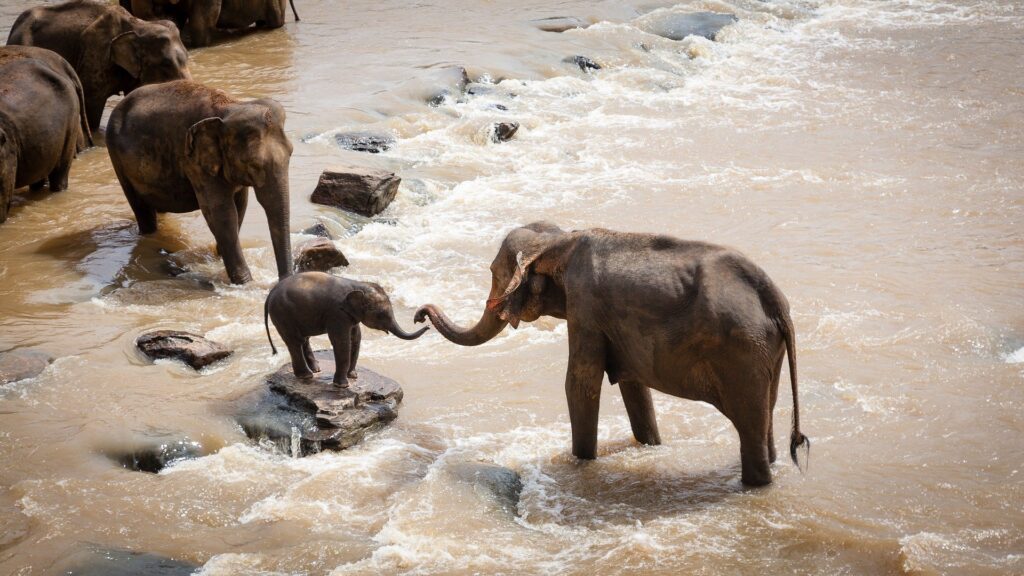
elephants-1,knowafricaofficial.com,history,

The people who share the African countryside with them have earned them the respect they hold and consequently they have significant cultural significance.

Elephants draw tourist dollars to help protect endangered species as the symbols of the continent. They also form part of the ecosystem and contribute directly to the ecosystem’s biodiversity.

In the forest, elephants eat, left gaps. These infringements allow new plants to grow and other small animals to develop routes.

In truth, we are in a total fight against ourselves and still did not. The world reacted less than pathetically. We try to sort out the problem that it was, rather than what it is, let alone what it might be.

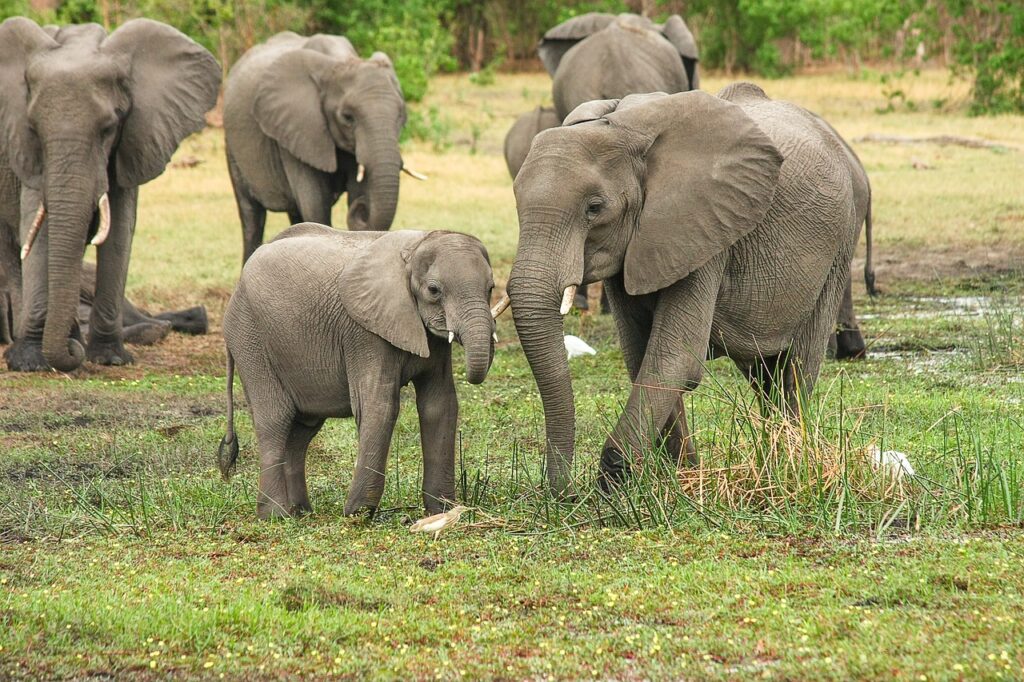
elephants,knowafricaofficial.com,history, africahistory

This is the key to the issue and the solution. 

We are neither independent nor separate from our environment. We belong to it and depend on it to be healthy. The decrease of the elephant is not only the loss of a magnificent creature but also the loss in the elephant’s environment.

Without good wilderness areas, we can’t live. The cities we live in are not isolated bubbles but food and other resources that are not dependent upon the world in our final residential district.

They are becoming out-of-check monsters with ravine appetites and sucking resources and the suction of these resources instead of interacting in harmony with the environment they have to sustain. The loss of the elephant is the beginning of our world’s irreversible loss.

I’ve never heard or read anything like this before. Everything has happened right in front of my eyes. As a result, I will continue to campaign in the hopes of increasing elephant awareness and respect. Let us hope we can be the voice of the peaceful creatures.

Article by: Georgeson Gatwech Phan

kerm a kingdom, history, africa,

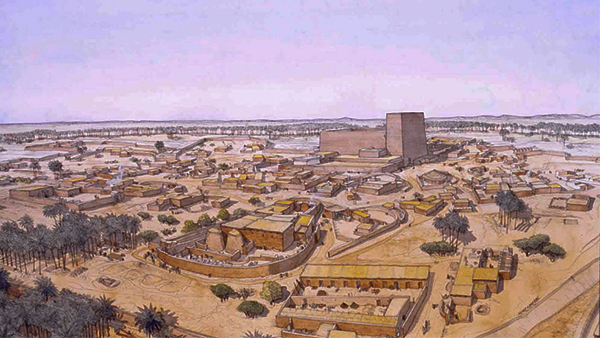
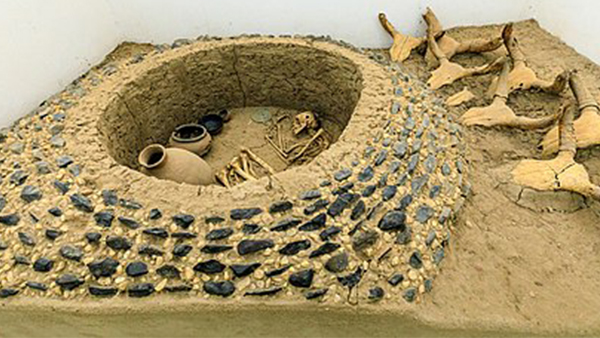
The Kingdom of Kerma was an antiquated civilization that existed between 2500 BC and 1500 BC, with its capital in the city of Kerma. It was situated in the core of Sudanese Nubia and is the main provable sub-Saharan realm to have existed. The Kingdom of Kerma is thought to have existed without a composing framework thus all data about this realm comes either from archeological confirmation or sources from Egypt.

Later the realm started to be alluded to as Kerma, and its occupants were famous for being skilled champions and toxophilite. The significant occupations of the realm included exchange, tending domesticated animals, chasing, and fishing. The Kingdom of Kerma existed in three unmistakable stages – Ancient/Early Kerma (around 2500 BC – 2050 BC), Middle Kerma (around 2050 BC – 1750 BC), and Classic Kerma (around 1750 BC – 1500 BC). Exemplary Kerma was the brilliant age of the realm. It was during this period that its rulers effectively assumed responsibility for Egyptian forts and gold mines in the Second waterfall. The realm continued assaulting and catching Egyptian domains until around 1500 BC Thutmose I assaulted Kerma itself and attached the realm into the Egyptian Empire.

kerm-a-kingdom-history-africa-sudan

Conveyance of gold in the Sudanese Eastern Desert. Shadowed regions mark the primary gold-bearing locales. Triangle – Kermite array, Green tablets – Eastern Sudan gathering, Square – Middle Nubian collection, and Rounded images – Pan-grave array. A collection is an archeological term for a gathering of relics that can be assembled by setting.

The Origin and Rise to Power

The Kingdom of Kerma was one of the most punctual metropolitan communities in the Nile district. This district had been possessed from as far back as 5,000 BC, fundamentally by little fishing towns and exchange focuses. There is archeological proof of a bound together culture and realm rising up out of a mixture of these little towns and the proto-Kerma (pre-dynastic) A-Group Culture of 3,800-3,100 BC. This culture and its realm were known as the Naqada realm. Around the turn of the proto-dynastic period, Naqada, in its offer to overcome and bring together the entire Nile Valley, appears to have vanquished Nubia.

This made a bound together realm encompassing the region of Nubia. After the fall of the Naqada realm in 2700 BC, the Kerma culture assumed control over the territory of Nubia, with Kermites fanning out from the city of Kerma. In the long run, this culture was the prevailing one nearby and prompted the making of The Kingdom of Kerma around 2500 BC with the total of the territory of Nubia under their influence.

As of now their northern neighbors, the Egyptians were prospering too, and that opened up both exchange openings and competitions as far as domains for the Kermit’s. They continued conflicting with one another however there were no critical advances made by all things considered. Following quite a while of growing away from Egypt, the Hyksos intrusion of Lower Egypt, around 1786 BC, allowed the Kermites a chance to broaden toward the north. Hyksos comes from heqa-khase, an expression signifying “leaders of unfamiliar terrains”.

In 1650 BC, Kerma made a coalition with the Hyksos which empowered them to practically twofold their solidarity. While the Hyksos managed Lower Egypt, the Kermites controlled Upper Egypt. The authority of autonomous Egyptian rulers was accordingly compelled to a little region around Thebes. The number of inhabitants in Upper Egypt, then again, seemed to have recognized the control of Kerma without impediment. This dispatched the Kingdom of Kerma into its brilliant age, wherein it arrived at the pinnacle of its riches and influence.

Having killed the opponent line at Hierakonpolis, the Theban pharaoh, Montjuhotep II, introduced a post fort at Abu, where he could screen desert exchanging courses and make a springboard to attack an inexorably estranged Lower Nubia, effectively attaching the district around Buhen. By c. 1872 BCE, Egypt had let completely go over Wawat, hastening a fierce attack by Amenhotep I and his co-ruler Senusret I.

Nubian freedom was quenched and many recruited into subjection. Having attached Nubia past the subsequent waterfall, Senusret I left on a productive fortress building program, thought around Buhen and Kor. Senusret III, stressed over the insubordinate Kush area, set up more fortifications and another line among Mirgissa and Semna. Exchanging focuses were likewise settled along the Nile, with monstrous posts not just giving a showcase of military strength and guarded ability yet in addition ensuring the Nile exchange gold, copper, and valuable metals separated from the Nubian mines.

The Areas Under Rule and Administration

In the Kingdom of Kerma’s most prosperous phase, from about 1700–1500 BCE, it absorbed the Sudanese kingdom of Sai and became a sizeable, populous empire rivaling Egypt. This Kingdom covered wide swathes of the great Nile river, covering all of Nubia and Egypt, barring the areas around the city of Thebes, where the Egyptian Pharaohs still held power.

The Kermit Empire was divided into provinces run by a pesto (governor). The pesto had subordinates who served specialized functions. Nubian queens were co-rulers with pharaohs. In some cases, they ruled alone.

Kermit kings worshipped Amun, who was also a key deity to Egyptians. Amun was the god of the sun and only one of the many in the Egyptian Pantheon. However, Kerma were believers in a single god and hence had banned the public worship of any other religion or major god in their territory. This excluded the local gods, which were considered minor deities under Amun. Kermit temples for Amun were similar to Egyptian temples, but temples for local gods were constructed differently.

SEE ALSO: https://knowafricaofficial.com/the-great-ashanti-empire/