The main reason for Samuel Eto’o’s punishments, which were imposed on him on Monday, September 30, is his actions during a FIFA Under-20 Women’s World Cup match.
The leader of the Cameroonian football federation, Samuel Eto’o was found to have violated two parts of the FIFA Disciplinary Code if the organization withheld information regarding the event that resulted in the sanction.
He violated FIFA Disciplinary Code paragraphs 13 and 14, which deal with officials’ and players’ misconduct.
Brazil defeated Cameroon 3-1 on September 11 in the U-20 Women’s World Cup round of 16.
If it was Cameroon’s first participation in the competition it was also a disappointing exit.
The country’s head coach Hassan Balla criticized refereeing.
Eto’o’s six-month ban from attending matches of Cameroon’s national teams means he will miss the men’s national team games in qualifying groups for the 2026 World Cup. and 2025 Africa Cup of Nations.
Native inhabitants of the Nile Valley who speak Nilotic languages are known as the Nilotic peoples. They reside in Tanzania, Rwanda, Burundi, Democratic Republic of the Congo‘s eastern border region, Ethiopia, Uganda, Kenya, South Sudan, and Sudan.
These include the peoples who speak Burun; Teso; also called Iteso or people of Teso; Karo; Luo; Ateker; Kalenjin; Karamojong; sometimes called the Karamojong or Karimojong; Datooga; Dinka; Nuer; Atwot; Lotuko; And the peoples who speak Maa.
In South Sudan, where they are thought to have originated, the Nilotes make up the majority of the population. They are the second-most numerous group of people living in the African Great Lakes region around the East African Rift, behind the Bantu peoples. They also constitute a sizable portion of the populace in southwest Ethiopia. There were 7 million nilotic people in the late 20th century.
The majority religions practiced by the Nilotic peoples include Christianity and indigenous faiths like Dinka. Additionally, some Nilotic people follow Islam.
History Of The Nilotes or Nilotic people
By 3000 BC, a proto-Nilotic unity is thought to have split off from an earlier undifferentiated Eastern Sudanic unity.
The domestication of livestock may have contributed to the collective development of the proto-Nilotes. It is likely that the unity of the Eastern Sudanic people occurred much earlier, maybe in the fifth millennium BC. The Upper Paleolithic, around 15,000 years ago, is when the projected Nilo-Saharan unity would have originated.
It is likely that the early Nilotic speakers originally lived in what is now South Sudan, east of the Nile. The proto-Central Sudanic peoples were primarily agriculturalists, in contrast to the pastoralist Proto-Nilotes of the third millennium BC.
Nilotic people practised a mixed economy of cattle pastoralism, fishing, and seed cultivation. Some of the earliest archaeological findings on record, that describe a similar culture to this from the same region, are found at Kadero, 48 m north of Khartoum in Sudan and date to 3000 BC. Kadero contains the remains of a cattle pastoralist culture and a cemetery with skeletal remains featuring sub-Saharan African phenotypes. It also contains evidence of other animal domestication, artistry, long-distance trade, seed cultivation, and fish consumption.
Genetic and linguistic studies have demonstrated that Nubian people in Northern Sudan and Southern Egypt are an admixed group that started off as a population closely related to Nilotic people. This population later received significant gene flow from Middle Eastern and other East African populations. Nubians are considered to be descendants of the early inhabitants of the Nile valley who later formed the Kingdom of Kush, which included Kerma and Meroe and the medieval Christian kingdoms of Makuria, Nobatia, and Alodia. These studies suggest that populations closely related to Nilotic people long inhabited the Nile Valley as far as southern Egypt in antiquity.
What is a Nilotic person?
Speaking Nilotic languages, the Nilotic peoples are native inhabitants of the Nile Valley. They live in the Democratic Republic of the Congo’s eastern border region, South Sudan, Sudan, Ethiopia, Uganda, Kenya, Rwanda, Burundi, and Tanzania.
Which tribes are Nilotes?
Nilotic ethnic groups include the Luo, Masai, Turkana, Samburu, and the Kalenjin. The Luo are the second largest ethnic group in Kenya and they live for the most part on the shores of Lake Victoria. The Luo migrated from the Nile region of the Sudan around the 15th century.
What countries are Nilotic people?
Nilotic peoples, who are the native speakers of the languages, originally migrated from the Gezira area in Sudan. Nilotic language speakers live in parts of the Democratic Republic of the Congo, Ethiopia, Kenya, Sudan, South Sudan, Tanzania and Uganda.
The significant achievements of Captain Ibrahim Traoré‘s leadership in Burkina Faso, demonstrating his influence on the country’s prosperity and stability.
Ibrahim Traoré, a Burkinabè military soldier born on March 14, 1988, has been serving as the country’s acting president since September 20, 2022, following the overthrow of interim president Paul-Henri Sandaogo Damiba in a coup d’état. Traoré is the youngest president in history and the second-youngest state leader in the world at the age of 36.
The Key Achievements of Captain Ibrahim Traoré’s Leadership in Burkina Faso
Energy
The Electricity Sector Support Project (PASEL) has:
constructed the 7.5 MW Fada N’Gourma thermal power plant in the eastern part of the country;
electrified 40 communities and 90 villages;
installed 851 kilometers of low-voltage lines and 463 kilometers of medium-voltage lines;
deployed 25,000 solar lamps in 400 schools.
Water and Sanitation
Since its inception in 2019, the Water Supply and Sanitation Program has achieved the following results:
Access to drinking water sources has been provided for more than 829,000 persons;
Access to improved sanitation facilities has been provided for over 406,800 persons;
Under the capacity-building component, there are more than 3,000 short-term training beneficiaries and 177 graduates (from senior technicians to design engineers).
Agriculture
Irrigation: the Projet d’Appui Régional à l’Initiative pour I’Irrigation au Sahel (PARIIS-BF) has enabled the development/rehabilitation of 1,313 ha with more than 21,062 direct beneficiaries.
As a result of the Burkina Faso Livestock Sector Development Support Project (PADEL B):
392,850 herders benefited from agricultural goods and services in livestock value chains;
1,653 livestock microprojects launched by young people and women were financed;
263 women-owned livestock businesses and 152 businesses owned by young people had access to financing from banks and microfinance institutions.
The acquisition of 260 prefabricated classrooms for internally displaced pupils.
Human Capital
The “Burkin-Naong-Sa ya” social safety net project (putting an end to poverty in Burkina Faso) targets the most vulnerable households and aims to lay the foundations for a social protection system. It has achieved the following results:
More than a million poor people in Burkina Faso benefited from social safety nets, including 763,714 who received cash transfers in response to shocks;
21,265 women benefited from economic inclusion activities, including mobilization of community savings, capacity-building for income-generating activities with subsidies, and market access;
Support for the operation of 20 mobile crèches and day-care centers;
Deployment of the Single Social Register of poor and vulnerable households in its pilot phase, with over 222,974 poor households registered in a management information system (MIS).
Education
Initial financing of the Project to Improve Access to Quality Education (PAAQE) was used to:
provide an annual grant of CFAF 100,000 ($166) to 1,000 selected students, primarily girls from poor households, for the duration of their schooling.
the initiative gives equal opportunity to girls and boys, and to teenagers from rural and urban backgrounds;
to date, 1,343 students have enrolled, 38.57% of them girls;
Baccalauréat pass rates were 100% from 2019 to 2022 and 98.5% in 2023.
Under the Higher Education Support Project:
10 higher education and research institutions are receiving competitive funds totaling CFAF 11.5 billion (more than $19 million).
SOURCE: https://www.worldbank.org/
7,959 students, 36.7% of whom were women, enrolled in undergraduate studies in the priority areas financed by the project;
build 327 classrooms in 45 lower and upper secondary schools thereby providing access to secondary education (post-primary and secondary) for approximately 20,595 students, 49% of whom were girls;
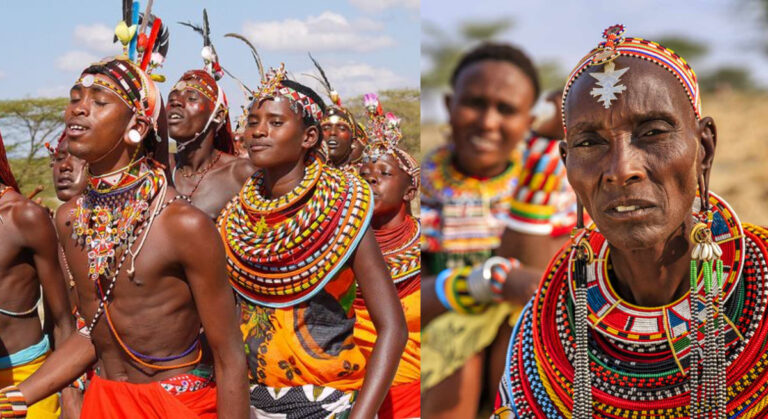
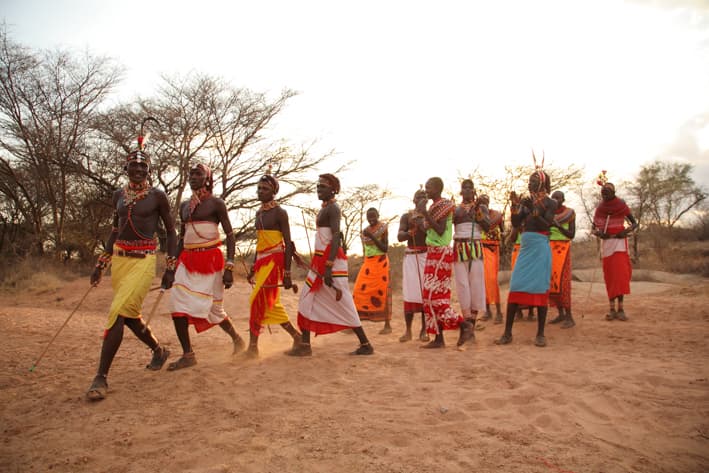
Northern Kenya is home to the semi-nomadic pastoralist Samburu Tribe. They own camels, sheep, and goats in addition to mostly herding cattle. Although the Samburu have kept most of their traditions and customs, they are closely related to the Masaai Tribe.
The Samburu people live in arid, drier places, therefore in order to provide their animals with enough new grazing, they have to relocate their dwellings and cattle every few weeks. To keep out wild animals, their houses are constructed of animal hides, mud, grass mats, and wooden poles and are encircled by a thorny fence. Typically, villages consist of five to ten families.
Traditionally, the women are in charge of gathering roots and vegetables, gathering water, and taking care of the children, while the males tend to the cattle and other livestock as well as the family’s general safety. The elders of the tribe govern it and choose which men and women are married to and circumcised. In Samburu tradition, a person can only be considered a man or woman if they have undergone circumcision. After undergoing circumcision, a boy is referred to as a Moran, or worrier.
The Samburu people’s traditional attire is a shukka, or brilliantly colored red material worn like a skirt and topped with a white sash.
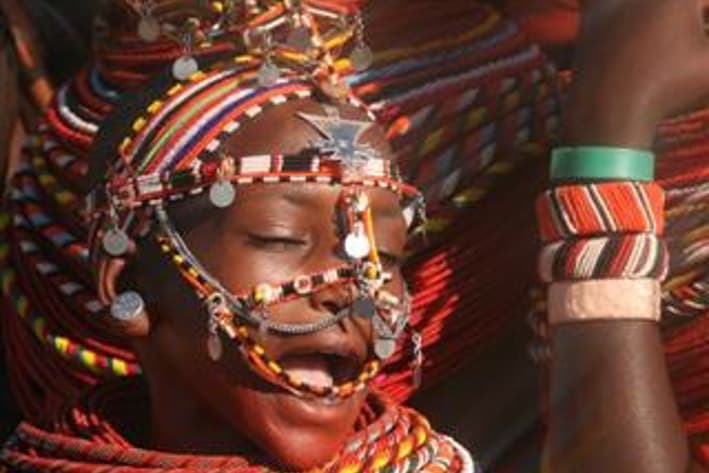
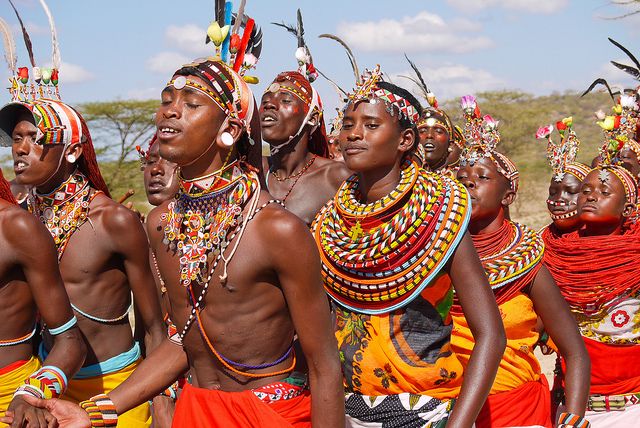
Beaded jewelry is worn by both men and women in the form of necklaces, earrings and headdress. The more jewelry they wear the higher their social status is.
Samburu Tribe: Their Culture
A gerontocracy is the Samburu people. The notion that elders are cursed gives them the exclusive right to arrange marriages and take on new women, which in turn gives them power. This comes at the expense of younger, single males, whose development remains in a state of social suspension until they turn thirty, so delaying the onset of adulthood.
Men wear a cloth which is often pink or black and is wrapped around their waist in a manner similar to a Scottish kilt. They adorn themselves with necklaces, bracelets and anklets, like other sub tribes of the Maasai community.
Members of the moran age grade (i.e. “warriors”) typically wear their hair in long braids, which they shave off when they become elders. It may be colored using red ochre. Their bodies are sometimes decorated with ochre, as well. Women wear two pieces of blue or purple cloth, one piece wrapped around the waist, the second wrapped over the chest. Women keep their hair shaved and wear numerous necklaces and bracelets. In the past decade, traditional clothing styles have changed.
Some men may dress in the red tartan cloth of the 1980s and 1990s or they may wrap a dark green or blue plaid material around their waists, known as “kikoi,” frequently with shorts worn below. Marani (Lmuran)[7] warriors dress in pastel or flowery clothing. While some ladies still choose to wear two items of red or blue clothing, it’s now trendy to wear clothing with vibrant floral or animal themes. In addition, women frequently pair their clothes with tiny tank tops, and plaid skirts have also.
Religion Of The Samburu Tribe
The traditional Samburu religion centers on their multifaceted divinity, known as Nkai. The Samburu people of today actively participate in the lives of Nkai, a feminine word. Children and teenagers, particularly ladies, frequently claim having visions of Nkai. A handful of these kids go on to have a long-term reputation for prophecy, and some of them prophesy for a while. In addition to these impromptu prophets, the Samburu people have ritual diviners, or shamans, known as “loibonok,” who counsel warriors and determine the origins of personal illness and bad luck.
The Samburu people hold that Nkai is the origin of all protection against life’s dangers. However, Nkai also punishes when a senior curses a junior for displaying disdain. The elder’s rage is interpreted as an appeal to Nkai, who makes the determination as to whether the curse is warranted. When a victim experiences misfortune after being disrespected by an older man, they should go to their senior and make amends in exchange for his approval. This eases the elder’s rage and brings Nkai’s defense back. Still, it is rare for an older person to curse a younger person. Curses are only used in the most egregious of situations.
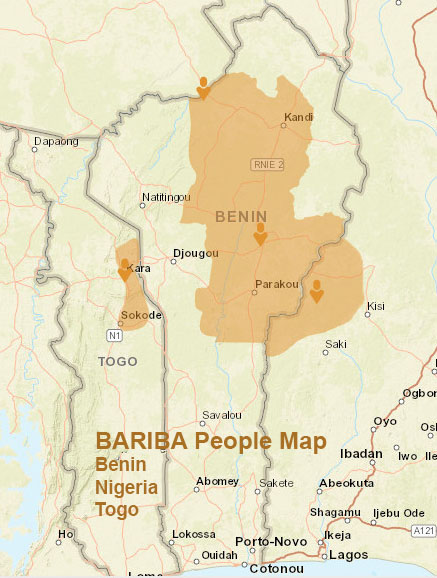
The Bariba people or the Bariba Tribe, also known as the Baatonu (plural: Baatombu), are the majority of people living in the Benin departments of Borgou and Alibori (1.285.000), and they were cofounders of the Borgu kingdom, which is now located in what is now northeastern Benin and west-central Nigeria (197,000). They are dispersed over western Kwara State and the Borgu region of Niger State in Nigeria. Seventy percent of the estimated one million Bariba live in Benin.
The Bariba are concentrated primarily in the north-east of Benin, especially around the city of Nikki, which is considered the traditional Bariba capital.
At the end of the 18th century they became independent from the Yoruba of Oyo and formed several kingdoms in the Borgou region. The colonization of Benin (then Dahomey) by the French at the end of the 19th century, and the imposition of an Anglo-French artificial border, ended Bariba trade in the region.
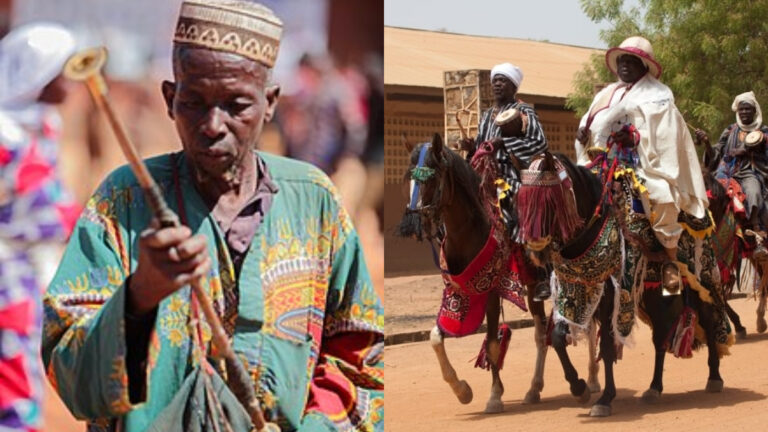
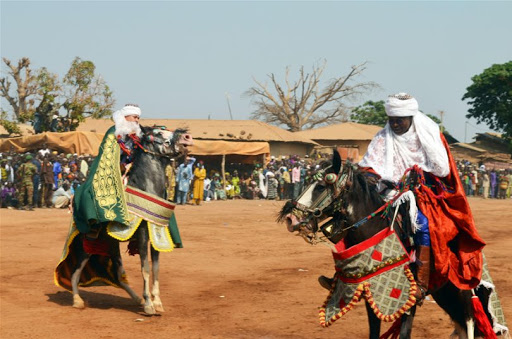
One of their noted festivals is the annual Gani festival of which horse riding is a prominent element.
The Bariba people holds an important place in the history of the country. During the late 19th century, Bariba was known to constitute independent states and dominate with kingdoms in cities like Nikki and Kandi in the northeast of the country. In the town of Pehunko there are approximately 200,000 Bariba people out of 365,000 inhabitants.
The Bariba society consists of a higher-ranking official as chief of the town and their subordinates’ chiefs. Social status and titles are inherited in families, but the status of a person may be given by the families’ nature of work. Notable subdivisions of the Bariba include the ruling Wasangari nobles, Baatombu commoners, slaves of varying origin, Dendi merchants, Fulbe herders, and other divisional ethnic groups.
Agriculture is the dominant occupation for the Bariba. They grow corn, sorghum, rice, cotton, cassava (tapioca), yams, beans, palm oil, peanuts and some poultry and livestock. Religion plays an important role in Bariba tribes and they are primarily Islamic.However a number of Bariba communities have their own indigenous beliefs.
History Of The Bariba Tribe
Origins
According to some versions of their history, the Wasangari first settled in the region of Nikki-Wenu around 1480, it having been occupied from 1350 by the Baatonu natives. Coming from the East, they initially settled in Bussa in what is now Nigeria, where Kisra, the legendary Wasangari horseman from Persia had formed an alliance with Mansa Doro left Bussa for Nikki-Wenu with his groom Sero, the son of Kisra who entrusted Mansa Doro with the education of Sero. Before leaving the region again to join Kisra, Mansa Doro nominated his protégé Sero as the new chief. Decked out in hunting attire, the groom was established by the populations of Nikki-Wenu as Sounon Sero, King of Nikki.
Sime Dobidia, father of the dynasties
Sabi Sime, the youngest son of Sounon Sero, later became Sime Dobidia, and through marriages with the native clans Baatonu, Boko and Hausa, founded the dynasties of the Empire of Nikki. His sons, endowed with the royal emblems of trumpets ans white spurs, took control of villages of their respective mothers. Those parental ties were the basis of the political structure established by the Wasangari.
The royal dynasties are founded by:
Sero Kora Bakarou, the ancestor of the dynasty of KorakouSero Baguiri, the ancestor of the dynasty of the Karawe
Kpe Gounon Kaba Wouko, the ancestor of the dynasty of the Gbassi
Sero Kpera I, the ancestor of the dynasty of the Makararou
Kpe Lafia Gamabrou, the ancestor of the dynasty of Lafiarou
Culture – The origins of the Gaani
The yearly Gaani festival, presided over by the Emperor of Nikki, or in his absence the chiefs of the Bouay, Kika and Sandiro provinces, assembles all the provincial chiefs and their populations, who come to renew allegiance to the Emperor and receive his blessing.
More than 150,000 persons converge to Nikki from all over to participate in the spectacular ceremony where the vitality of the Baatonu culture is celebrated and parental and fraternal links between dynasties are nurtured. Everyone brings presents, however modest, to contribute to the magnificence of the festivities.
The Gaani is the second festival in the Baatonu calendar, following the fire festival or Donkonru, that takes place at the New Year. The Gaani is associated with the notion of nasara, evoking joy, victory and freedom and is a time for ecstasy and communion. By animating and perpetrating the memories that unite them, it nourishes and re-news solidarity and fraternity within the Baatonu people, endorsing their values of welcome and sharing.
An animistic tribal ceremony, it was later incorporated into the Muslim calendar and thus coincides with the Mawlid which is celebrated by Muslims to commemorate the birth of the Prophet. The festival is organized according to the lunar calendar and is always held on a Tuesday, Thursday, Saturday or Sunday; it cannot be held on any other day of the week.
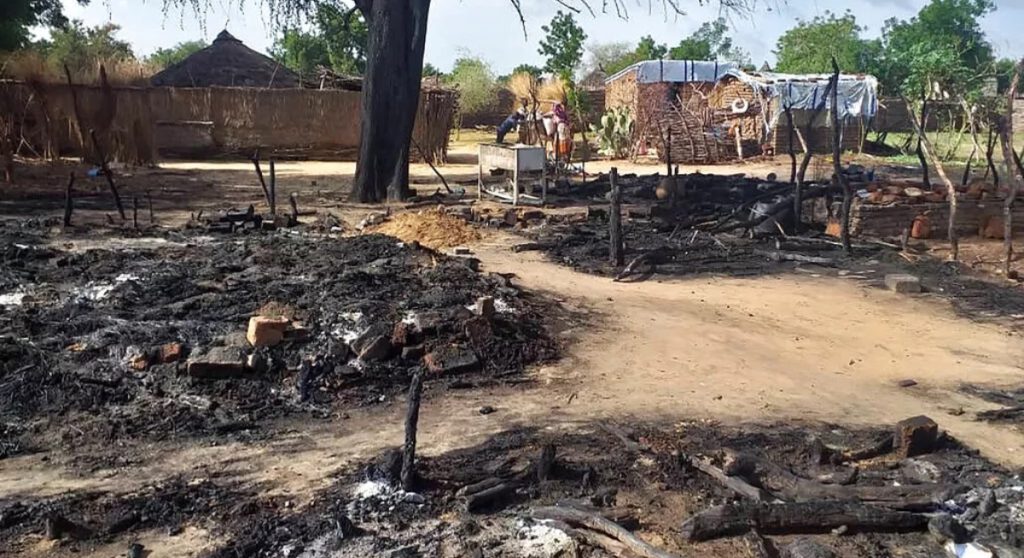
At least 123 people were killed in more than two weeks of Sudan War over a major city in the western Darfur region between the Sudanese military and an infamous paramilitary gang, according to a report released on Sunday by an international humanitarian organization.
Over 930 people were injured in the same period by fighting in el-Fasher, the provincial seat of North Darfur, according to Doctors Without Borders.
The organization stated, “This is a sign of the violent intensity of the fighting.” “We urge the warring parties to do more to protect civilians.”
Clashes between the military and the paramilitary Rapid Support Forces escalated earlier this month in the city, forcing thousands of people to flee their homes, according to the United Nations.
El-Fasher has become the centre of the conflict between the military and the RSF, which is aided by Arab militias commonly known as janjaweed. The city is the last stronghold that is still held by the military in the sprawling Darfur region.
Sudan’s conflict began in April last year when soaring tensions between the leaders of the military and the RSF exploded into open fighting in the capital, Khartoum, and elsewhere in the country.
The conflict killed more than 14,000 people and wounded thousands more amid reports of widespread sexual violence and other atrocities that rights groups say amount to war crimes and crimes against humanity.
It also pushed the country’s population to the brink of famine. The U.N. food agency warned the warring parties earlier this month that there is a serious risk of widespread starvation and death in Darfur and elsewhere in Sudan if they don’t allow humanitarian aid into the vast western region.
The RSF has built up forces in recent months seeking to wrest control of el-Fasher. Along with its Arab militia allies, the RSF besieged the city and launched a major attack on its southern and eastern parts earlier this month.
The clashes renewed on Thursday in the Abu Shouk camp for displaced people in the Salam neighbourhood in the city’s northern part, as well as its southern western parts, the U.N.’s International Organization for Migration reported.
On Saturday, a shell hit the house of a Doctors Without Borders aid worker close to the city’s main market, killing the worker, the charity said.
The U.N. Resident and Humanitarian Coordinator in Sudan Clementine Nkweta-Salami blasted the “tragic” killing. The aid worker was not identified.
Nkweta-Salami urged warring parties to stop fighting in the city where “hundreds of thousands of women, men, and children in North Darfur are once again caught in the crossfire of war.”
“A human tragedy of epic proportions is on the horizon, but it can, and must, be prevented,” she said.
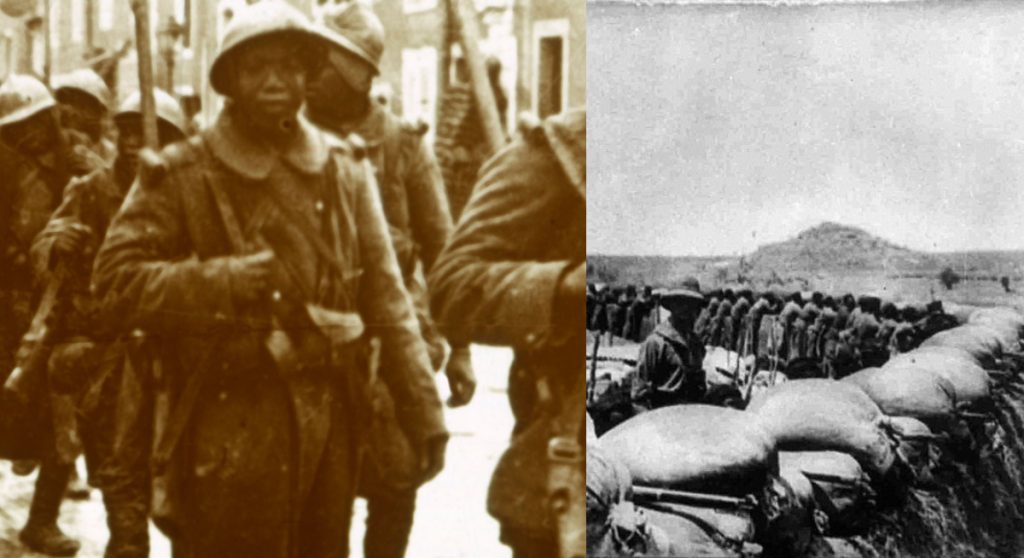
Battles in Africa were fought between colonial powers, but the majority of those forced to fight were conscripted Africans. World War I is often associated with scenes of fighting in Europe, such as the first Battle of the Marne, the siege of Verdun, the terrible battle of The Somme, and the brutal grind of trench warfare on the Western Front.
However, the first bullet of the war, fired in late July 1914, did not come from Europe. Instead, as Byron Farwell observes in his book The Great War in Africa, 1914-1918, it was a shot taken by an African soldier in a British uniform at German colonial forces in what is now Togo in West Africa, which was once a part of Germany’s huge empire in Africa.
Africans Compelled to Fight
Between 1914 and 1918, the British and their allies fought to take Africa’s massive colonial empire, which the Germans had established. However, Africans, whose lands had been taken from them by Europeans in the mid to late 1800s, bore the brunt of the battle.
“The fighting in Africa was between the colonial powers, but most of the soldiers were Africans,” explains Padraic Kennedy, an associate professor of history at York College of Pennsylvania. About two million Africans were compelled to fight in the war, and more than 150,000 African soldiers and bearers lost their lives, with many more wounded and disabled.
In addition, many African civilians succumbed to starvation, due to food shortages created by the war’s disruption of agriculture, including armies’ seizure of food supplies and cattle, and the shortage of farmers, hunters and fishermen due to the Europeans’ conscription of African males.
“The conflict in one way or another affected almost every African group and family,” according to Derek Frisby, an associate professor in the Global Studies program at Middle Tennessee State University and an expert in military history.
The war in Africa also was very different from the conflict in Europe, where new technologies such as tanks and aircraft revolutionized warfare.
“The African Great War battles lack much of the industrialization inherent in Europe,” Frisby says. In particular, the artillery used so effectively in European fighting was mostly a non-factor in Africa, according to Frisby. None of the colonial powers had the necessary infrastructure, such as communications for observation and logistics for transporting artillery pieces and keeping them supplied with ammo and maintenance, and it was harder to find suitable terrain. And the forces there often had to make due with older weapons. As a result, Frisby says their greatest effect was in terrifying the native populations, rather than creating devastating barrages. “Infantry remained the primary combat arm in Great War Africa, not surprisingly taking advantage of the machine gun,” Frisby explains.
In contrast to the often massive battlefield clashes in Europe, African World War I battles tended to be smaller in scale and drawn out over longer time spans. “They were fighting over so much land in Africa, that the fighting was very spread out,” explains Michael Green, associate professor of history at the University of Nevada, Las Vegas. Indeed, the crucial German East Africa campaign between 1916 and 1918, which pitted 165,000 troops from Britain, South Africa, Belgium and Portugal against a German colonial force of 25,000, took place over an area of 750,000 square miles—three times the size of Imperial Germany itself.
Many Africans wanted no part of the war at all. “The French encountered widespread rebellions as they attempted to conscript soldiers in various parts of west Africa,” says Etana Dinka, a history professor at James Madison University.
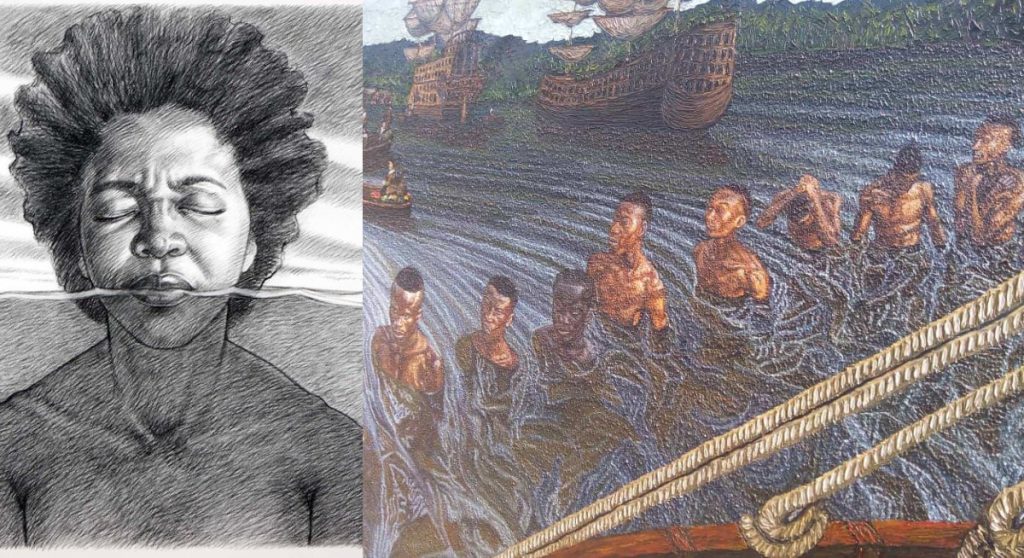
Igbo Landing, also known as Ebo Landing, Ibo Landing, or Ebos Landing, is a historic site located near Dunbar Creek in Glynn County, Georgia, on St. Simons Island. In 1803, a group of Igbo captives who had taken over their slave ship and refused to accept being sold into slavery in the United States committed a mass suicide there. African American folklore, such as the legend of the flying Africans, and literary history both place symbolic emphasis on the event’s moral significance as a tale of struggle against slavery.
History of the Igbo Landing
After surviving the Middle Passage, a shipload of West African captives was brought to Savannah by American-paid kidnappers in May 1803, where they were put up for auction at one of the region’s slave markets. Among the enslaved passengers on board the ship were several Igbo people from modern-day Nigeria. Planters and slave traders in the American South knew the Igbo for their staunch independence and opposition to chattel slavery.
The seventy-five Igbo slaves were purchased for $100 apiece by agents of John Couper and Thomas Spalding to be used as forced labor on their estates on St. Simons Island.
The chained enslaved people were packed under the deck of a small vessel named The Schooner York to be shipped to the island (other sources say the voyage took place aboard The Morovia[6]).
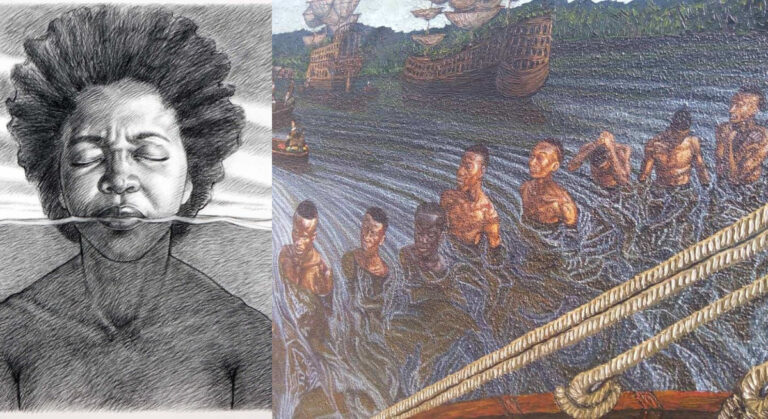
During this voyage the Igbo slaves rose up in rebellion, taking control of the ship and drowning their captors, in the process causing the grounding of the Morovia in Dunbar Creek at the site now locally known as Igbo Landing.
There are multiple narratives regarding the revolt’s evolution, some of which are regarded as mythical, therefore it’s unclear what happened in what order. Under the guidance of a prominent Igbo leader, the Africans reportedly disembarked and proceeded to sing “The Water Spirit brought us, the Water Spirit will take us home” as they marched into the creek together. As a result, they chose death and the protection of their god Chukwu over the option of servitude.
One of the few contemporaneous reports of the tragedy was written by Roswell King, a white overseer on the adjacent Pierce Butler plantation (Butler Island Plantation). According to King, as soon as the Igbo people arrived on St. Simons Island, they fled to the swamp and committed suicide by entering Dunbar Creek. The captain is identified by his last name, Patterson, in a 19th-century narrative of the incident, and Roswell King is credited with retrieving the drowning victims’ bodies.
The Igbo walked into the swamp, where 10 to 12 drowned, according to a letter detailing the incident written by Savannah slave dealer William Mein. Some were “salvaged” by bounty hunters who got $10 a head from Spalding and Couper. Certain sources state that.
The formation of the Federative Republic of Brazil, the Russian Federation, the Republic of India, the People’s Republic of China, and the Republic of South Africa (BRICS) in 2006 was initiated by Russia with the goal of fostering peace, security, development, and cooperation, as well as supporting multilateral collaborations. In 2022, the states established the BRICS Joint Committee on Space Cooperation.
This committee is critical in allowing member space agencies to collaborate more closely on environmental protection, disaster prevention and mitigation, and addressing climate change through effective data sharing and utilization. Its formation is a significant step forward for BRICS space cooperation, increasing the effectiveness and impact of member countries’ space activities.
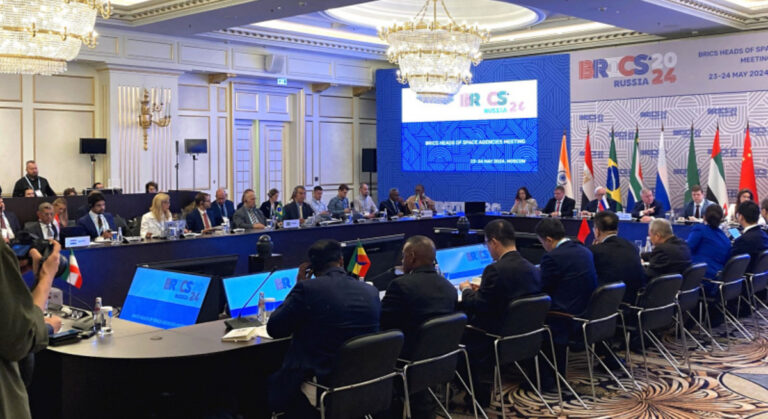
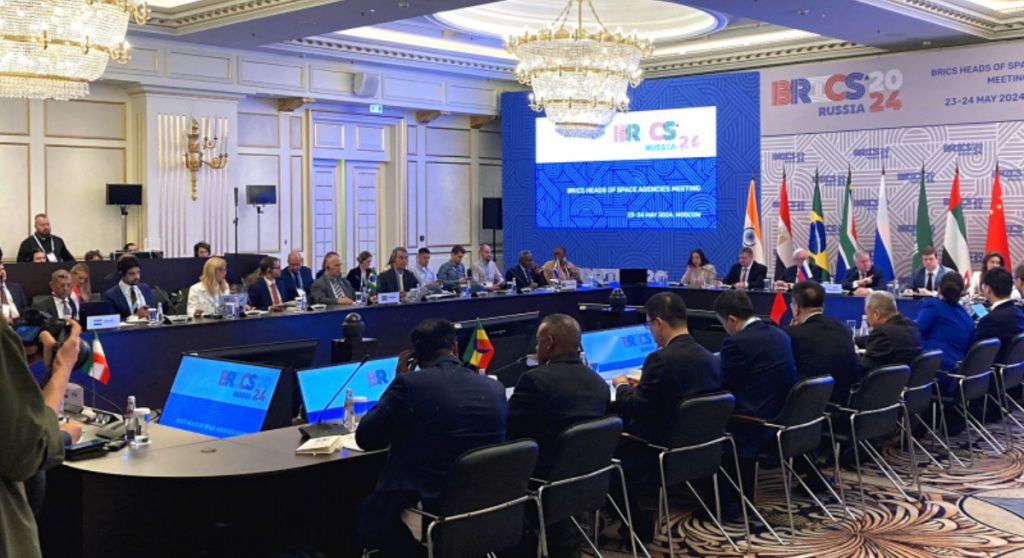
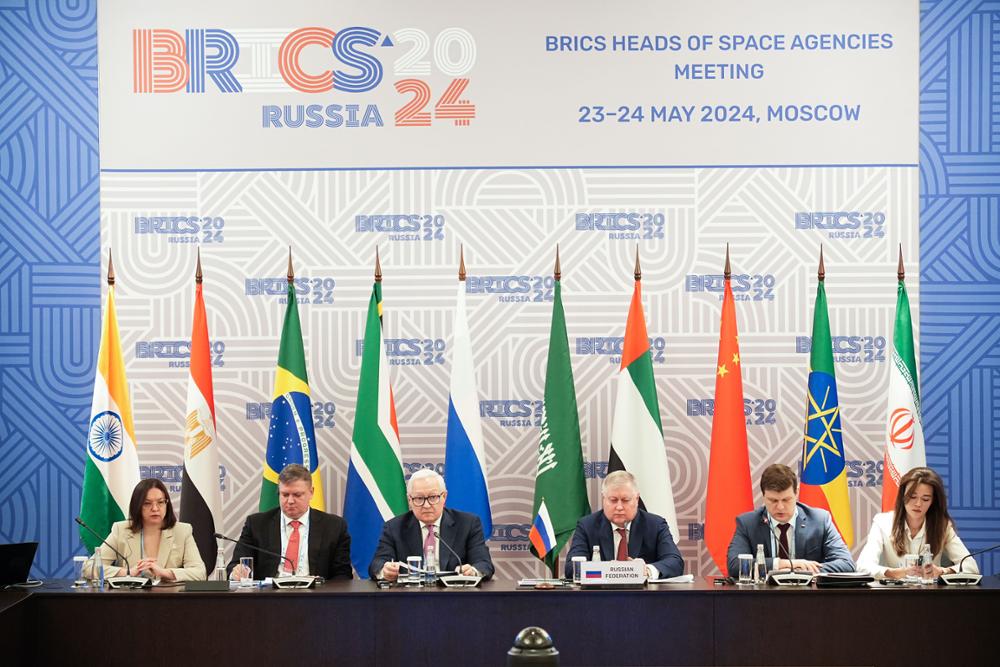
The BRICS committee comprises ten countries: Brazil, China, Egypt, Ethiopia, India, Iran, Russia, Saudi Arabia, South Africa, and the United Arab Emirates. Under Russia’s leadership, the heads of BRICS space agencies gathered in Moscow on May 23, 2024, for a two-day summit to discuss various facets of international space cooperation, deliberate on ongoing and prospective multilateral space initiatives, and adopt joint documents.
In his welcome address, Yury Borisov, Director General of Roscosmos, highlighted that the BRICS countries collectively operate over 1,200 national orbital satellites in space, considering the recent addition of new member countries to the association. The Director-General also proposed an initiative to establish a global system to guarantee the safety of space operations. This global system would be constructed around an accessible information platform with software capable of exchanging data and monitoring the situation in near-Earth orbit, providing real-time updates on space debris, potential collisions, and other safety concerns.
Furthermore, the BRICS countries also plan to exchange data regarding natural phenomena in space, including solar activity, galactic radiation, and the paths of potentially hazardous asteroids and other celestial objects. This system will be inclusive, welcoming participation from all, regardless of their level of expertise, technical resources, objectives, or terms of engagement. The process of data exchange and sharing will be governed by a comprehensive data sharing agreement, ensuring the security and privacy of all participating countries’ data.
“Both curious enthusiasts and amateur astronomers, as well as professionals in space activities, including regional or national monitoring systems, will be able to connect to the platform. Based on their choice and desire, the partners will be offered the opportunity to receive information, products, and services and to offer their own based on their demands,” commented Yury Borisov.
To advance the BRICS space activities and foster the peaceful use of outer space, the participants considered a draft joint statement by the Heads of BRICS Space Agencies. This statement urges the international community to unite in preventing the deployment of any weaponry in space and to abstain from actions that could jeopardise the integrity of the space environment and the enduring viability of space missions. This includes refraining from utilising civilian space infrastructure for undisclosed purposes. This commitment to space safety and integrity underscores the responsible and trustworthy approach of the BRICS countries towards space exploration and utilization.
At the forefront of the discussions was the BRICS Remote Sensing Satellite Constellation Cooperation Initiative, a testament to the collaborative spirit of the member countries. Established in 2015, this initiative aims to form the BRICS Remote Sensing Satellite Virtual Constellation and implement a data-sharing framework among the BRICS space agencies. The ultimate goal is to address global challenges such as climate change, major disasters, and environmental protection. This ambitious initiative will be executed in two phases, further underscoring the collective commitment of the BRICS nations to international space cooperation.
In the first phase, a virtual constellation will be created using existing Earth remote sensing satellites. The second phase will involve establishing an actual satellite constellation. Integrating the five countries’ remote sensing satellites and ground receiving stations for coordinated network observation will reduce the investment needed for building individual satellites and ground stations and significantly enhance each satellite’s imaging capabilities. This will increase efficiency in BRICS satellite observations, resulting in a “value-added” observational impact.
Furthermore, Russia’s initiative to establish a space council within the BRICS group received significant interest among member states, including South Africa.
“We see the Russian proposal to create a BRICS space council. We will develop our cooperation in this direction; South Africa supports this initiative,” Humbulani Mudau, the Executive Director of the South African National Space Agency (SANSA), stated. Beyond supporting Russia’s initiative, South Africa’s involvement in other collaborative projects with Russia, including its partnership with the country to Install PanEOS Station , the establishment of a Space Debris Monitoring Facility, and proposed projects in terms of “the extraction of mineral resources, specifically, platinum, issues overseen by Russian Railways, the Russian State Nuclear Energy Corporation and the use of the Global Navigation Satellite System (GLONASS) base station, will significantly contribute to the success of the proposed space council and enhance international space cooperation.
Furthermore, Egypt, which recently joined BRICS, has been involved in discussions on space collaboration with Roscosmos to foster its space economy’s growth. These discussions encompassed various areas such as satellite manufacturing and launches, the development of manned programmes, and the establishment of surface space infrastructure. Shedding light on Cairo’s involvement in BRICS, Sherif Sedky, the head of the Egyptian Space Agency, emphasised in an interview with RT during the space agency chiefs meeting on Thursday that Egypt’s membership in BRICS facilitates the extension of its longstanding relations with Russia to other member states within the organisation.
On the other hand, this is the first time Ethiopia will attend the BRICS Heads of Space Agencies meeting. This milestone will present an opportunity for Ethiopia to establish new partnerships and collaborations within the space community. Attending the BRICS meeting gives Ethiopia access to valuable knowledge, expertise, and best practices in space technology and exploration. This can support Ethiopia in strengthening its space programme and building local space science and technology capacity.
“It is our first meeting to join the heads of space agencies. So it’s a perfect opportunity for us to gain experience in the existing opportunities,” Abdissa Yilma, Director General of the Ethiopian Space Science and Geospatial Institute, stated.
This collaborative approach to space activities, where all member countries contribute their unique perspectives, resources, and expertise, is a key strength of the BRICS space cooperation and a testament to the shared commitment to advancing space science and technology for the benefit of all.
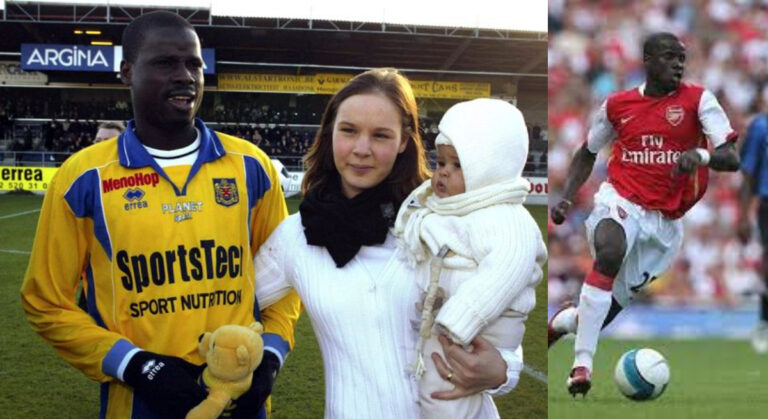
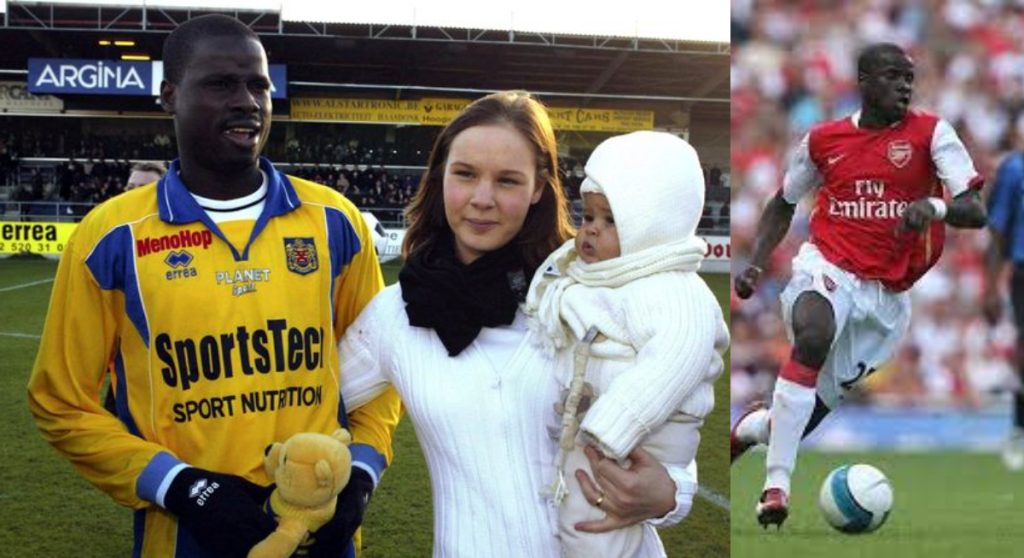
The story is about two football players from Ivory Coast named Emmanuelle Eboue and Didier Drogba. The Ivorians both played for two big London football clubs at the same time, from the mid-1990s to the early 2000s. This meant that each one made tens of thousands of pounds every week for eight years on average. So by the end of their time at Arsenal and Chelsea FC, they should both have been worth a billion pounds, right? Yes!
Didier Drogba, on the other hand, is now the second-biggest investor in mines in the Ivory Coast and a part-owner of two MLS soccer teams in North America. He is worth about $100 million (Sh10 billion), but Eboue’s story is one of “woiye” (pity). After a nasty divorce from his white wife, in which the judge gave her even his mansion in Enfield, Eboue is now angry and broke. He hides in the empty house with the electricity turned off because he is afraid that bailiffs will come to get him.
He washes his clothes by hand because he can no longer afford a washing machine (and thanks to his late grandmother for teaching him domestic chores when he grew up in the village). He used to roll around in fancy expensive cars for years, but now uses public transport.
And he blames it all on his conniving ex-wife. “Emmanuelle, you were very naïve,” Eboue now laments. “Every document your wife tells you to sign, you sign (even for property)!” He revealed that of the 8 million euros (almost a billion bob) he earned playing with Galatasaray in Turkey, seven million was sent to his (ex) wife Aurelie “because she was living behind with our three kids in London.”
Now the woman has even cut off contact of the children from their Ivorian father. There are lessons to be learned from the tragic story of Eboue here (more than sad, because the once-pound millionaire has recently considered suicide, because of heartbreak, shame, depression, and near penury).
First of all, it is almost always better to try and marry within your own culture. Oh, I know, there are a few stories out there of loving and successful interracial and intercultural marriages, but these are in the minority. It is easier, if not better, to be near when it comes to matters of marriage – in color, religion, class, and education. ‘Opposites attract’ is fine – but an Eskimo man from Greenland marrying a Khoisan woman from the Kalahari desert, to use an extreme example – does that sound like a sound foundation for the long and happy union?
By all means, marry across tribes, because divided Kenya doesn’t need more ethnic insularity. If you can, even marry across a national border. Didier Drogba, an Ivorian, married a lady from Mali – which is like marrying a nice Tanzanian. But don’t stray too far from East(ern) Africa if you can. Build back home, or even in the city – but invest in real estate, if able to, close to your roots.
If Eboue had apartment buildings in Abidjan, greedy Aurelie wouldn’t have an English racist judge able to award her these properties – and he’d just have fled back to Africa a rich man. True, Drogba has invested in real estate in Marseilles, but these are rental properties, not home – and by investing in Ivory Coast mines during their civil war at low prices, Drogba showed patriotism and confidence in his country that has now paid off, pardon the pun, in spades.
Drogba is also a great philanthropist. He established a free hospital for poor Ivorians in Abidjan, in partnership with wealthy global contacts like Abramovich. “Those who give shall receive,” and by using his networks so wisely, Drogba is now so popular in Cote d’Ivoire, it is quite possible that – (like former footballer Weah of Liberia) – if he ran, he would easily win the presidency.
Eboue’s ‘investments,’ other than in his sly white fox of a wife, were in false friends and fast cars. He didn’t even bother to invest in himself, by going to school, even after he got money. While Drogba is a professional accountant (university level), Eboue had street talent, but is still semi-literate – which is how he could sign everything over. There are lots of ‘hustler’ millionaire stories these days in Kenya, but as kids go back to school, remember education is the best investment you’ll ever make for your children.