Tag

Know Africa Official

Browsing
Adolf Hitler

Here is Adolf Hitler Ordered The Invasion Of The Soviet Union In 1941

In June 1941, Adolf Hitler ordered an invasion of the Soviet Union. By the end of 1941, German forces and the European Axis powers occupied most of Europe and North Africa.

These gains were gradually reversed after 1941, and in 1945 the Allied armies defeated the German army.

After the outbreak of war in 1939 came the added fear of Soviet expansion in Eastern Europe, while Germany was fighting the British Empire and France in the west.

All of these factors contributed to the decision taken by Hitler in July 1940, after the German defeat of France, to plan for an all-out assault on the Soviet Union.

In August 1939, Germany and the Soviet Union signed a non-aggression pact in Moscow. The pact stunned the world because of the parties’ earlier mutual hostility and their conflicting ideologies.

The conclusion of this pact was followed by the German invasion of Poland on 1 September that triggered the outbreak of World War II in Europe.

According to France24.com, Hitler intended to destroy what he saw as Stalin’s ‘Jewish Bolshevist’ regime and establish Nazi hegemony.

The conquest and enslavement of the Soviet Union’s racially ‘inferior’ Slavic populations would be part of a grand plan of ‘Germanisation’ and economic exploitation lasting well beyond the expected military victory.

Knowafricaofficial.com

elephants-,knowafricaofficial.com,history, africahistory 1

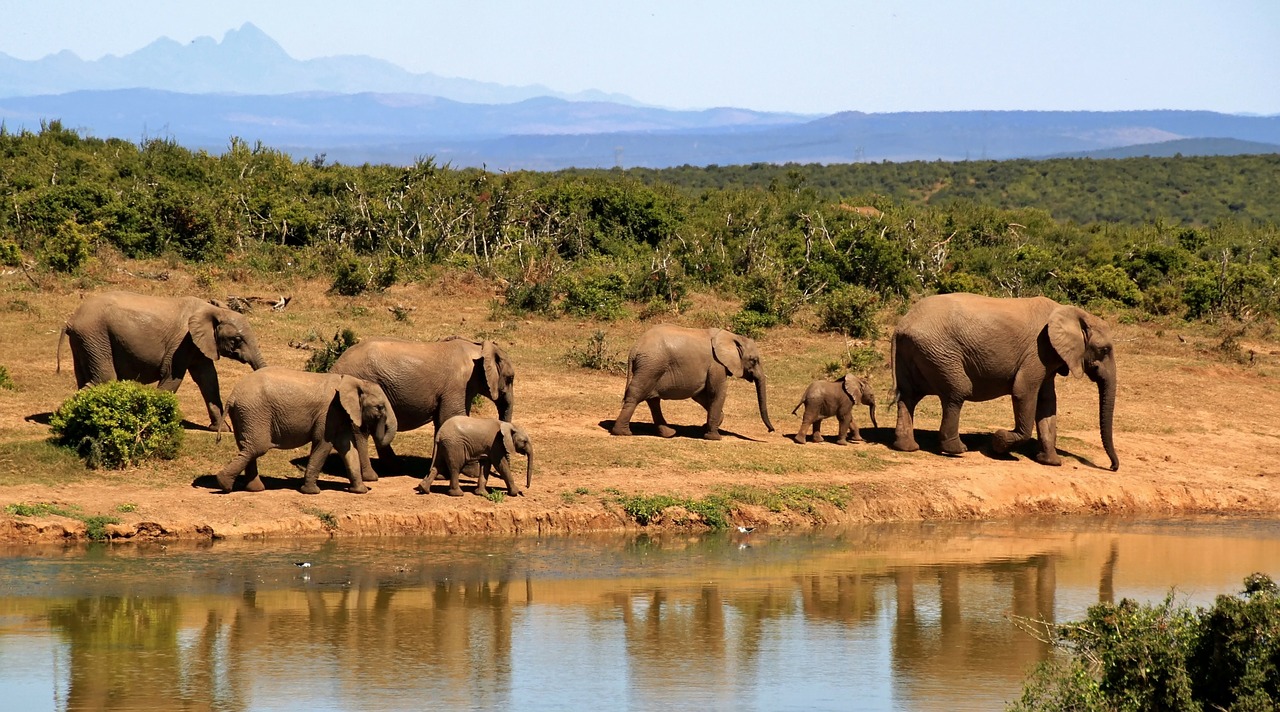
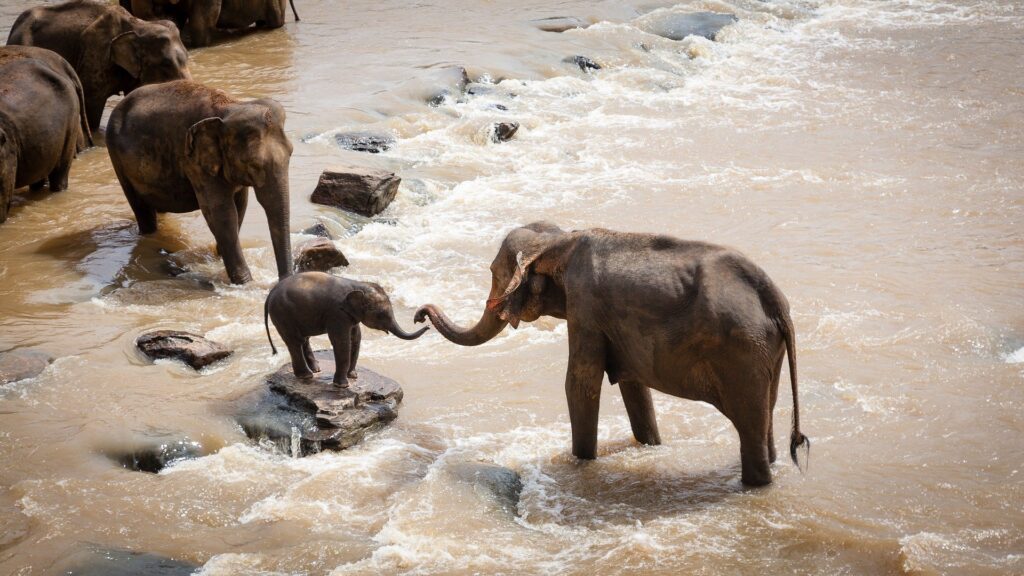
Because of their sophisticated minds and ability to experience intense emotions, elephants are among the most competent animals on the planet.

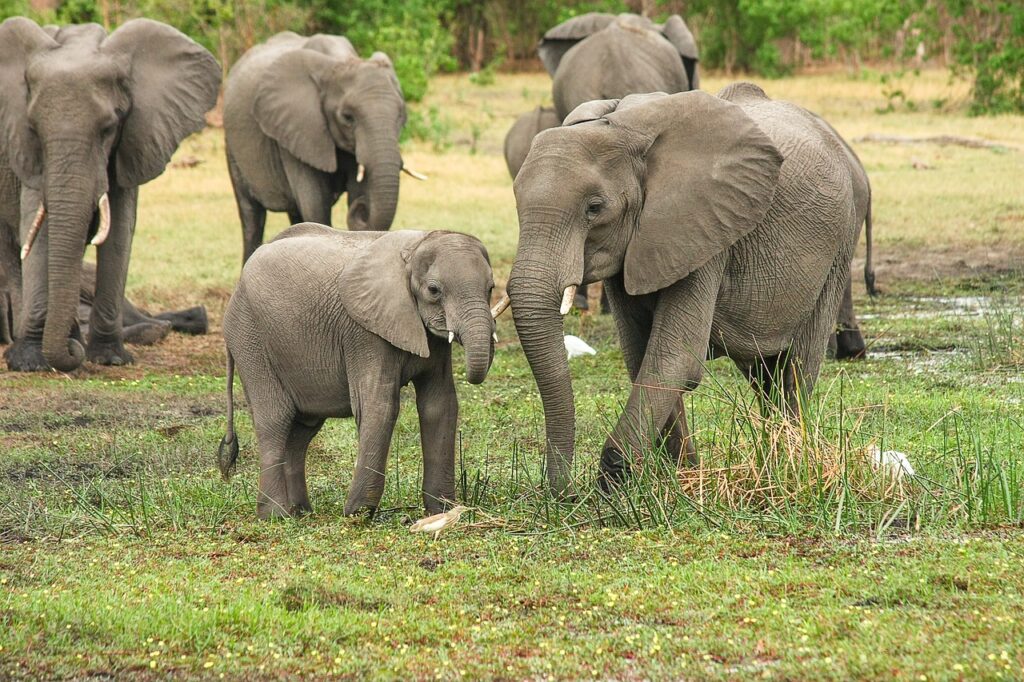
Elephants play an important role in seedling establishment for trees; in fact, some species rely entirely on elephants. Elephants that eat savannah tree sprouts and shrubs help keep the plains open and ready for the plains game that lives in these ecosystems. Elephants eat a wide variety of plants, and their dung contains plant seeds. When this dung is deposited, seeds are sown, which grow into new grasses, bushes, and trees, thereby benefiting the savannah ecosystem.

elephants-1,knowafricaofficial.com,history,

The people who share the African countryside with them have earned them the respect they hold and consequently they have significant cultural significance.

Elephants draw tourist dollars to help protect endangered species as the symbols of the continent. They also form part of the ecosystem and contribute directly to the ecosystem’s biodiversity.

In the forest, elephants eat, left gaps. These infringements allow new plants to grow and other small animals to develop routes.

In truth, we are in a total fight against ourselves and still did not. The world reacted less than pathetically. We try to sort out the problem that it was, rather than what it is, let alone what it might be.

elephants,knowafricaofficial.com,history, africahistory

This is the key to the issue and the solution. 

We are neither independent nor separate from our environment. We belong to it and depend on it to be healthy. The decrease of the elephant is not only the loss of a magnificent creature but also the loss in the elephant’s environment.

Without good wilderness areas, we can’t live. The cities we live in are not isolated bubbles but food and other resources that are not dependent upon the world in our final residential district.

They are becoming out-of-check monsters with ravine appetites and sucking resources and the suction of these resources instead of interacting in harmony with the environment they have to sustain. The loss of the elephant is the beginning of our world’s irreversible loss.

I’ve never heard or read anything like this before. Everything has happened right in front of my eyes. As a result, I will continue to campaign in the hopes of increasing elephant awareness and respect. Let us hope we can be the voice of the peaceful creatures.

Article by: Georgeson Gatwech Phan

kerm a kingdom, history, africa,

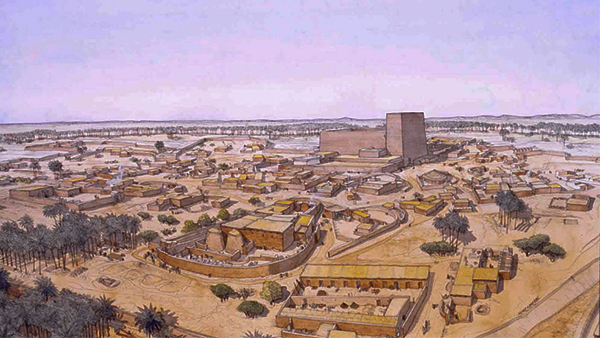
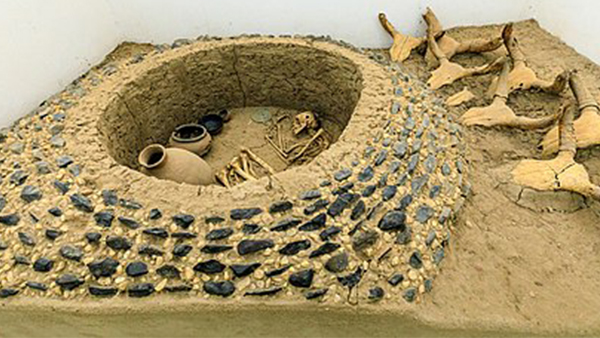
The Kingdom of Kerma was an antiquated civilization that existed between 2500 BC and 1500 BC, with its capital in the city of Kerma. It was situated in the core of Sudanese Nubia and is the main provable sub-Saharan realm to have existed. The Kingdom of Kerma is thought to have existed without a composing framework thus all data about this realm comes either from archeological confirmation or sources from Egypt.

Later the realm started to be alluded to as Kerma, and its occupants were famous for being skilled champions and toxophilite. The significant occupations of the realm included exchange, tending domesticated animals, chasing, and fishing. The Kingdom of Kerma existed in three unmistakable stages – Ancient/Early Kerma (around 2500 BC – 2050 BC), Middle Kerma (around 2050 BC – 1750 BC), and Classic Kerma (around 1750 BC – 1500 BC). Exemplary Kerma was the brilliant age of the realm. It was during this period that its rulers effectively assumed responsibility for Egyptian forts and gold mines in the Second waterfall. The realm continued assaulting and catching Egyptian domains until around 1500 BC Thutmose I assaulted Kerma itself and attached the realm into the Egyptian Empire.

kerm-a-kingdom-history-africa-sudan

Conveyance of gold in the Sudanese Eastern Desert. Shadowed regions mark the primary gold-bearing locales. Triangle – Kermite array, Green tablets – Eastern Sudan gathering, Square – Middle Nubian collection, and Rounded images – Pan-grave array. A collection is an archeological term for a gathering of relics that can be assembled by setting.

The Origin and Rise to Power

The Kingdom of Kerma was one of the most punctual metropolitan communities in the Nile district. This district had been possessed from as far back as 5,000 BC, fundamentally by little fishing towns and exchange focuses. There is archeological proof of a bound together culture and realm rising up out of a mixture of these little towns and the proto-Kerma (pre-dynastic) A-Group Culture of 3,800-3,100 BC. This culture and its realm were known as the Naqada realm. Around the turn of the proto-dynastic period, Naqada, in its offer to overcome and bring together the entire Nile Valley, appears to have vanquished Nubia.

This made a bound together realm encompassing the region of Nubia. After the fall of the Naqada realm in 2700 BC, the Kerma culture assumed control over the territory of Nubia, with Kermites fanning out from the city of Kerma. In the long run, this culture was the prevailing one nearby and prompted the making of The Kingdom of Kerma around 2500 BC with the total of the territory of Nubia under their influence.

As of now their northern neighbors, the Egyptians were prospering too, and that opened up both exchange openings and competitions as far as domains for the Kermit’s. They continued conflicting with one another however there were no critical advances made by all things considered. Following quite a while of growing away from Egypt, the Hyksos intrusion of Lower Egypt, around 1786 BC, allowed the Kermites a chance to broaden toward the north. Hyksos comes from heqa-khase, an expression signifying “leaders of unfamiliar terrains”.

In 1650 BC, Kerma made a coalition with the Hyksos which empowered them to practically twofold their solidarity. While the Hyksos managed Lower Egypt, the Kermites controlled Upper Egypt. The authority of autonomous Egyptian rulers was accordingly compelled to a little region around Thebes. The number of inhabitants in Upper Egypt, then again, seemed to have recognized the control of Kerma without impediment. This dispatched the Kingdom of Kerma into its brilliant age, wherein it arrived at the pinnacle of its riches and influence.

Having killed the opponent line at Hierakonpolis, the Theban pharaoh, Montjuhotep II, introduced a post fort at Abu, where he could screen desert exchanging courses and make a springboard to attack an inexorably estranged Lower Nubia, effectively attaching the district around Buhen. By c. 1872 BCE, Egypt had let completely go over Wawat, hastening a fierce attack by Amenhotep I and his co-ruler Senusret I.

Nubian freedom was quenched and many recruited into subjection. Having attached Nubia past the subsequent waterfall, Senusret I left on a productive fortress building program, thought around Buhen and Kor. Senusret III, stressed over the insubordinate Kush area, set up more fortifications and another line among Mirgissa and Semna. Exchanging focuses were likewise settled along the Nile, with monstrous posts not just giving a showcase of military strength and guarded ability yet in addition ensuring the Nile exchange gold, copper, and valuable metals separated from the Nubian mines.

The Areas Under Rule and Administration

In the Kingdom of Kerma’s most prosperous phase, from about 1700–1500 BCE, it absorbed the Sudanese kingdom of Sai and became a sizeable, populous empire rivaling Egypt. This Kingdom covered wide swathes of the great Nile river, covering all of Nubia and Egypt, barring the areas around the city of Thebes, where the Egyptian Pharaohs still held power.

The Kermit Empire was divided into provinces run by a pesto (governor). The pesto had subordinates who served specialized functions. Nubian queens were co-rulers with pharaohs. In some cases, they ruled alone.

Kermit kings worshipped Amun, who was also a key deity to Egyptians. Amun was the god of the sun and only one of the many in the Egyptian Pantheon. However, Kerma were believers in a single god and hence had banned the public worship of any other religion or major god in their territory. This excluded the local gods, which were considered minor deities under Amun. Kermit temples for Amun were similar to Egyptian temples, but temples for local gods were constructed differently.

SEE ALSO: https://knowafricaofficial.com/the-great-ashanti-empire/

nelson-mandela-history-africa-southafrica. knowafricaofficial.com

Nelson Mandela, in full Nelson Rolihlahla Mandela, byname Madiba, (brought into the world July 18, 1918, Mvezo, South Africa—kicked the bucket December 5, 2013, Johannesburg), Black patriot and the principal Black leader of South Africa (1994–99). His exchanges in the mid-1990s with South African Pres. F.W. de Klerk helped end the country’s politically-sanctioned racial segregation arrangement of racial isolation and introduced serene progress to larger part rule. Mandela and de Klerk were mutually granted the Nobel Prize for Peace in 1993 for their endeavors.

Mandela’s Early Life And Work

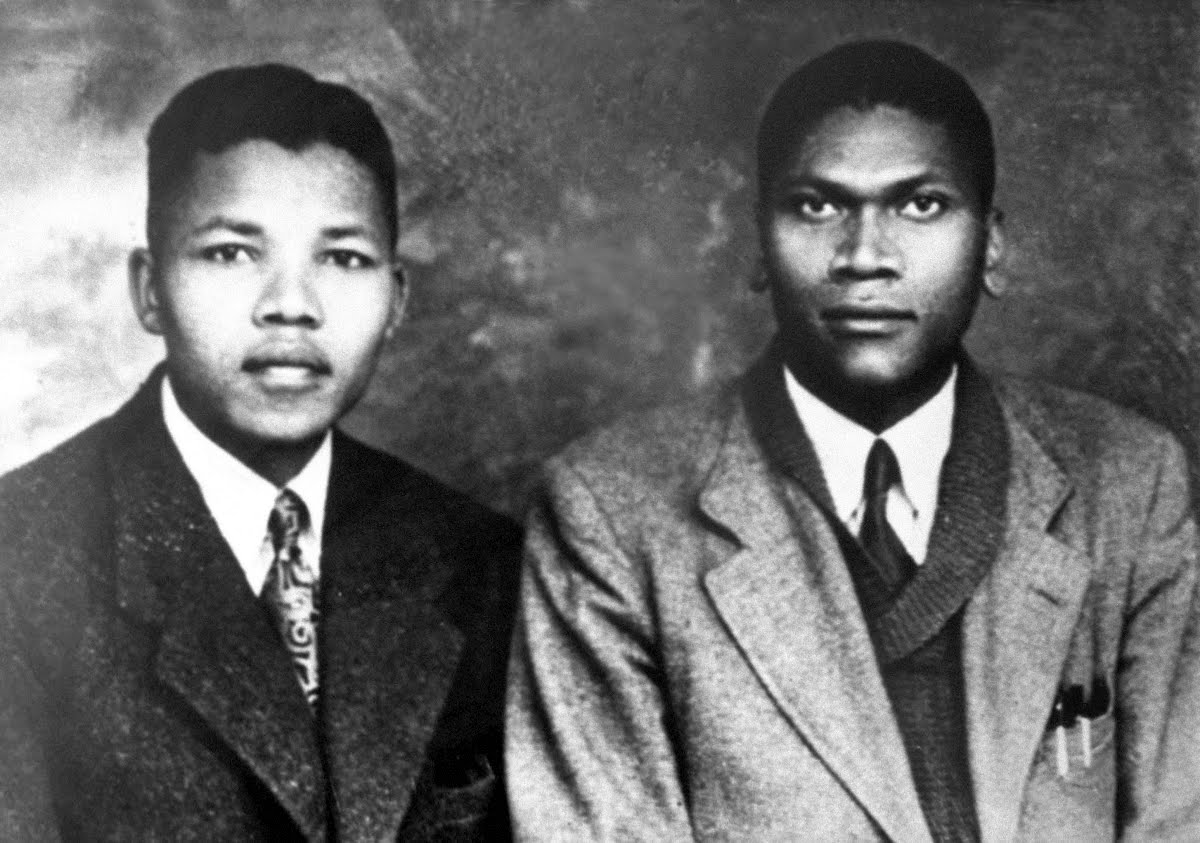
Nelson Mandela was the child of Chief Henry Mandela of the Madiba tribe of the Xhosa-speaking Tembu individuals. After his dad’s passing, youthful Nelson was raised by Jongintaba, the official of the Tembu. Nelson denied his case to the chieftainship to turn into a legal advisor. He went to South African Native College (later the University of Fort Hare) and considered law at the University of the Witwatersrand; he later finished the capability test to turn into an attorney. In 1944 he joined the African National Congress (ANC), a Black-freedom gathering, and turned ahead of its Youth League. That very year he met and wedded Evelyn Ntoko Mase. Mandela along these lines stood firm on other ANC administration situations, through which he rejuvenated the association and contradict the politically-sanctioned racial segregation arrangements of the decision National Party.

 nelson mandela, history, africa,

In 1952 in Johannesburg, with individual ANC pioneer Oliver Tambo, Mandela set up South Africa’s first Black law work on, having some expertise in cases coming about because of the post-1948 politically-sanctioned racial segregation enactment. Additionally that year, Mandela assumed a significant part in dispatching a mission of rebellion against South Africa’s pass laws, which required nonwhites to convey reports (known as passes, passbooks, or reference books) approving their quality in zones that the public authority considered “confined” (i.e., by and large, held for the white populace). He went all through the country as a component of the mission, attempting to fabricate uphold for peaceful methods for challenging the unfair laws. In 1955 he was associated with drafting the Freedom Charter, an archive calling for a nonracial social vote-based system in South Africa.

Mandela’s enemy of politically-sanctioned racial segregation activism made him an incessant objective of the specialists. Beginning in 1952, he was discontinuously prohibited (seriously limited in movement, affiliation, and discourse). In December 1956 he was captured with in excess of 100 others on charges of treachery that were intended to irritate against politically-sanctioned racial segregation activists. Mandela went being investigated that very year and in the long run, was cleared in 1961. During the all-encompassing court procedures, he separated from his first spouse and wedded Nomzamo Winifred Madikizela ( Winnie Madikizela-Mandela).

The Underground Activity And The Rivonia Trial

After the slaughter of unarmed Black South Africans by police powers at Sharpeville in 1960 and the resulting forbidding of the ANC, Mandela deserted his peaceful position and started supporting demonstrations of treachery against the South African system. He went underground (during which time he got known as the Black Pimpernel for his capacity to sidestep catch) and was one of the organizers of Umkhonto we Sizwe (“Spear of the Nation”), the military wing of the ANC. In 1962 he went to Algeria for preparing in close quarters combat and damage, getting back to South Africa sometime thereafter. On August 5, soon after his return, Mandela was captured at a barrier in Natal; he was in this manner condemned to five years in jail.

nelson mandela, history, africa.

In October 1963 the detained Mandela and a few different men were pursued for damage, injustice, and fierce scheme in the notorious Rivonia Trial, named after an elegant suburb of Johannesburg where striking police had found amounts of arms and hardware at the central command of the underground Umkhonto we Sizwe. Mandela’s discourse from the dock, wherein he conceded the reality of a portion of the charges made against him, was exemplary protection of freedom and disobedience of oppression. (His discourse gathered global consideration and recognition and was distributed sometime thereafter as I Am Prepared to Die.) On June 12, 1964, he was condemned to life detainment, barely getting away from capital punishment.

Incarceration

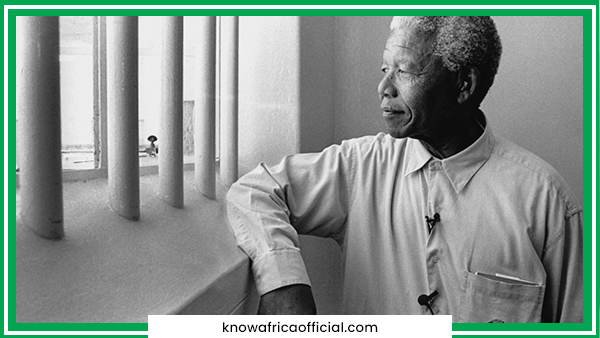
From 1964 to 1982 Mandela was detained at Robben Island Prison, off Cape Town. He was thusly kept at the most extreme security Pollsmoor Prison until 1988, when, in the wake of being treated for tuberculosis, he was moved to Victor Verster Prison close to Paarl. The South African government occasionally made restrictive proposals of opportunity to Mandela, most prominently in 1976, relying on the prerequisite that he perceives the recently autonomous—and profoundly questionable—the status of the Transkei Bantustan and consent to dwell there. An offer made in 1985 necessitated that he deny the utilization of savagery. Mandela denied the two offers, the second on the reason that lone free men had the option to participate in such exchanges and, as a detainee, he was not a liberated person.

All through his detainment, Mandela held wide help among South Africa’s Black populace, and his detainment turned into a reason célèbre among the worldwide local area that censured politically-sanctioned racial segregation. As South Africa’s political circumstance disintegrated after 1983, and especially after 1988, he was locked in by priests of Pres. P.W. Botha’s administration in exploratory exchanges; he met with Botha’s replacement, de Klerk, in December 1989.

On February 11, 1990, the South African government under President de Klerk delivered Mandela from jail. Not long after his delivery, Mandela was picked agent leader of the ANC; he became a leader of the gathering in July 1991. Mandela drove the ANC in dealings with de Klerk to end politically-sanctioned racial segregation and achieve serene progress to nonracial majority rule government in South Africa.

The Presidency And Retirement

In April 1994 the Mandela-drove ANC won South Africa’s first races by general testimonial, and on May 10 Mandela was confirmed as leader of the country’s first multiethnic government. He set up in 1995 the Truth and Reconciliation Commission (TRC), which explored common liberties infringement under politically-sanctioned racial segregation, and he presented lodging, instruction, and financial advancement activities intended to improve the expectations for everyday comforts of the nation’s Black populace. In 1996 he supervised the establishment of another popularity-based constitution. Mandela surrendered his post with the ANC in December 1997, moving the administration of the gathering to his assigned replacement, Thabo Mbeki. Mandela and Madikizela-Mandela had separated in 1996, and in 1998 Mandela wedded Graca Machel, the widow of Samora Machel, the previous Mozambican president and head of Frelimo.

Mandela didn’t look for a second term as South African president and was prevailing by Mbeki in 1999. Subsequent to leaving office Mandela resigned from dynamic legislative issues however kept a solid worldwide presence as a backer of harmony, compromise, and social equity, regularly crafted by the Nelson Mandela Foundation, set up in 1999. He was an establishing individual from the Elders, a gathering of worldwide pioneers set up in 2007 for the advancement of compromise and critical thinking all through the world. In 2008 Mandela was feted with a few festivals in South Africa, Great Britain, and different nations to pay tribute to his 90th birthday celebration.

Mandela Day, seen on Mandela’s birthday, was made to respect his heritage by advancing local area administration around the planet. It was first seen on July 18, 2009, and was supported fundamentally by the Nelson Mandela Foundation and the 46664 activity (the establishment’s HIV/AIDS worldwide mindfulness and anticipation crusade); soon thereafter the United Nations proclaimed that the day would be noticed yearly as Nelson Mandela International Day.

Mandela’s compositions and addresses were gathered in I Are Prepared to Die (1964; fire up. ed. 1986), No Easy Walk to Freedom (1965; refreshed ed. 2002), The Struggle Is My Life (1978; fire up. ed. 1990), and In His Own Words (2003). The life account Long Walk to Freedom, which annals his initial life and years in jail, was distributed in 1994. An incomplete draft of his second volume of diaries was finished by Mandla Langa and delivered after death as Dare Not Linger: The Presidential Years (2017).

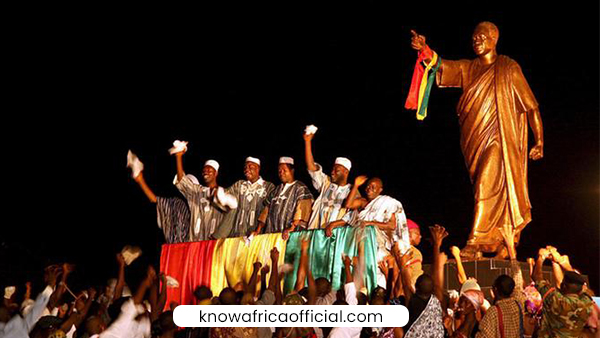
Dr. Kwame Nkrumah | Biography, Education, Life -knowafricaofficial.com

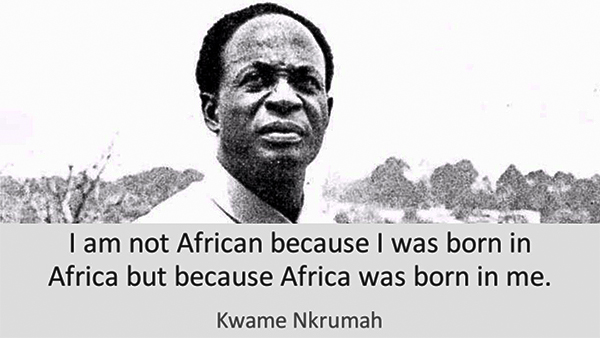
Dr. Kwame Nkrumah, (came into this world on September 1909, Nkroful, Gold Coast [now Ghana]—passed on April 27, 1972, Bucharest, Romania), Ghanaian patriot pioneer who drove the Gold Coast’s drive for freedom from Britain and directed its rise as the new country of Ghana. He headed the country from autonomy in 1957 until he was ousted by an overthrow in 1966.

Dr. Kwame Nkrumah’s Early Life 

Kwame Nkrumah’s dad was a goldsmith and his mom a retail merchant. Purified through water a Roman Catholic, Nkrumah went through nine years at the Roman Catholic grade school close by Half Assini. After graduation from Achimota College in 1930, he began his profession as an educator at Roman Catholic junior schools in Elmina and Axim and at a theological school.

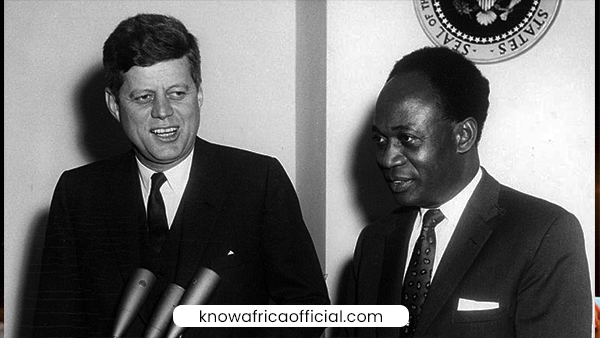
Progressively attracted to governmental issues, Nkrumah chose to seek additional examinations in the United States. He entered Lincoln University in Pennsylvania in 1935 and, subsequent to graduating in 1939, acquired graduate degrees from Lincoln and from the University of Pennsylvania. He examined the writing of communism, prominently Karl Marx and Vladimir Lenin, and of patriotism, particularly Marcus Garvey, the Black American head of the 1920s. In the long run, Nkrumah came to portray himself as a “nondenominational Christian and a Marxist communist.” He likewise submerged himself in political work, revamping and turning out to be the leader of the African Students’ Organization of the United States and Canada. He left the United States in May 1945 and went to England, where he coordinated the fifth Pan-African Congress in Manchester.

In the meantime, in the Gold Coast, J.B. Danquah had shaped the United Gold Coast Convention (UGCC) to work for self-government by established methods. Welcome to fill in as the UGCC’s overall secretary, Nkrumah got back in late 1947. As broad secretary, he tended to gatherings all through the Gold Coast and started to make a mass base for the new development. At the point when broad uproars happened in February 1948, the British momentarily captured Nkrumah and different heads of the UGCC.

At the point when a split created between the working class heads of the UGCC and the more extreme allies of Nkrumah, he framed in June 1949 the new Convention Peoples’ Party (CPP), a mass-based gathering that was focused on a program of prompt self-government. In January 1950, Nkrumah started a mission of “positive activity,” including peaceful fights, strikes, and noncooperation with the British provincial specialists.

Dr. Kwame Nkrumah | Biography, Education, Life -knowafricaofficial.com


From Prison To Prime Ministry

In the resulting emergency, administrations all through the nation were upset, and Nkrumah was again captured and condemned to one year’s detainment. Be that as it may, the Gold Coast’s first broad political race (February 8, 1951) showed the help the CPP had effectively won. Chosen for Parliament, Nkrumah was delivered from jail to become head of government business and, in 1952, leader of the Gold Coast.

Dr. Kwame Nkrumah | Biography, Education, Life -knowafricaofficial.com

At the point when the Gold Coast and the British Togoland trust an area turned into a free state inside the British Commonwealth—as Ghana—in March 1957, Nkrumah turned into the new country’s first leader. In 1958 Nkrumah’s administration legitimized the detainment without preliminary of those it viewed as security hazards. It before long became evident that Nkrumah’s style of government was to be a tyrant. Nkrumah’s fame in the nation rose, be that as it may, as new streets, schools, and wellbeing offices were constructed and as the approach of Africanization set out better vocation open doors for Ghanaians.

By a plebiscite of 1960, Ghana turned into a republic and Nkrumah turned into its leader, with wide administrative and chief forces under another constitution. Nkrumah at that point focused his consideration on lobbying for the political solidarity of Black Africa, and he started to put some distance between real factors in Ghana. His organization got engaged with superb however frequently ruinous improvement projects, so a once-prosperous nation got injured with the unfamiliar obligation. His administration’s Second Development Plan declared in 1959, must be deserted in 1961 when the shortage yet to be determined of installments rose to more than $125 million. Compression of the economy prompted broad work agitation and an overall strike in September 1961. From that time Nkrumah started to advance a substantially more thorough mechanical assembly of political control and to go progressively to the socialist nations for help.

The endeavoured death of Nkrumah at Kulugungu in August 1962—the first of a few—prompted his expanding segregation from public life and to the development of a character faction, just as to a monstrous development of the country’s interior security powers. Right off the bat in 1964 Ghana was formally assigned a one-party state, with Nkrumah as life leader of both country and gathering. While the organization of the nation passed progressively under the control of self-serving and degenerate gathering authorities, Nkrumah busied himself with the philosophical training of another age of Black African political activists. In the meantime, the monetary emergency in Ghana declined and deficiencies of groceries and different merchandise got ongoing. On February 24, 1966, while Nkrumah was visiting Beijing, the military and police in Ghana held onto power. Getting back to West Africa, Nkrumah discovered refuge in Guinea, where he spent the rest of his life. He kicked the bucket of disease in Bucharest in 1972.

Ashanti_Empire_knowafricaofficial

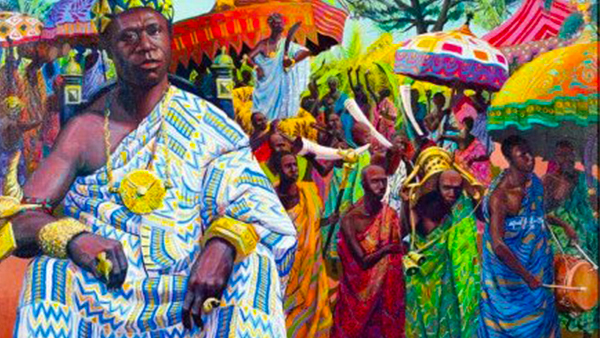
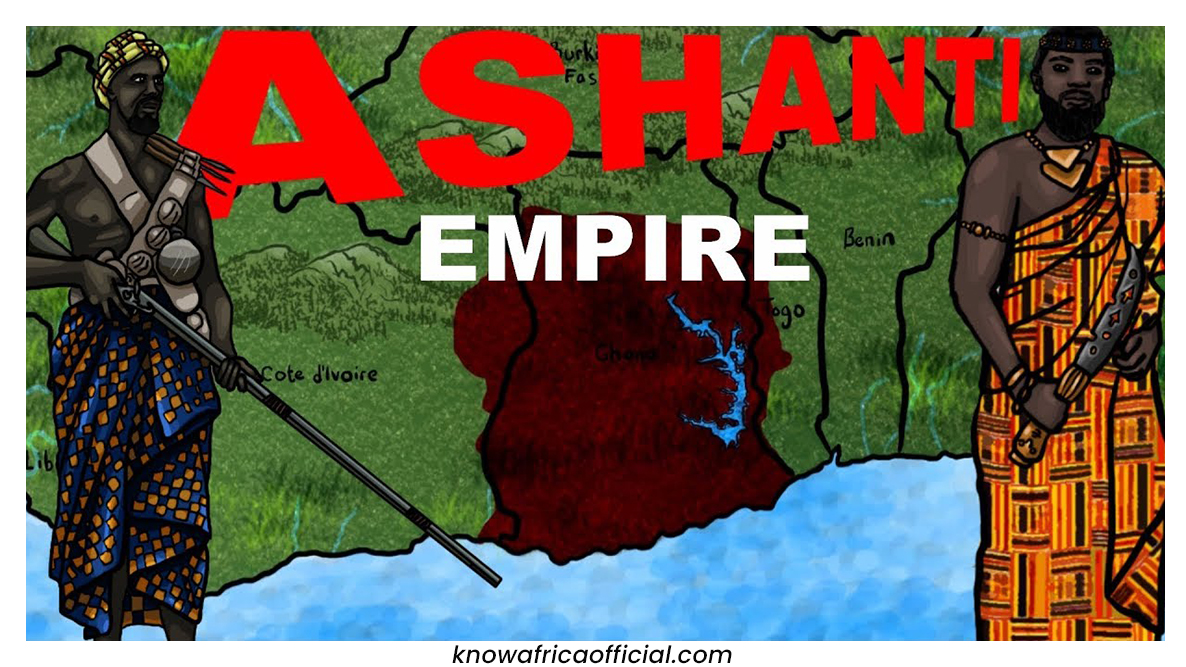
The Great Ashanti Empire was a pre-colonial West African express that arose in the seventeenth century in what is currently Ghana.

The Ashanti or Asante was an ethnic subgroup of the Akan-talking individuals and was made out of little chiefdoms.

The Ashanti set up their state around Kumasi in the last part of the 1600s, soon after their first experience with Europeans. Some, the Empire outgrew the wars and separations brought about by Europeans who looked for the popular gold stores which gave this locale its name, the Gold Coast. During this period, the Portuguese were the most dynamic Europeans in West Africa. They made Ashanti a huge exchanging accomplice, giving riches and weapons which permitted the little state to develop further than its neighbours. Regardless of when the eighteenth Century started Ashanti was essentially one of the Akan-communicating in Portuguese exchanging accomplices the locale.

Ashanti_Empire_knowafricaofficial

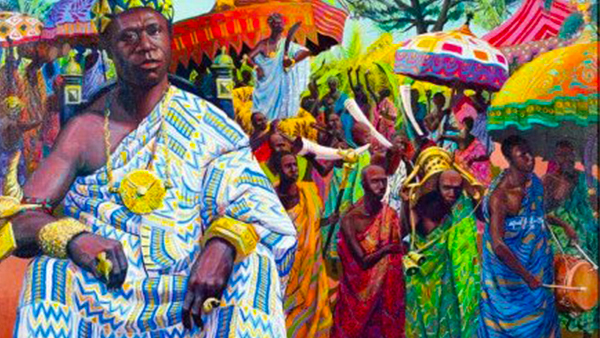
That circumstance changed when Osei Tutu, the Asantehene (vital head) of Ashanti from 1701 to 1717, and his cleric Komfo Anokye, bound together with the autonomous chiefdoms into the most remarkable political and military state in the waterfront locale. The Asantehene coordinated the Asante Union, a union of Akan-talking individuals who were currently faithful to his focal position. The Asantehene made Kumasi the capital of the new domain. He additionally made a constitution, redesigned and concentrated the military, and made another social celebration, Odwira, which represented the new association. Above all, he made the Golden Stool, which he contended addressed the precursors of all the Ashanti. Upon that Stool, Osei Tutu legitimized his standard and that of the regal line that followed him.

Gold was the significant result of the Ashanti Empire. Osei Tutu made the gold mines illustrious belongings. He likewise made gold residue the flowing cash in the domain. The gold residue was often gathered by Asante residents, especially by the developing affluent trader class. Be that as it may, even moderately helpless subjects utilized gold residue as ornamentation on their dress and different belongings. Bigger gold trimmings possessed by the illustrious family and the well-off were undeniably more important. Occasionally they were softened down and moulded into new examples of a show in gems and sculpture.

Ashanti_Empire_knowafricaofficial

On the off chance that the early Ashanti Empire economy relied upon the gold exchange in the 1700s, by the mid-1800s it had become a significant exporter of oppressed individuals. The slave exchange was initially centred north with hostages going to Mande and Hausa merchants who traded them for products from North Africa and by implication from Europe. By 1800, the exchange had moved toward the south as the Ashanti tried to fulfill the developing need of the British, Dutch, and French for prisoners. In return, the Ashanti got extravagant things and some made products including the main guns.

The result of this exchange for the Ashanti and their neighbours was terrible. From 1790 until 1896, the Ashanti Empire was in a never-ending condition of war including the extension of protection of its space. A large portion of these wars managed the cost of the chance to procure more slaves for exchange. The steady fighting likewise debilitated the Empire against the British who in the end turned into their fundamental enemy. Somewhere in the range of 1823 and 1873, the Ashanti Empire opposed British infringement on their domain. By 1874, in any case, British powers effectively attacked the Empire and momentarily caught Kumasi. The Ashanti opposed British principle and the Empire was again vanquished in 1896. After one more uprising in 1900, the British ousted and banished the Asantehene and attached the Empire into their Gold Coast settlement in 1902.

Yoruba-Kingdoms-and-Benin-knowafricaofficial-history

The Yoruba Kingdoms and Benin – To the extent authentic memory broadens, the Yoruba have been the prevailing gathering on the west bank of Niger.

To the extent authentic memory broadens, the Yoruba have been the prevailing gathering on the west bank of Niger. Of blended inception, they were the result of the osmosis of occasional influxes of travellers who advanced a typical language and culture. The Yoruba were coordinated in patrilineal drop bunches that involved town networks and stayed alive on farming, yet from about the 11th century A.D., neighbouring town compounds, called ile, started to blend into various regional city-states in which loyalties to the tribe got subordinate to loyalty to a dynastic clan leader. This progress created an urbanized political and social climate that was joined by a significant degree of imaginative accomplishment, especially in earthenware and ivory design and in the complex metal projecting delivered at Ife. The metal and bronze utilized by Yoruba craftsmen was a huge thing of exchange, produced using copper, tin, and zinc either imported from North Africa or from mines in the Sahara and northern Nigeria.

The Yoruba Kingdoms and Benin-knowafricaofficial.com

The Yoruba pacified a lush pantheon headed by a generic god, Olorun, and included lesser divinities, some of them once mortal, who played out an assortment of enormous and commonsense assignments. One of them, Oduduwa, was viewed as the maker of the earth and the precursor of the Yoruba lords. As per a creation fantasy, Oduduwa established the city of Ife and dispatched his children to build up different urban communities, where they ruled as minister rulers and managed religious ceremonies. Formal practices of this sort have been deciphered as lovely representations of the chronicled cycle by which Ife’s decision administration expanded its position over Yorubaland. The tales were endeavours to legitimize the Yoruba governments – after they had superseded tribe loyalties- – by asserting a heavenly root.

Ife was the focal point of upwards of 400 strict religions whose customs were controlled to a political favorable position by the oni (ruler) in the times of the realm’s significance. Ife likewise lay at the focal point of an exchanging network with the north. The oni upheld his court with tolls demanded on an exchange, recognition claimed from conditions and offerings due him as a strict pioneer. Perhaps the best heritage to present-day Nigeria is its lovely model related to this custom.

The oni was picked on a turning premise from one of a few parts of the decision line, which was made out of a family with a few thousand individuals. When chosen, he went into disengagement in the castle compound and was not seen again by his kin. Underneath the oni in the state pecking order were royal residence authorities, town bosses, and the leaders of remote conditions. The royal residence authorities were representatives for the oni and the leaders of conditions who had their own subordinate authorities. All workplaces, even that of the oni, were elective and relied upon expansive help inside the local area. Every authority was browsed among the qualified faction individuals who had innate

right to the workplace. Individuals from the imperial tradition frequently were allowed to administer conditions, while the children of castle authorities expected lesser parts as functionaries, guardians to the oni, and judges.

 Yoruba Kingdoms and Benin, knowafricaofficial, history, nigeria

During the fifteenth century, Oyo and Benin outperformed Ife as political and financial forces, in spite of the fact that Ife saved its status as a strict focus even after its decrease. Regard for the religious elements of the oni of Ife and acknowledgment of the regular practice of source was essential variables in the development of Yoruba identity. The oni of Ife was perceived as the senior political authority among the Yoruba as well as at Benin, and he contributed Benin’s rulers with the images of worldly force.


The Ife model of government was adjusted at Oyo, where an individual from its decision line united a few more modest city-states under his influence. A board of express, the Oyo Mesi, in the long run, accepted accountability for naming the alafin (ruler) from applicants proposed by the decision administration and went about a keep an eye on his power. Oyo created as a protected government; the real government was in the possession of the basorun (PM), who directed the Oyo Mesi. The city was arranged 170 kilometres north of Ife, and around 100 kilometres north of present-day Oyo. In contrast to the woods bound Yoruba realms, Oyo was in the savanna and drew its military strength from its cavalry powers, which set up authority over the contiguous Nupe and the Borgu realms and subsequently created shipping lanes farther toward the north.

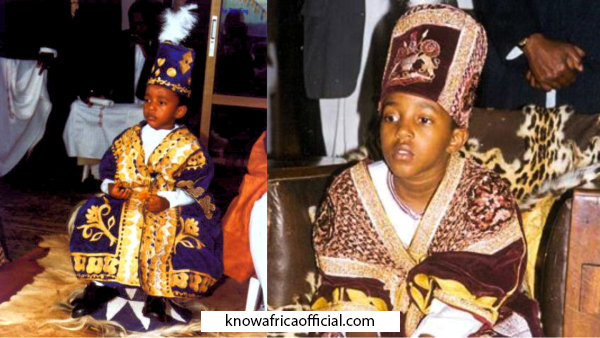
King Oyo was the World’s Youngest King Who Ascended The Throne At Age 3

Numerous children will mess around or have a good time outside with their companions at age 3, yet not for King Oyo Nyimba Kabamba Iguru Rukidi IV, who was at that point figuring out how to govern a realm of in excess of 2 million individuals at that youthful age.

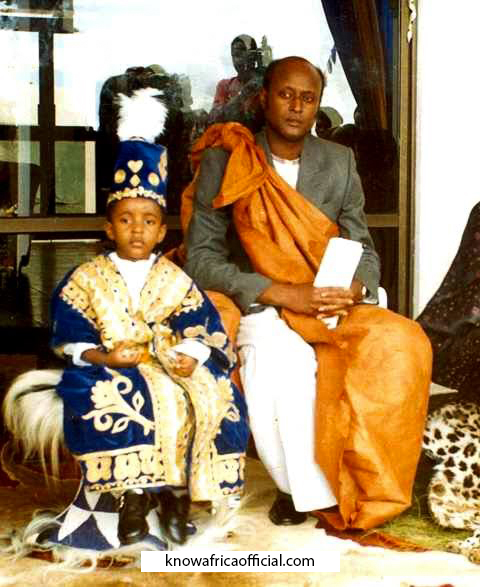
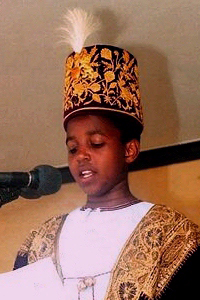
Rukirabasaija Oyo Nyimba Kabamba Iguru Rukidi IV, King Oyo, is the ruling Omukama of Toro, in Uganda. He was brought into the world on 16 April 1992 to King Patrick David Mathew Kaboyo Olimi III and Queen Best Kemigisa Kaboyo. Three and a half years after the fact, in1995, Oyo rose to the seat and succeeded his dad as the twelfth leader of the 180-year-old Toro Kingdom.

Lord Oyo of Toro Kingdom, one of four realms in Uganda, East Africa is holding the record as the “World’s Youngest Monarch” in the Guinness World Records Book.

BACKGROUND

What is currently Uganda was comprised of free realms and networks drove by Tribal Chiefs and Kings in pre-pioneer times. Albeit most social orders in Uganda, similar to networks in its north and upper east, were approximately settled by tribe administration structures, different networks, for example, Bunyoro, Buganda, Ankole and Toro were coordinated governments.

In 1966, notwithstanding their capability to partition powers and hence a danger to the early republic, the political forces of the conventional pioneers were abrogated by the patriot development drove by Milton Obote, who contradicted the rulers due to their relationship with British colonialists.

Political disturbance and common conflict overwhelmed the 1970s and 1980s, adding to serious ramifications for social organizations. Large numbers of the pioneers, including Buganda’s Kabaka Mutesa and Toro’s Omukama Patrick Kaboyo, were constrained into outcasts to get away from the public authority of dread. It was not until 1986 that the realms were reestablished by President Yoweri Kaguta Museveni through a change to the Constitution 1993. In pre-pioneer times, the realms could never appreciate the sway they had, however, they would be instrumental in activating the country toward social and monetary recuperation.

THE TORO KINGDOM

Toro lies in the mid-western piece of present-day Uganda, with its capital, Fort Portal. The people group of Toro, known as Batooro or Batoro, make up 3.2 percent of Uganda’s 35.5 million individuals (2012 gauge). The Kingdom is constrained by the tradition of Babiito, whose set of experiences returns similar to the fourteenth century. As per oral history, in 1822, Prince Olimi Kaboyo Kasunsunkwanzi, child of the King of Bunyoro, added the southern piece of the Kingdom of his dad and established what is today known as Toro.

Title of king Oyo

Oyo Nyimba is known as Omukama, signifying “King” and Rukirabasaija, signifying “the best of men” in Toro. Despite the fact that he is viewed as Batooro’s sovereign ruler, the authority of Oyo Nyimba is limited to social obligations.
King Oyo was the World’s Youngest King Who Ascended The Throne At Age 3

Coronation of the young King Oyo

The demise of his dad King Kaboyo in 1995 just implies that the Crown Prince needed to assume the job of King in his youth. The customs of giving over control of capacity to Oyo started at 2 a.m. on 12 September 1995, seven days after the late King’s internment. They incorporated a counterfeit fight at the passageway of the royal residence, battled between the adversary powers of the “rebel” sovereign and the illustrious armed force, and a trial of Oyo’s heavenly right to the seat, wherein the Omusuga, top of the imperial family, called upon the divine beings to hit Oyo dead on the off chance that he was not of regal blood. After breezing through the assessment, Oyo was permitted to sound the Nyalebe, a holy Chwezi drum, as his progenitors had done. At that point, he was honoured with the blood of a bull and a white hen.
King Oyo was the World’s Youngest King Who Ascended The Throne At Age 3

At 4 a.m., Oyo was delegated King amidst an upbeat group and entered the castle as the new leader of the Kingdom of Toro. His first feast was filled in as King, comprising of millet mixture. He sat in the lap of a virgin young lady and swore faithfulness to the Crown while lying on his side on the ground.

Social rituals followed a strict function directed by the Anglican Bishop, Eustance Kamanyire. President Museveni went to the crowning ordinance festivities, honoring the new King.

Regency

Three reagents were entrusted with supervising the development of King Oyo in the job of King and managing the social undertakings of the Kingdom during the adolescence and youth of the King. At the hour of his delegate, the three officials incorporated his mom, Queen Best (Queen Mother); his auntie/backup parent, Princess Elizabeth Bagaaya; and President Museveni.
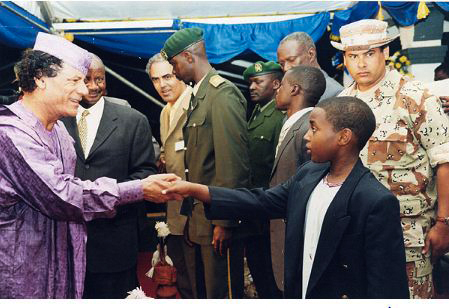
King Oyo was the World’s Youngest King Who Ascended The Throne At Age 3

The late Colonel Muamar Gaddafi, the previous President of Libya, was the supporter of the Kingdom of Toro, who had close binds with the regal family. Ruler Oyo, 9 years of age, named Gaddafi the “protector” of the Kingdom and welcomed him to go to the sixth commemoration of the royal celebration in 2001. Gaddafi made gifts to the Kingdom to help pay for the reclamation of the Palace in Fort Portal.

Education background of King Oyo

One of the King’s key assignments is to lobby for monetary and social prosperity gifts to his subjects. Wellbeing, training, financial and social activities are completely concerned. Likewise, it is critical to construct individuals’ trust in the King and reinforce social character. Oyo ventures to the far corners of the planet with the assistance of his officials and family to look for global help for Toro improvement. Most as of late, in the interest of the Kingdom, Oyo got 100 wheelchairs dispersed to five Toro districts. The Kingdom embraces other magnanimous projects through the Batebe Foundation of Toro, which works a custom curriculum store for youngsters out of luck.
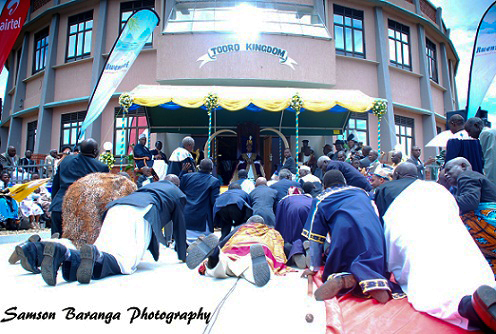
Oyo said that growing up he was more keen on playing with different youngsters than running a realm. “At the point when I was eight years of age that is the point at which I understood the obligation I had, what my identity was and what I needed to do.


“Everything became all-good; everything clicked. How I planned to do it, I didn’t know, however I certainly knew what my identity was and what I needed to do.”

In school, where he had military watchmen drifting all finished, Oyo said he understood that he was not quite the same as his associates as he had colossal duties.

“Outside of school is presumably when I must be somewhat more genuine, however when I was at school it was essentially a climate that permitted me to act naturally in light of the fact that the understudies around me dealt with me like whatever other understudy, which permitted me to resemble them and to likewise consider another to be to me personally — as a ruler, an individual and an understudy. It made me exceptionally practical, which I am extremely appreciative for.”

His realm is honored with green fields, natural life and public parks, making it a travel industry center point in Uganda, in spite of its financial difficulties.
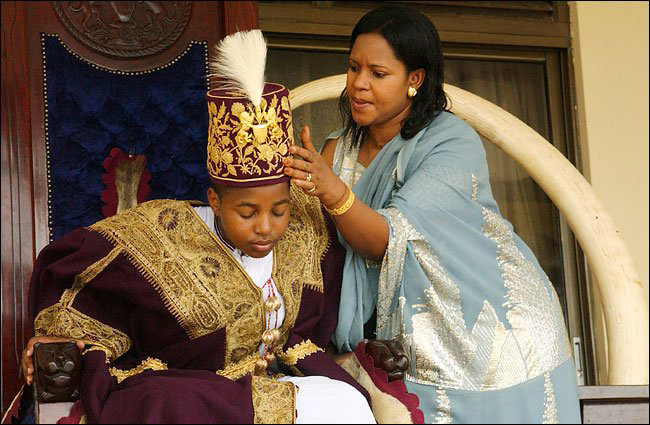
King Oyo was the World’s Youngest King Who Ascended The Throne At Age 3

Lord Oyo, who once said his mom was his most noteworthy wellspring of help, desires to achieve the ideal change that his subjects are expecting, with a particular accentuation on wellbeing and schooling.

“I’d prefer to enable my kin, to see them flourishing, to see them out of destitution, to give them that stage or endurance unit so they don’t need to battle to send their children to class or to get cash for transport or to take them to the emergency clinic, while there aren’t that numerous clinics also,” he said.

“His age brings a ton of monetary help from pioneers who need to tutor him and see him succeed,” Ruhweza Religious, a 34-year-old woodworker who lives around the royal residence in Fort Portal was cited by news site CNN in 2010.

“Most Africans are driven by more established individuals who don’t do anything.”

“He is youthful and enthusiastic, and we trust he will give us a superior life and modernize our foundations.”

READ ALSO: Seven most Influential African Empires

 

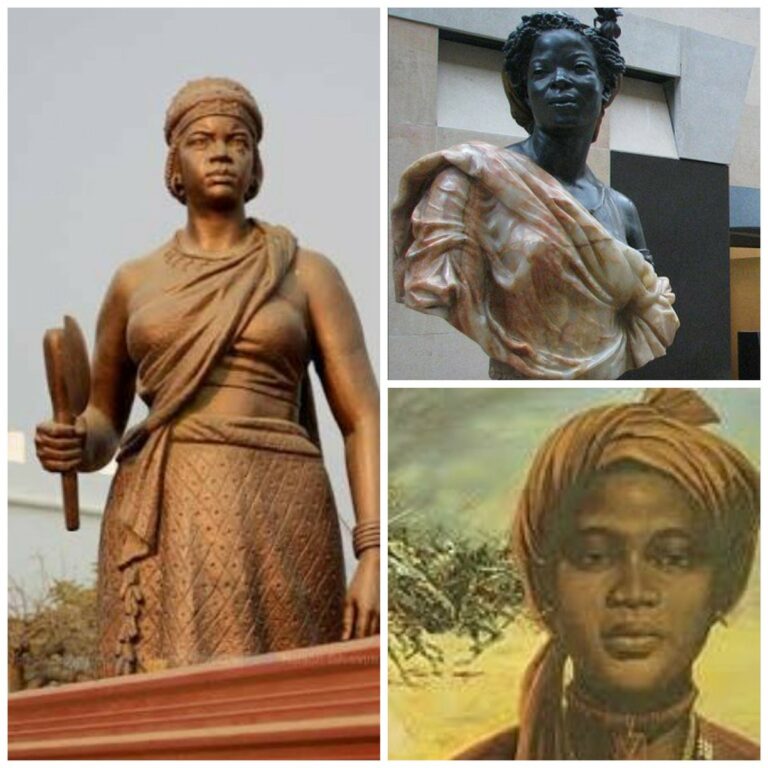
Queen Nzinga of Ndongo (1583-1663), She fought Europeans influence and liberated Angola - knowafricaofficial

Queen Nzinga Mbande was the leader (ruler) of the Mbundu Kingdom of the Ndongo (1583-1663), once alluded to as Anna Nzinga, in what is currently Angola.

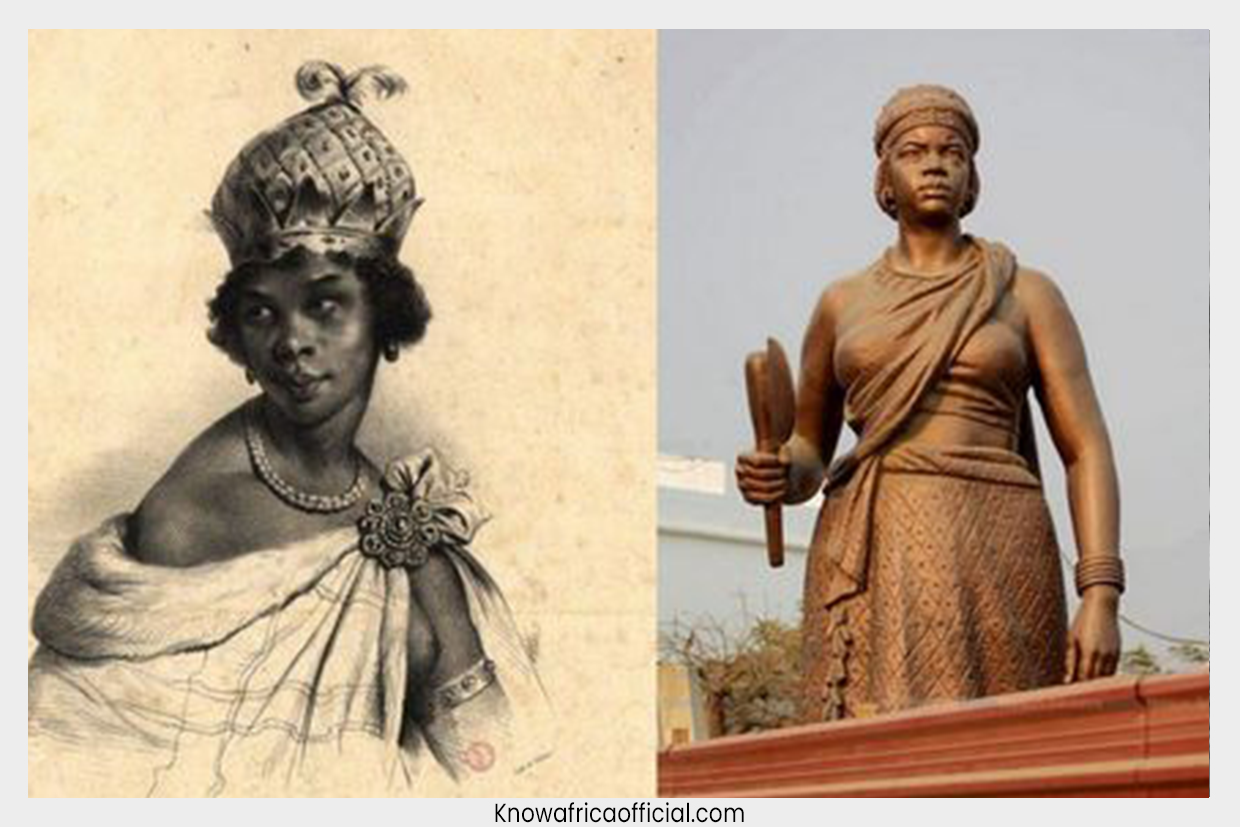
Queen Anna Nzinga (roughly 1581-1663) one of the unmistakable ladies’ leaders of Africa. She controlled (ruled) what is today called Angola throughout the seventeenth century doing combating the slave exchange and European impact. Queen Anna Nzinga is Known as a canny representative and visionary military ruler, for over 30 years she had opposed the Portuguese extension and slave exchange in Angola.

A French craftsman named Achille Devéria delivered the lithograph during the 1800s and shaded it years (decades) by an obscure craftsman.

Nzinga Mbande, King Kiluanji ‘s most loved little girl of the Ndongo, was taught and by and by encountered the standard of her dad’s standard. Her dad took her with him when he did battle. In southwest Africa, Kiluanji settled on concurrences with the Portuguese who broadened their slave-exchanging exercises, and this organization has proceeded with her sibling who succeeded her dad.

In 1617, Portuguese lead representative Correia de Sousa assaulted the realm of Ndongo, which got a great many individuals from Mbundu.

Queen Nzinga of Ndongo (1583-1663), She fought Europeans influence and liberated Angola - knowafricaofficial

Ndongo ruler designated his sister to Nzinga Mbande to go for his sake when he was welcome to the harmony talks called by the Portuguese in 1621.

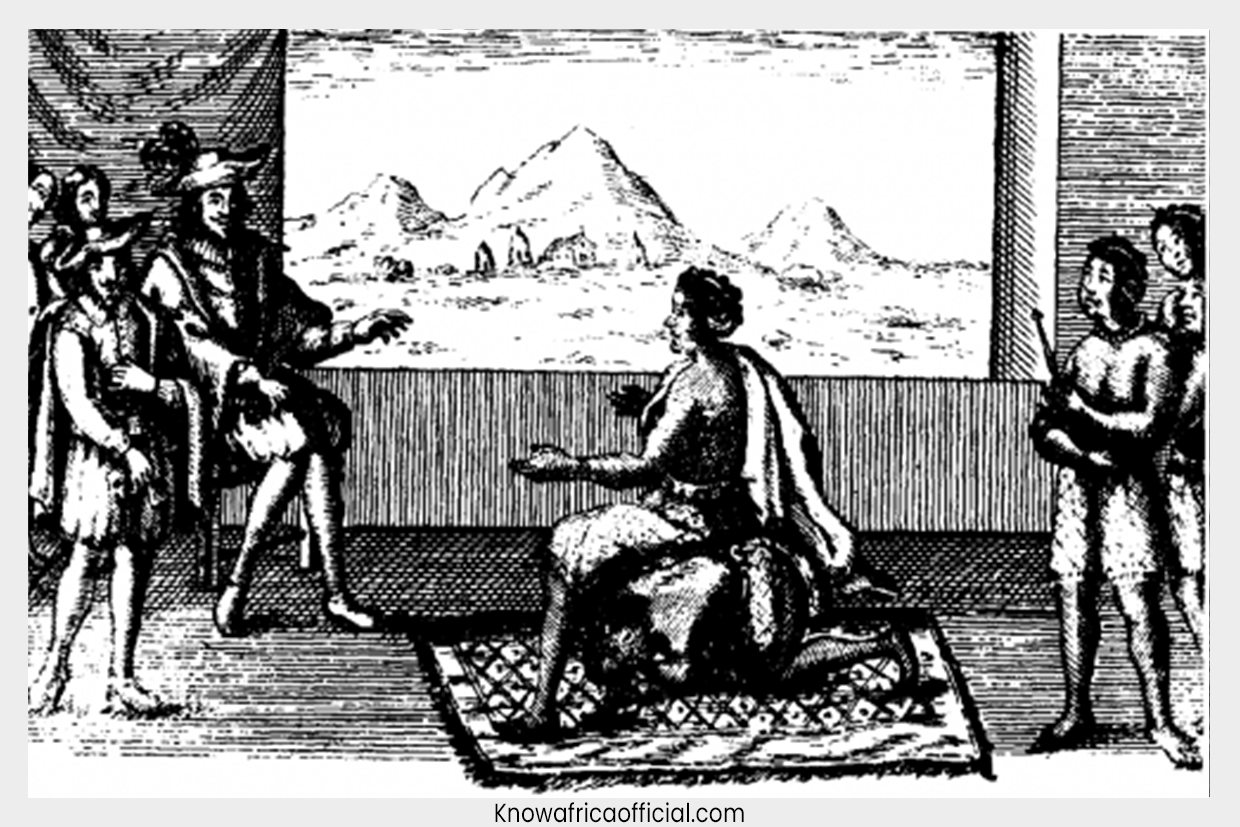
In her popular gathering with the De Sousa burns were simply given to the Portuguese and Nzinga was expected to plunk down on the floor yet she told her watchmen to go about as her seat.

Mbande moved in the arrangements an almost negligible difference between preventing the Portuguese from controlling the Kingdom as they did in Kongo, and yet holding exchanging openings for weapons request to strengthen their powers.

She prevailing in the arrangement however she was given a condition to change over to Christianity and was sanctified through the water as Anna de Sousa, with the Portuguese lead representative turning into her Godfather.

Mbande succeeded her sibling(brother) after his passing and turned into the Queen of Ndongo in 1626. Her realm began in peril when the Portuguese returned and, as other adjoining clans did, proclaimed battle on her.

Mbande had to reclaim from her own region. South of Matamba, she attacked Matamba and caught the Queen of Matamba, and her military was driven away.

At that point, Mbande set up herself as another Matamba sovereign, from where she dispatched a drawn-out hit and run combat crusade against the Portuguese that was going to most recent thirty years. Mbande had become a notable hero and acquired a standing.

It is likewise dubious that she had an individual collection of mistresses of more than 50 individuals. Everything is known is that a Mbande armed force, comprising of getting away from Slaves, revolted warriors and ladies, was against the Portuguese.

She had shaped a coalition with the Dutch in overseeing European competitions and employed her very own protectors of 60 weapon furnished Dutch talented military men.

In 1644, 1646 and 1647, Mbande vanquished the Portuguese armed force adequately in a joint effort with the Dutch. In any case, in 1648 Mbanda was pushed to embrace the fight alone. The Dutch were driven out of the district. While she would never topple them, she dismissed the Portuguese addition for quite a long time skillfully.

Mbande drove her soldiers to battle actually until she was sixty, however toward the finish of the long war the two sides battled down. She finished up in 1657 and marked a truce with Portugal.

She spent the remainder of her life reconstructing a nation attacked by war and over-farming. In 1663, when she was 81 years of age, she passed on of normal causes.

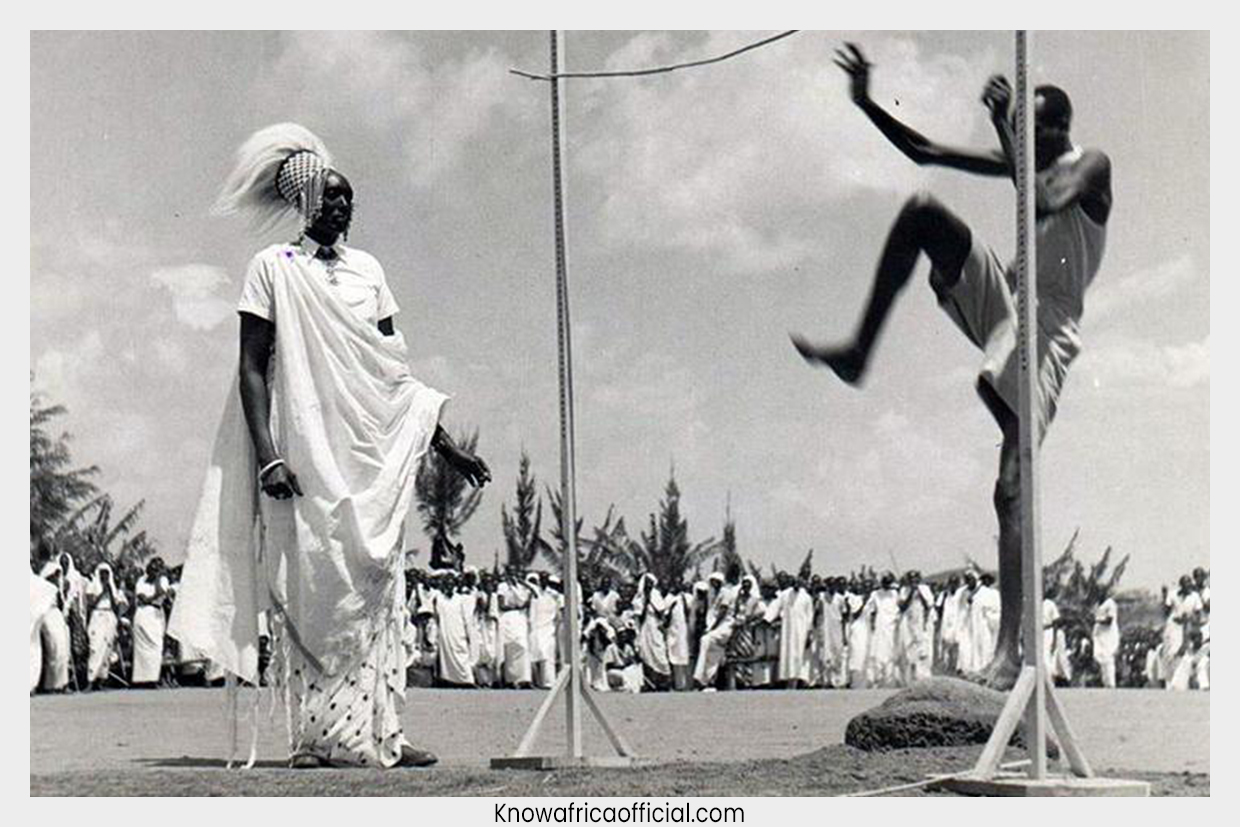
The Forgotten African high jump game. It was the best game in Rwanda before colonialism

The Forgotten African high jump game. It was the best game in Rwanda before colonialism

A few people don’t realize that there were antiquated African games that had enormous notoriety and regard even before the appearance of sports like football, ball, volleyball, netball and others to Africa, however, unfortunately, these games were dropped and gradually failed to remember.

The interest could be resuscitated for any of these games so who knows may in any case be included in the Olympics.

In Africa, in the event that somebody discusses the high hop game the country that will ring a bell is Kenya for its global acknowledgment among competitors on the planet.

One would likewise discuss Uganda, Ethiopia and Eritrea. Clearly, Rwanda may not show up in one’s posting of sports, however, before the expansionism time, Rwandans were brilliant in the high hop.

Emmanuel Bugingo wrote in his theory, ‘Gusimbuka Urukiramende,’ that Professor Joskl showed that “sometime before the ascent of the transformations of the current game Rwandans were viewed as remarkable high jumpers.”

‘Gusimbuka Urukiramende’ identifies with a midway line on two vertical lines. The assortment of the devices utilized and the kind of settings at which it happened makes it totally exceptional from either high hop sport model. Likewise, the way that there were obviously different styles of hopping.

“Prior to the pioneer time frame, the game was instituted. The game, which was performed by Rwandans in contrast with the Western method of high hopping, has satisfied the colonialists, ” – said Bugingo.

Over the span of his preparation, the sonnet, panegyrics, dance, self-protection, tossing lance, running, high bouncing, Jean-Damascène Rwasamirera, matured 76, uncovers likewise that he was given sufficient time in this groundwork for Intore. Their preparation includes sonnets. “It was a mainstream sport much the same as football, yet it took quite a while, in light of the determination cycle and it was serious as individuals contended at the individual level,” he says.

He likewise adds that it was a custom of foremost incentive in the Rwandan culture when individuals saw their extraordinary actual gifts bouncing over 2.00 meters or in excess of 6 feet. The more you took in, the bolder you became.

The ruler could arrange an assortment of craftsmanship shows to be hung on the courts at social events and high hopping was one of the exercises performed. It was additionally held during wedding parties and outside the yard at significant nearby social affairs.

‘Gusimbuka’ was a centred game around the courts, nonetheless, aside from a masculine preparation and an affable entertainment for the King and different individuals, the high hop was acted locally as a feature of a party as characterized by the Europeans.

The Forgotten African high jump game. It was the best game in Rwanda before colonialism

In occurrence cases, the artists additionally acted in high hop games. Rubakambu, the dance ace among the best members of Rwandans “high bouncing” too Butera, who was the lord’s driving artist during the 1930s, was likewise respected as a best high jumper.

Recognizing mainstream competitors wasn’t basic, as it was not normalized at that point. Besides, the most prominent high jumpers recorded during the time in force of King Musinga from 1897 to 1931 have been demonstrated to be Kanyamuhungu, while during the hour of King Rudahigwa (1931-1959) the most famous jumpers noted were Ngoga, Gashimirang, Kanyemera, and Mwunvaneza.

Rwasamirera clarified that while grown-ups and individuals from the Intore were heroes of the game, they started at an early age and were a casual game for youngsters.

The game was played by both youthful and grown-up individuals however the youngsters played it from the start by planting two posts evenly at the statures as per their age.

The youngsters who have done the majority of their housework used their breaks to play their games until the night when they brought animals home. The tallest young men were tried to spring upwards in a line. Gateyihene turned into the most popular Rwandan in the high hopping game.

CHECK ALSO: How Shakazulu made it from an unwanted son to a great Zulu king in 1820