Tag

History

Browsing

The Mali Empire is one of the popular empires to exist in the world. Here is how strong the empire was and it European slaves

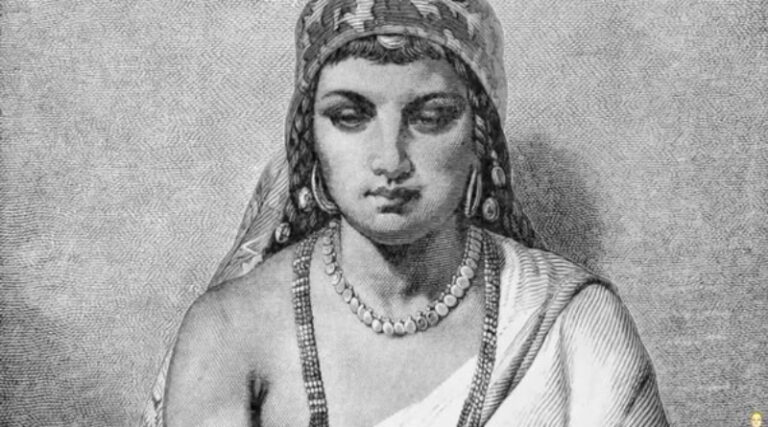
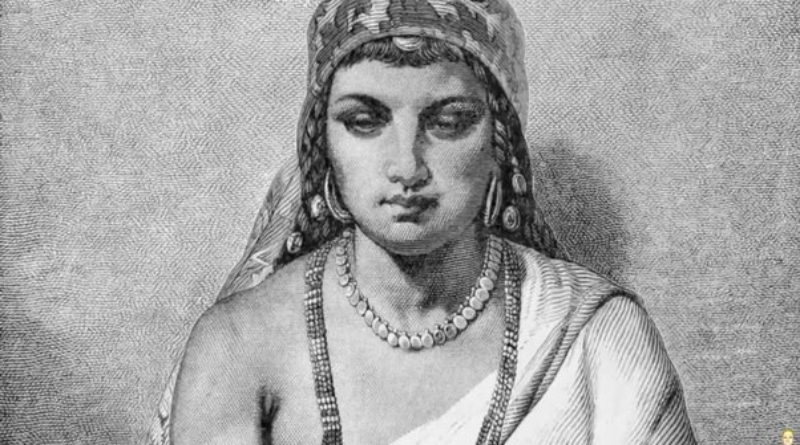
Wagadu empire, throughout most of her history, from the 5th century CE to the 12th century CE, maintained the traditional ways of the natives of the empire. Mali empire which later absorbed the Wagadu empire in the 13th century CE had elites that had embraced the sociological ideology that was coming into Africa from the Arabian peninsula through the trans-saharan trade routes.
EMPIRE

Although the generality of the people of Mali retained their traditional religious beliefs and spirituality, especially that of the griots.

READ ALSO: The Zulu Tribe Of South Africa Where Girls Still Undergo Vìrginity Tests And Are Given Certificate

Becoming a Muslim was a matter of convenience for west African princes in Gao, Kano, Tekrur and Timbuktu, mostly from the later parts of the 7th century CE, at the peak of the trans-saharan trade which blew most west African city-states to eye-watering riches.

But with the trans-saharan trade also came foreign cultures, and with it, the young sociological ideology of Islam and a steady flow of captured and enslaved people from the Mediterranean to north Africa and then west Africa, as well as from west Africa to the Arabian peninsula.

The trade in humans by the Arabs had lasted for about 1000 years, even before the triangular, European trans-atlantic slave trade began in the 15th/16th century CE. While the European trans-atlantic slave trade wore a racial veneer, the Arabs slave trade had no racial undertones, but it rather exuded a religious drive as well as the economic gain that came with it.

To this effect, laws were written concerning enslavement by several Islamic scholars and jurists. Mahmud Bambari wrote in the 14th century CE thus; “…Anyone who’s known to be from those lands which are known to be lands of Islam should be let go and should be adjudged free… This is the ruling of the jurist from Andalusia.” These laws were taken seriously and many groups in west African embraced the belief system from the Arabian peninsula to avoid capture and enslavement.

For the kings and princes of west Africa, becoming a Muslim meant that the markets of the Mediterranean were open to them as well as possible alliances with caliphs of Arabia. This situation had stretched into the 19th century CE.

Enslaved persons from both Europe and Africa were given as homage or sold to caliphs, kings and princes from north Africa, Arabian peninsula and Mali empire. For example, during the famous raid of Lisbon in the 10th century CE, 3000 young European women were sent to the Arabian peninsula as homage to the Caliphs. This might have seemed like normal part of everyday life, and European slaves were also brought to the Mali empire from about the 13th century CE.

READ ALSO: Seven most Influential African Empires

The enslavement of Europeans that were brought into north Africa and the Arabian peninsula was common in medieval times, to an extent that king George I, in 1721, once lamented of how “most of his subjects were taken into slavery in north Africa” by the Arabs -(Nature knows no colourline by J.A. Rogers).

This line of slavery was so intense that most coastal towns in Europe were vacated. Not much people of the Soudan (as most of west Africa was known then) were enslaved, most of the enslaved, captured by the Varangians, Vikings etc and sold to the Arabs or Jewish merchants from Cordoba were Europeans. For example “Mulai Ismail of Merknes, Morocco had 25,000 European slaves who had participated in the building of his colossal stables.” -(The golden age of the Moor, by Ivan Van Sertima).

The Mamluk were ruling Egypt in the 13th century CE at the same time Mansa Suleiman was ruling the Mali empire after the death of Mansa Musa. Al Umari of Damascus who travelled to Africa wrote this of the Mali royalty: “The king of this realm sits in his palace on a big dais (mastaba) which they call Banbi, on a big seat made of ebony like a throne for a heavily-built sitter. Over the dais, on all sides, are elephant tusks one beside the other. He has with him his arms, which are all of gold; sword, javelin, quiver, bows and arrows.

He wears a big trousers cut out of about twenty pieces which none but he wears. About 30 slaves (Mamluk) stand behind him, Turks and others who were bought for him in Egypt. One of them carries in his hand a parasol of silk surmounted by a dome and a bird of gold in the shape of a falcon.”

Ibn Battuta, a Moroccan writer and explorer visited The Mali empire in the 14th century CE, and said himself that while at the court of ‘a wealthy man named Faga Suleiman,’ Ibn Battuta said he spoke to one of his Arab slave girls and ‘she was from Damascus.’

In the 12th century CE, the Africans and Arabs who were in southern Europe, introduced gunpowder into Europe. This know-how came in from China via the silk routes during incursion of Genghis Khan, the Mongolian, into Europe.

This gave birth to the invention of ‘firing sticks’ (forerunner to guns). Europe had developed this technology to protect ‘Europeans against Europeans’ (-John Henrik Clarke) in the barbarian tribal wars that had stretched into the middle ages.

But during the Renaissance era when Europe managed to break away from the dire conditions of the ‘dark ages’ (when most of Europe had degenerated back to primitive life after the fall of western Roman empire), nationalism began to unite European scattered tribal groups under the papacy.

In 1455 CE, pope Nicholas V wrote a papal bull, declaring all Moors, Saracens and non-christian black-skinned people to perpetual slavery.

By 1492, all Moors in Spain surrendered their castles, with Spain claiming more of the Moorish territories. The blood-letting and persecutions that followed was so much so that the new sultan of the ottoman empire had to send ships to escort fleeing Jews to settle in his conquered lands.

By this time also, Columbus had stumbled on the Americas islands while seeking a western ocean route to Asia, as the silk routes in the east were already taken over by the ottomans. The Africans in Spain were the first group to be shipped as slaves to the Americas from Spain.

Next in line was west African captured able-bodied craft men, seamen from Kru, blacksmiths, masons, planters, traders, fishermen, goldsmiths and so on, to the plantations of the Americas in order to toil and produce proceeds to develop Western Europe and America for the sake of Europeans. These ones became greater grand parents of people like Michael Jackson, Eddie Murphy, Booker T. Washington, Malcolm X, Du Bois and so on.
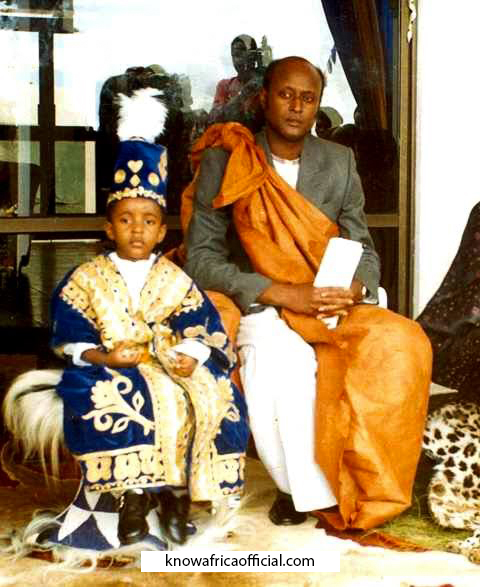
Knowafricaofficial.com

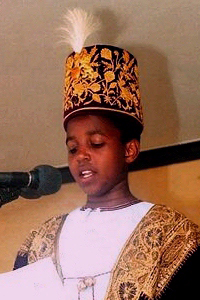
King Oyo was the World’s Youngest King Who Ascended The Throne At Age 3

Numerous children will mess around or have a good time outside with their companions at age 3, yet not for King Oyo Nyimba Kabamba Iguru Rukidi IV, who was at that point figuring out how to govern a realm of in excess of 2 million individuals at that youthful age.

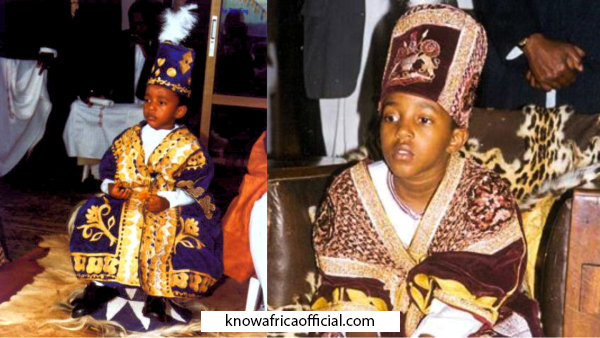
Rukirabasaija Oyo Nyimba Kabamba Iguru Rukidi IV, King Oyo, is the ruling Omukama of Toro, in Uganda. He was brought into the world on 16 April 1992 to King Patrick David Mathew Kaboyo Olimi III and Queen Best Kemigisa Kaboyo. Three and a half years after the fact, in1995, Oyo rose to the seat and succeeded his dad as the twelfth leader of the 180-year-old Toro Kingdom.

Lord Oyo of Toro Kingdom, one of four realms in Uganda, East Africa is holding the record as the “World’s Youngest Monarch” in the Guinness World Records Book.

BACKGROUND

What is currently Uganda was comprised of free realms and networks drove by Tribal Chiefs and Kings in pre-pioneer times. Albeit most social orders in Uganda, similar to networks in its north and upper east, were approximately settled by tribe administration structures, different networks, for example, Bunyoro, Buganda, Ankole and Toro were coordinated governments.

In 1966, notwithstanding their capability to partition powers and hence a danger to the early republic, the political forces of the conventional pioneers were abrogated by the patriot development drove by Milton Obote, who contradicted the rulers due to their relationship with British colonialists.

Political disturbance and common conflict overwhelmed the 1970s and 1980s, adding to serious ramifications for social organizations. Large numbers of the pioneers, including Buganda’s Kabaka Mutesa and Toro’s Omukama Patrick Kaboyo, were constrained into outcasts to get away from the public authority of dread. It was not until 1986 that the realms were reestablished by President Yoweri Kaguta Museveni through a change to the Constitution 1993. In pre-pioneer times, the realms could never appreciate the sway they had, however, they would be instrumental in activating the country toward social and monetary recuperation.

THE TORO KINGDOM

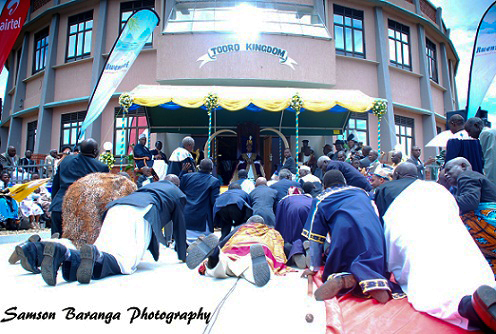
Toro lies in the mid-western piece of present-day Uganda, with its capital, Fort Portal. The people group of Toro, known as Batooro or Batoro, make up 3.2 percent of Uganda’s 35.5 million individuals (2012 gauge). The Kingdom is constrained by the tradition of Babiito, whose set of experiences returns similar to the fourteenth century. As per oral history, in 1822, Prince Olimi Kaboyo Kasunsunkwanzi, child of the King of Bunyoro, added the southern piece of the Kingdom of his dad and established what is today known as Toro.

Title of king Oyo

Oyo Nyimba is known as Omukama, signifying “King” and Rukirabasaija, signifying “the best of men” in Toro. Despite the fact that he is viewed as Batooro’s sovereign ruler, the authority of Oyo Nyimba is limited to social obligations.

King Oyo was the World’s Youngest King Who Ascended The Throne At Age 3

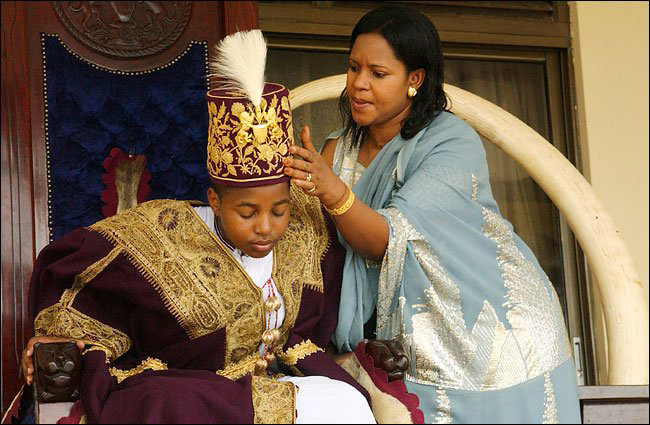
Coronation of the young King Oyo

The demise of his dad King Kaboyo in 1995 just implies that the Crown Prince needed to assume the job of King in his youth. The customs of giving over control of capacity to Oyo started at 2 a.m. on 12 September 1995, seven days after the late King’s internment. They incorporated a counterfeit fight at the passageway of the royal residence, battled between the adversary powers of the “rebel” sovereign and the illustrious armed force, and a trial of Oyo’s heavenly right to the seat, wherein the Omusuga, top of the imperial family, called upon the divine beings to hit Oyo dead on the off chance that he was not of regal blood. After breezing through the assessment, Oyo was permitted to sound the Nyalebe, a holy Chwezi drum, as his progenitors had done. At that point, he was honoured with the blood of a bull and a white hen.

King Oyo was the World’s Youngest King Who Ascended The Throne At Age 3

At 4 a.m., Oyo was delegated King amidst an upbeat group and entered the castle as the new leader of the Kingdom of Toro. His first feast was filled in as King, comprising of millet mixture. He sat in the lap of a virgin young lady and swore faithfulness to the Crown while lying on his side on the ground.

Social rituals followed a strict function directed by the Anglican Bishop, Eustance Kamanyire. President Museveni went to the crowning ordinance festivities, honoring the new King.

Regency

Three reagents were entrusted with supervising the development of King Oyo in the job of King and managing the social undertakings of the Kingdom during the adolescence and youth of the King. At the hour of his delegate, the three officials incorporated his mom, Queen Best (Queen Mother); his auntie/backup parent, Princess Elizabeth Bagaaya; and President Museveni.

King Oyo was the World’s Youngest King Who Ascended The Throne At Age 3

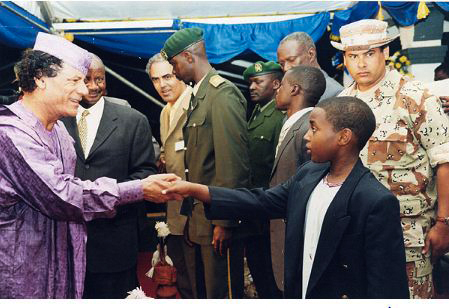
The late Colonel Muamar Gaddafi, the previous President of Libya, was the supporter of the Kingdom of Toro, who had close binds with the regal family. Ruler Oyo, 9 years of age, named Gaddafi the “protector” of the Kingdom and welcomed him to go to the sixth commemoration of the royal celebration in 2001. Gaddafi made gifts to the Kingdom to help pay for the reclamation of the Palace in Fort Portal.

Education background of King Oyo

One of the King’s key assignments is to lobby for monetary and social prosperity gifts to his subjects. Wellbeing, training, financial and social activities are completely concerned. Likewise, it is critical to construct individuals’ trust in the King and reinforce social character. Oyo ventures to the far corners of the planet with the assistance of his officials and family to look for global help for Toro improvement. Most as of late, in the interest of the Kingdom, Oyo got 100 wheelchairs dispersed to five Toro districts. The Kingdom embraces other magnanimous projects through the Batebe Foundation of Toro, which works a custom curriculum store for youngsters out of luck.

Oyo said that growing up he was more keen on playing with different youngsters than running a realm. “At the point when I was eight years of age that is the point at which I understood the obligation I had, what my identity was and what I needed to do.


“Everything became all-good; everything clicked. How I planned to do it, I didn’t know, however I certainly knew what my identity was and what I needed to do.”

In school, where he had military watchmen drifting all finished, Oyo said he understood that he was not quite the same as his associates as he had colossal duties.

“Outside of school is presumably when I must be somewhat more genuine, however when I was at school it was essentially a climate that permitted me to act naturally in light of the fact that the understudies around me dealt with me like whatever other understudy, which permitted me to resemble them and to likewise consider another to be to me personally — as a ruler, an individual and an understudy. It made me exceptionally practical, which I am extremely appreciative for.”

His realm is honored with green fields, natural life and public parks, making it a travel industry center point in Uganda, in spite of its financial difficulties.

King Oyo was the World’s Youngest King Who Ascended The Throne At Age 3

Lord Oyo, who once said his mom was his most noteworthy wellspring of help, desires to achieve the ideal change that his subjects are expecting, with a particular accentuation on wellbeing and schooling.

“I’d prefer to enable my kin, to see them flourishing, to see them out of destitution, to give them that stage or endurance unit so they don’t need to battle to send their children to class or to get cash for transport or to take them to the emergency clinic, while there aren’t that numerous clinics also,” he said.

“His age brings a ton of monetary help from pioneers who need to tutor him and see him succeed,” Ruhweza Religious, a 34-year-old woodworker who lives around the royal residence in Fort Portal was cited by news site CNN in 2010.

“Most Africans are driven by more established individuals who don’t do anything.”

“He is youthful and enthusiastic, and we trust he will give us a superior life and modernize our foundations.”

READ ALSO: Seven most Influential African Empires


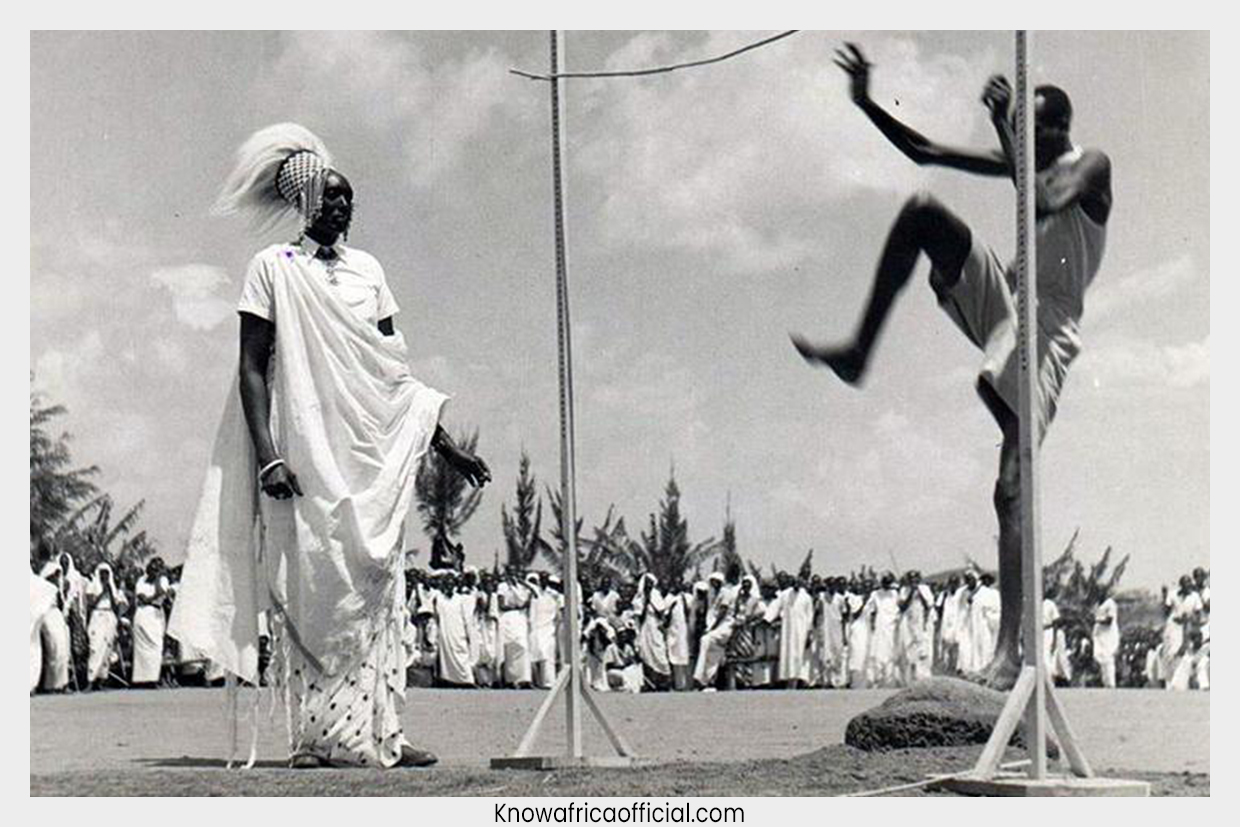
The Forgotten African high jump game. It was the best game in Rwanda before colonialism

The Forgotten African high jump game. It was the best game in Rwanda before colonialism

A few people don’t realize that there were antiquated African games that had enormous notoriety and regard even before the appearance of sports like football, ball, volleyball, netball and others to Africa, however, unfortunately, these games were dropped and gradually failed to remember.

The interest could be resuscitated for any of these games so who knows may in any case be included in the Olympics.

In Africa, in the event that somebody discusses the high hop game the country that will ring a bell is Kenya for its global acknowledgment among competitors on the planet.

One would likewise discuss Uganda, Ethiopia and Eritrea. Clearly, Rwanda may not show up in one’s posting of sports, however, before the expansionism time, Rwandans were brilliant in the high hop.

Emmanuel Bugingo wrote in his theory, ‘Gusimbuka Urukiramende,’ that Professor Joskl showed that “sometime before the ascent of the transformations of the current game Rwandans were viewed as remarkable high jumpers.”

‘Gusimbuka Urukiramende’ identifies with a midway line on two vertical lines. The assortment of the devices utilized and the kind of settings at which it happened makes it totally exceptional from either high hop sport model. Likewise, the way that there were obviously different styles of hopping.

“Prior to the pioneer time frame, the game was instituted. The game, which was performed by Rwandans in contrast with the Western method of high hopping, has satisfied the colonialists, ” – said Bugingo.

Over the span of his preparation, the sonnet, panegyrics, dance, self-protection, tossing lance, running, high bouncing, Jean-Damascène Rwasamirera, matured 76, uncovers likewise that he was given sufficient time in this groundwork for Intore. Their preparation includes sonnets. “It was a mainstream sport much the same as football, yet it took quite a while, in light of the determination cycle and it was serious as individuals contended at the individual level,” he says.

He likewise adds that it was a custom of foremost incentive in the Rwandan culture when individuals saw their extraordinary actual gifts bouncing over 2.00 meters or in excess of 6 feet. The more you took in, the bolder you became.

The ruler could arrange an assortment of craftsmanship shows to be hung on the courts at social events and high hopping was one of the exercises performed. It was additionally held during wedding parties and outside the yard at significant nearby social affairs.

‘Gusimbuka’ was a centred game around the courts, nonetheless, aside from a masculine preparation and an affable entertainment for the King and different individuals, the high hop was acted locally as a feature of a party as characterized by the Europeans.

The Forgotten African high jump game. It was the best game in Rwanda before colonialism

In occurrence cases, the artists additionally acted in high hop games. Rubakambu, the dance ace among the best members of Rwandans “high bouncing” too Butera, who was the lord’s driving artist during the 1930s, was likewise respected as a best high jumper.

Recognizing mainstream competitors wasn’t basic, as it was not normalized at that point. Besides, the most prominent high jumpers recorded during the time in force of King Musinga from 1897 to 1931 have been demonstrated to be Kanyamuhungu, while during the hour of King Rudahigwa (1931-1959) the most famous jumpers noted were Ngoga, Gashimirang, Kanyemera, and Mwunvaneza.

Rwasamirera clarified that while grown-ups and individuals from the Intore were heroes of the game, they started at an early age and were a casual game for youngsters.

The game was played by both youthful and grown-up individuals however the youngsters played it from the start by planting two posts evenly at the statures as per their age.

The youngsters who have done the majority of their housework used their breaks to play their games until the night when they brought animals home. The tallest young men were tried to spring upwards in a line. Gateyihene turned into the most popular Rwandan in the high hopping game.

CHECK ALSO: How Shakazulu made it from an unwanted son to a great Zulu king in 1820