Here is what you need to know about the first signs of human life in AFRICA
Human life in AFRICA is one of the most talked about topics across the globe. It is widely known that Africa is the birthplace of humanity, where the earliest evidence of human existence has been discovered.
Human history spans a minimum of 2 million years, with some experts suggesting it could extend as far back as 12 million years.
Approximately 2 million years ago, hominids, human-like creatures, started crafting and utilizing tools in East Africa. These early human groups dispersed in various directions, gradually spreading their tools and cultural practices across the globe.
These creatures lived among other animals that were often much more powerful than they were. They had to find ways of surviving. On the day that the first of these hominids picked up a stone to throw at another animal (either in self-defence or to kill for food) there took place the most important revolution in the whole history of humanity. For a stone, used like this in those early times, became the first tool. These tools gave the weak hominid a chance to survive.
Changes in the climate of the world (centuries of ice, centuries of rain, centuries of drought) made life difficult. Only those creatures that could cope with these changes could survive. Over thousands of years they learnt how to make fire and to cook.
They started burying their dead. Their societies developed the Saharan region rules of living and of order. We can be sure that they prayed to various gods, sang songs, danced, and used paint on their bodies. Up to this point, the story of humanity is more or less the same all over the word.
Then suddenly, about 12 000 years ago, the story of Africa goes its own way.
Basil Davidson, one of the best writers of the history of Africa, says: “Pastures appeared. Rivers flowed. The land became fertile.” People from North Africa and from West-Central moved into Europe and Asia.
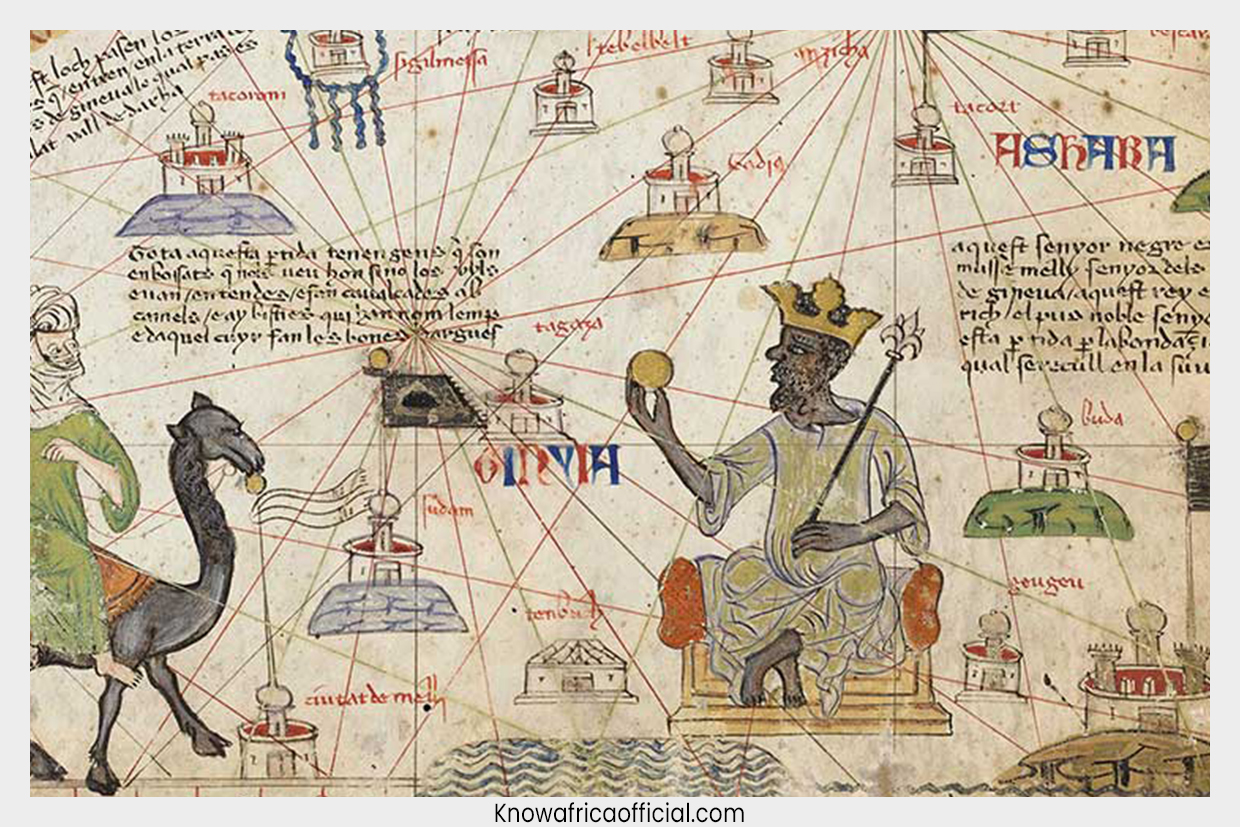
The Mali Empire is one of the popular empires to exist in the world. Here is how strong the empire was and it European slaves
Wagadu empire, throughout most of her history, from the 5th century CE to the 12th century CE, maintained the traditional ways of the natives of the empire. Mali empire which later absorbed the Wagadu empire in the 13th century CE had elites that had embraced the sociological ideology that was coming into Africa from the Arabian peninsula through the trans-saharan trade routes.
Although the generality of the people of Mali retained their traditional religious beliefs and spirituality, especially that of the griots.
Becoming a Muslim was a matter of convenience for west African princes in Gao, Kano, Tekrur and Timbuktu, mostly from the later parts of the 7th century CE, at the peak of the trans-saharan trade which blew most west African city-states to eye-watering riches.
But with the trans-saharan trade also came foreign cultures, and with it, the young sociological ideology of Islam and a steady flow of captured and enslaved people from the Mediterranean to north Africa and then west Africa, as well as from west Africa to the Arabian peninsula.
The trade in humans by the Arabs had lasted for about 1000 years, even before the triangular, European trans-atlantic slave trade began in the 15th/16th century CE. While the European trans-atlantic slave trade wore a racial veneer, the Arabs slave trade had no racial undertones, but it rather exuded a religious drive as well as the economic gain that came with it.
To this effect, laws were written concerning enslavement by several Islamic scholars and jurists. Mahmud Bambari wrote in the 14th century CE thus; “…Anyone who’s known to be from those lands which are known to be lands of Islam should be let go and should be adjudged free… This is the ruling of the jurist from Andalusia.” These laws were taken seriously and many groups in west African embraced the belief system from the Arabian peninsula to avoid capture and enslavement.
For the kings and princes of west Africa, becoming a Muslim meant that the markets of the Mediterranean were open to them as well as possible alliances with caliphs of Arabia. This situation had stretched into the 19th century CE.
Enslaved persons from both Europe and Africa were given as homage or sold to caliphs, kings and princes from north Africa, Arabian peninsula and Mali empire. For example, during the famous raid of Lisbon in the 10th century CE, 3000 young European women were sent to the Arabian peninsula as homage to the Caliphs. This might have seemed like normal part of everyday life, and European slaves were also brought to the Mali empire from about the 13th century CE.
The enslavement of Europeans that were brought into north Africa and the Arabian peninsula was common in medieval times, to an extent that king George I, in 1721, once lamented of how “most of his subjects were taken into slavery in north Africa” by the Arabs -(Nature knows no colourline by J.A. Rogers).
This line of slavery was so intense that most coastal towns in Europe were vacated. Not much people of the Soudan (as most of west Africa was known then) were enslaved, most of the enslaved, captured by the Varangians, Vikings etc and sold to the Arabs or Jewish merchants from Cordoba were Europeans. For example “Mulai Ismail of Merknes, Morocco had 25,000 European slaves who had participated in the building of his colossal stables.” -(The golden age of the Moor, by Ivan Van Sertima).
The Mamluk were ruling Egypt in the 13th century CE at the same time Mansa Suleiman was ruling the Mali empire after the death of Mansa Musa. Al Umari of Damascus who travelled to Africa wrote this of the Mali royalty: “The king of this realm sits in his palace on a big dais (mastaba) which they call Banbi, on a big seat made of ebony like a throne for a heavily-built sitter. Over the dais, on all sides, are elephant tusks one beside the other. He has with him his arms, which are all of gold; sword, javelin, quiver, bows and arrows.
He wears a big trousers cut out of about twenty pieces which none but he wears. About 30 slaves (Mamluk) stand behind him, Turks and others who were bought for him in Egypt. One of them carries in his hand a parasol of silk surmounted by a dome and a bird of gold in the shape of a falcon.”
Ibn Battuta, a Moroccan writer and explorer visited The Mali empire in the 14th century CE, and said himself that while at the court of ‘a wealthy man named Faga Suleiman,’ Ibn Battuta said he spoke to one of his Arab slave girls and ‘she was from Damascus.’
In the 12th century CE, the Africans and Arabs who were in southern Europe, introduced gunpowder into Europe. This know-how came in from China via the silk routes during incursion of Genghis Khan, the Mongolian, into Europe.
This gave birth to the invention of ‘firing sticks’ (forerunner to guns). Europe had developed this technology to protect ‘Europeans against Europeans’ (-John Henrik Clarke) in the barbarian tribal wars that had stretched into the middle ages.
But during the Renaissance era when Europe managed to break away from the dire conditions of the ‘dark ages’ (when most of Europe had degenerated back to primitive life after the fall of western Roman empire), nationalism began to unite European scattered tribal groups under the papacy.
In 1455 CE, pope Nicholas V wrote a papal bull, declaring all Moors, Saracens and non-christian black-skinned people to perpetual slavery.
By 1492, all Moors in Spain surrendered their castles, with Spain claiming more of the Moorish territories. The blood-letting and persecutions that followed was so much so that the new sultan of the ottoman empire had to send ships to escort fleeing Jews to settle in his conquered lands.
By this time also, Columbus had stumbled on the Americas islands while seeking a western ocean route to Asia, as the silk routes in the east were already taken over by the ottomans. The Africans in Spain were the first group to be shipped as slaves to the Americas from Spain.
Next in line was west African captured able-bodied craft men, seamen from Kru, blacksmiths, masons, planters, traders, fishermen, goldsmiths and so on, to the plantations of the Americas in order to toil and produce proceeds to develop Western Europe and America for the sake of Europeans. These ones became greater grand parents of people like Michael Jackson, Eddie Murphy, Booker T. Washington, Malcolm X, Du Bois and so on.
The Yoruba Kingdoms and Benin – To the extent authentic memory broadens, the Yoruba have been the prevailing gathering on the west bank of Niger.
To the extent authentic memory broadens, the Yoruba have been the prevailing gathering on the west bank of Niger. Of blended inception, they were the result of the osmosis of occasional influxes of travellers who advanced a typical language and culture. The Yoruba were coordinated in patrilineal drop bunches that involved town networks and stayed alive on farming, yet from about the 11th century A.D., neighbouring town compounds, called ile, started to blend into various regional city-states in which loyalties to the tribe got subordinate to loyalty to a dynastic clan leader. This progress created an urbanized political and social climate that was joined by a significant degree of imaginative accomplishment, especially in earthenware and ivory design and in the complex metal projecting delivered at Ife. The metal and bronze utilized by Yoruba craftsmen was a huge thing of exchange, produced using copper, tin, and zinc either imported from North Africa or from mines in the Sahara and northern Nigeria.
The Yoruba pacified a lush pantheon headed by a generic god, Olorun, and included lesser divinities, some of them once mortal, who played out an assortment of enormous and commonsense assignments. One of them, Oduduwa, was viewed as the maker of the earth and the precursor of the Yoruba lords. As per a creation fantasy, Oduduwa established the city of Ife and dispatched his children to build up different urban communities, where they ruled as minister rulers and managed religious ceremonies. Formal practices of this sort have been deciphered as lovely representations of the chronicled cycle by which Ife’s decision administration expanded its position over Yorubaland. The tales were endeavours to legitimize the Yoruba governments – after they had superseded tribe loyalties- – by asserting a heavenly root.
Ife was the focal point of upwards of 400 strict religions whose customs were controlled to a political favorable position by the oni (ruler) in the times of the realm’s significance. Ife likewise lay at the focal point of an exchanging network with the north. The oni upheld his court with tolls demanded on an exchange, recognition claimed from conditions and offerings due him as a strict pioneer. Perhaps the best heritage to present-day Nigeria is its lovely model related to this custom.
The oni was picked on a turning premise from one of a few parts of the decision line, which was made out of a family with a few thousand individuals. When chosen, he went into disengagement in the castle compound and was not seen again by his kin. Underneath the oni in the state pecking order were royal residence authorities, town bosses, and the leaders of remote conditions. The royal residence authorities were representatives for the oni and the leaders of conditions who had their own subordinate authorities. All workplaces, even that of the oni, were elective and relied upon expansive help inside the local area. Every authority was browsed among the qualified faction individuals who had innate
right to the workplace. Individuals from the imperial tradition frequently were allowed to administer conditions, while the children of castle authorities expected lesser parts as functionaries, guardians to the oni, and judges.
During the fifteenth century, Oyo and Benin outperformed Ife as political and financial forces, in spite of the fact that Ife saved its status as a strict focus even after its decrease. Regard for the religious elements of the oni of Ife and acknowledgment of the regular practice of source was essential variables in the development of Yoruba identity. The oni of Ife was perceived as the senior political authority among the Yoruba as well as at Benin, and he contributed Benin’s rulers with the images of worldly force.
The Ife model of government was adjusted at Oyo, where an individual from its decision line united a few more modest city-states under his influence. A board of express, the Oyo Mesi, in the long run, accepted accountability for naming the alafin (ruler) from applicants proposed by the decision administration and went about a keep an eye on his power. Oyo created as a protected government; the real government was in the possession of the basorun (PM), who directed the Oyo Mesi. The city was arranged 170 kilometres north of Ife, and around 100 kilometres north of present-day Oyo. In contrast to the woods bound Yoruba realms, Oyo was in the savanna and drew its military strength from its cavalry powers, which set up authority over the contiguous Nupe and the Borgu realms and subsequently created shipping lanes farther toward the north.
The following are the facts on the seven most influential African kingdoms or empires that made their mark on history.
The Kingdom of Kush
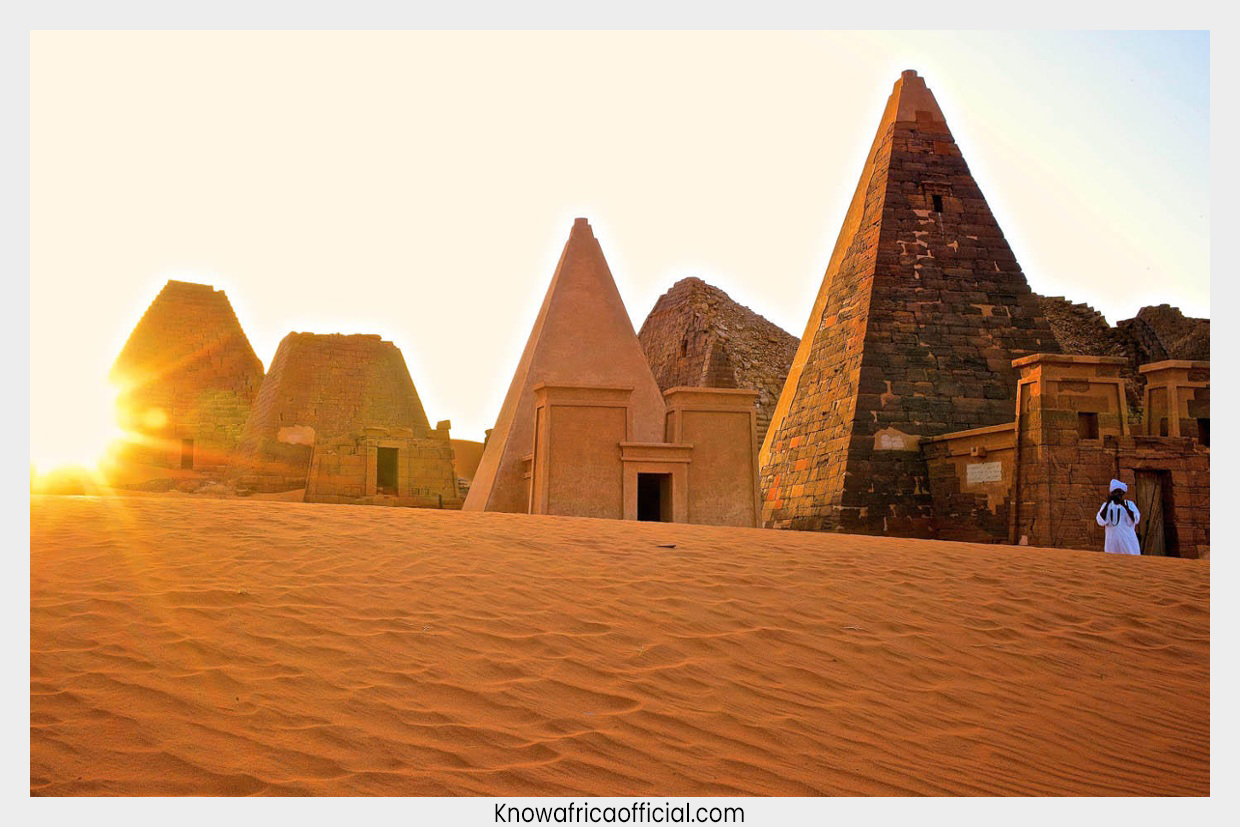
The Kingdom of Kush -(Photo credit to Martha Dyer)
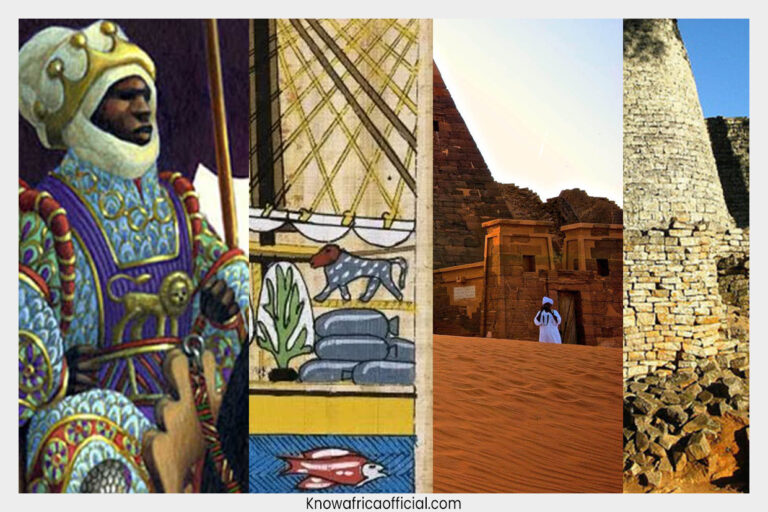
In spite of the fact that regularly eclipsed by its Egyptian neighbours toward the north, the Kingdom of Kush remained as a territorial force in Africa for over 1,000 years. This old Nubian realm arrived at its top in the second thousand years B.C., when it administered over a tremendous area of the domain along the Nile River in what is presently Sudan. Practically all that is thought about Kush comes from Egyptian sources, which show that it was a financial focus that worked a worthwhile market in ivory, incense, iron and particularly gold. The realm was both an exchanging accomplice and a military adversary of Egypt—it even controlled Egypt as the 25th Dynasty—and it received large numbers of its neighbour’s traditions. The Kushites loved a portion of the Egyptian divine beings, embalmed their dead and constructed their own sorts of pyramids. The territory encompassing the antiquated Kushite capital of Meroe is presently home to the vestiges of more than 200 pyramids—more than in the entirety of Egypt.
2. The Land of Punt
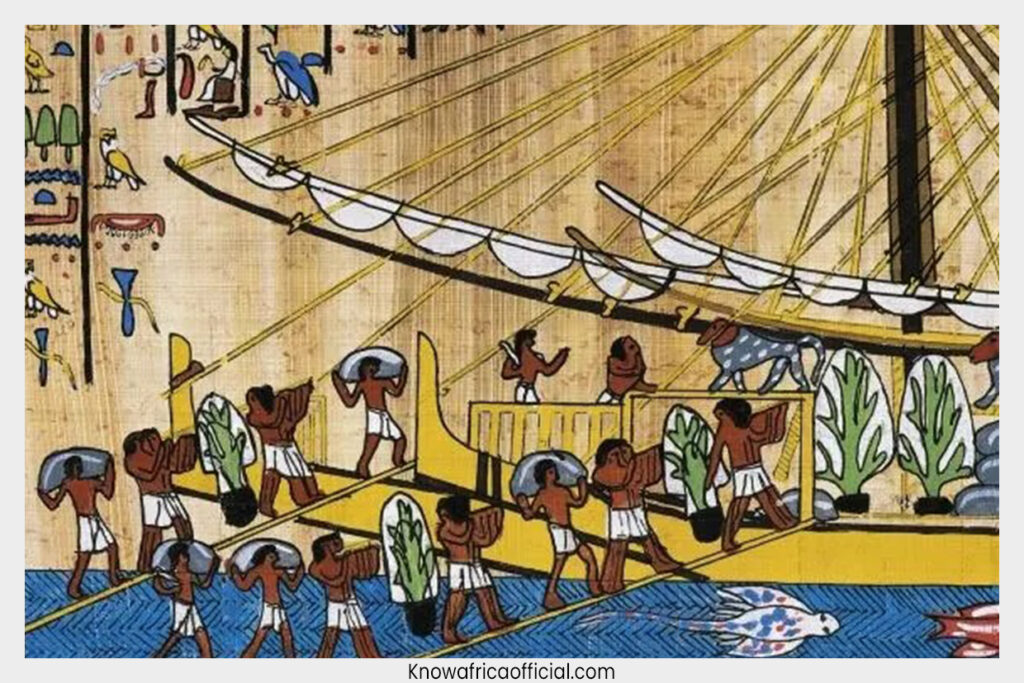
Papyrus indicating arrangements for an Egyptian excursion to Punt. (Credit: De Agostini Picture Library/Getty Images)
Not many African civic establishments are just about as baffling as Punt. Chronicled records of the realm date to around 2500 B.C., when it shows up in Egyptian records as a “Place that is known for the Gods” wealthy in black, gold, myrrh and colourful creatures, for example, chimps and panthers. The Egyptians are known to have sent tremendous convoys and flotillas on exchange missions to Punt—most remarkably during the fifteenth century B.C. rule of Queen Hatshepsut—yet they never distinguished where it was found. The site of the famous realm is currently a fervently discussed subject among researchers. The Arabian Peninsula and the Levant have both been proposed as possible competitors, yet most trust it existed someplace on the Red Sea shoreline of East Africa. In 2010, a group of analysts attempted to focus on Punt by dissecting an embalmed mandrill that its rulers once talented to the Egyptian pharaohs. While their outcomes indicated that the remaining parts most firmly coordinated creatures found in advanced Ethiopia and Eritrea, the exact area of the Land of Punt has still yet to be affirmed.
3. Carthage
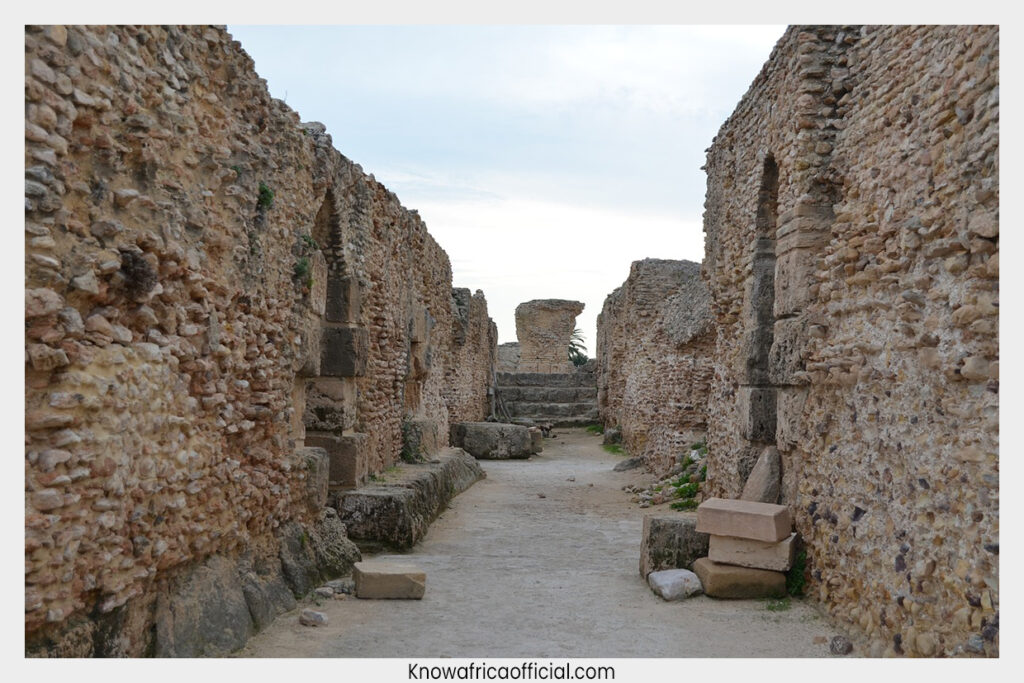
Most popularly known as old Rome’s opponent in the Punic Wars, Carthage was a North African business center that prospered for more than 500 years. The city-state started its life in the eighth or ninth century B.C. as a Phoenician settlement in what is presently Tunisia, yet it later developed into a rambling nautical realm that ruled exchange materials, gold, silver and copper. At its pinnacle, its capital city flaunted almost a large portion of 1,000,000 occupants and incorporated an ensured harbour equipped with mooring straights for 220 boats. Carthage’s impact, in the end, stretched out from North Africa to Spain and parts of the Mediterranean, yet its hunger for extension prompted expanded grinding with the prospering Roman Republic. Starting in 264 B.C., the antiquated superpowers conflicted in the three wicked Punic Wars, the remainder of which finished in 146 B.C. with the close complete obliteration of Carthage. Today, practically all that survives from the once-strong realm is a progression of vestiges in the city of Tunis.
4. The Kingdom of Aksum
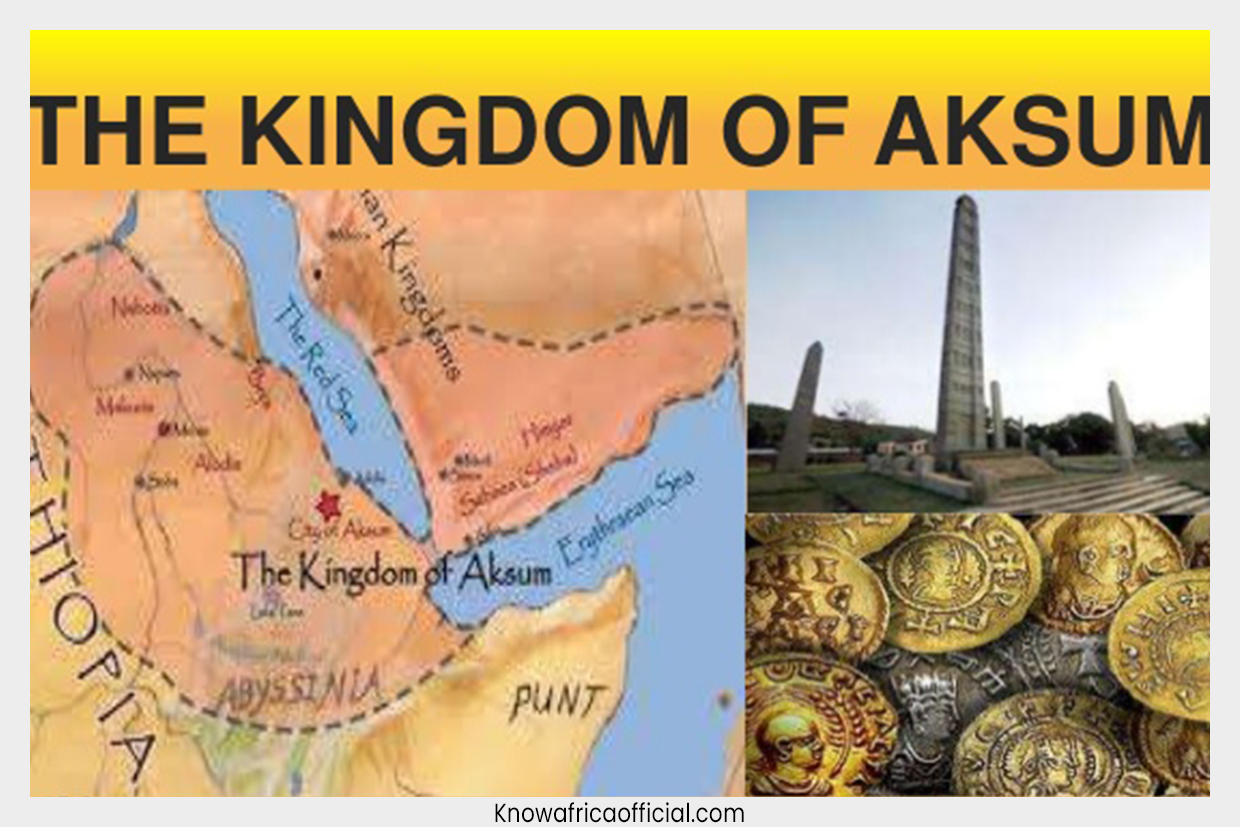
The Kingdom Aksum
During the very period that the Roman Empire rose and fell, the powerful Kingdom of Aksum held influence over pieces of what is currently Eritrea and northern Ethiopia. Shockingly little is thought about Aksum’s inceptions, yet by the second and third hundreds of years A.D., it was an exchanging juggernaut whose gold and ivory made it a crucial connection between old Europe and the Far East. The realm had a composed content known as Ge’ez—one of the first to arise in Africa—and it built up a particular engineering style that elaborates the structure of enormous stone monoliths, some of which remained more than 100 feet tall. In the fourth century, Aksum got one of the primary domains on the planet to embrace Christianity, which prompted political and military collusion with the Byzantines. The domain later went into decay at some point around the seventh or eighth century, however, its strict inheritance actually exists today as the Ethiopian Orthodox Church.
5. The Mali Empire
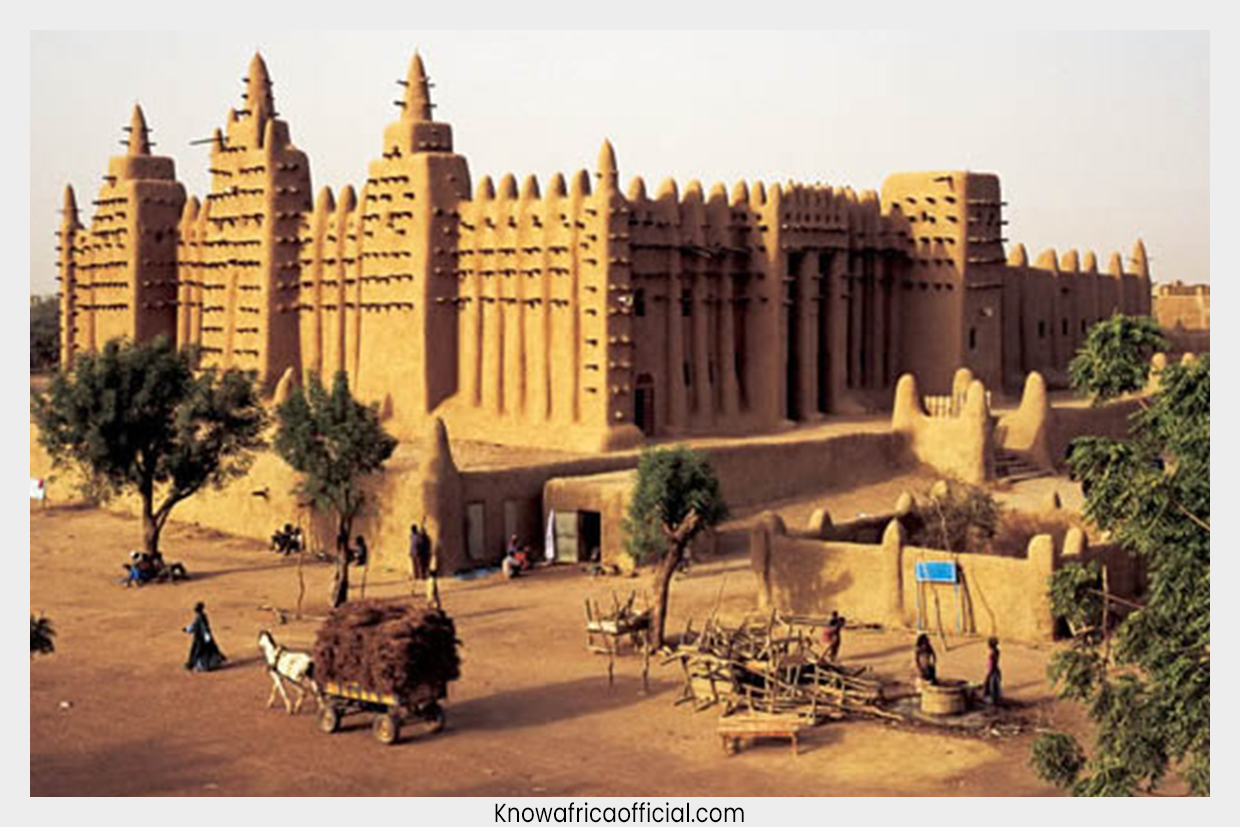
The establishing of the Mali Empire dates to the 1200s when a ruler named Sundiata Keita—at times called the “Lion King”— drove a rebel against a Sosso lord and joined his subjects into another state. Under Keita and his replacements, the realm fixed its grasp over an enormous segment of West Africa and developed rich on exchange. Its most significant urban areas were Djenné and Timbuktu, the two of which were eminent for their intricate adobe mosques and Islamic schools. One such foundation, Timbuktu’s Sankore University, incorporated a library with an expected 700,000 original copies. The Mali Empire at last crumbled in the sixteenth century, yet at its pinnacle, it was one of the gems of the African landmass and was known the world over for its riches and extravagance. One unbelievable story about the realm’s wealth concerns the ruler Mansa Musa, who made a visit to Egypt during a fourteenth-century journey to Mecca. As indicated by contemporary sources, Musa doled out such a lot of gold during the visit that he made its worth plunge in Egyptian business sectors for quite a long while.
6. The Songhai Empire
For sheer size, barely any states in African history can contrast with the Songhai Empire. Framed in the fifteenth century from a portion of the previous districts of the Mali Empire, this West African realm was bigger than Western Europe and involved pieces of twelve advanced countries. The domain delighted in a time of success because of energetic exchange strategies and a refined regulatory framework that isolated its immense property into various regions, each managed by its own lead representative. It arrived at its peak in the mid-sixteenth century under the standard of the dedicated King Muhammad I Askia, who vanquished new grounds, produced a union with Egypt’s Muslim Caliph and set up many Islamic schools in Timbuktu. While the Songhai Empire was once among the most impressive states on the planet, it later disintegrated in the last part of the 1500s after a time of common war and inward struggle left it open to an attack by the Sultan of Morocco.
7. Great Zimbabwe
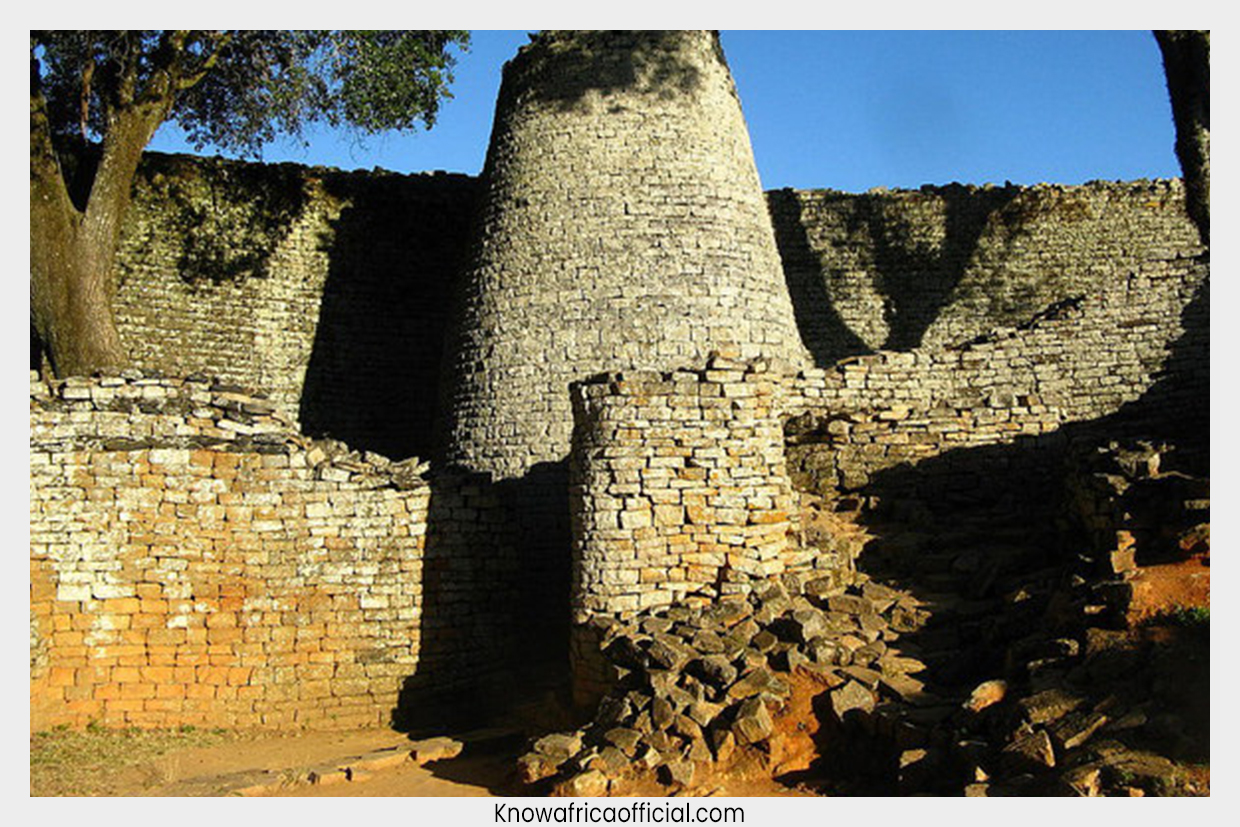
Quite possibly the most amazing landmarks in sub-Saharan Africa is Great Zimbabwe, an overwhelming assortment of stacked rocks, stone pinnacles and cautious dividers gathered from cut rock blocks. The stone stronghold has for quite some time been the subject of fantasies and legends—it was once thought to be the home of the Biblical Queen of Sheba—however, students of history presently know it as the capital city of a native realm that flourished in the district between the thirteenth and fifteenth hundreds of years. This realm controlled over a huge piece of current Botswana, Zimbabwe and Mozambique. It was especially wealthy in cows and valuable metals and stood straddling a shipping lane that associated the district’s goldfields with ports on the Indian Ocean coast. Despite the fact that little is thought about its set of experiences, the remaining parts of antiquities, for example, Chinese ceramics, Arabian glass and European materials demonstrate that it was previously an all-around associated trade focus. The fort city at Great Zimbabwe was strangely deserted at some point in the fifteenth century after the realm went into decay, yet in its prime, it was home to an expected 20,000 individuals.